


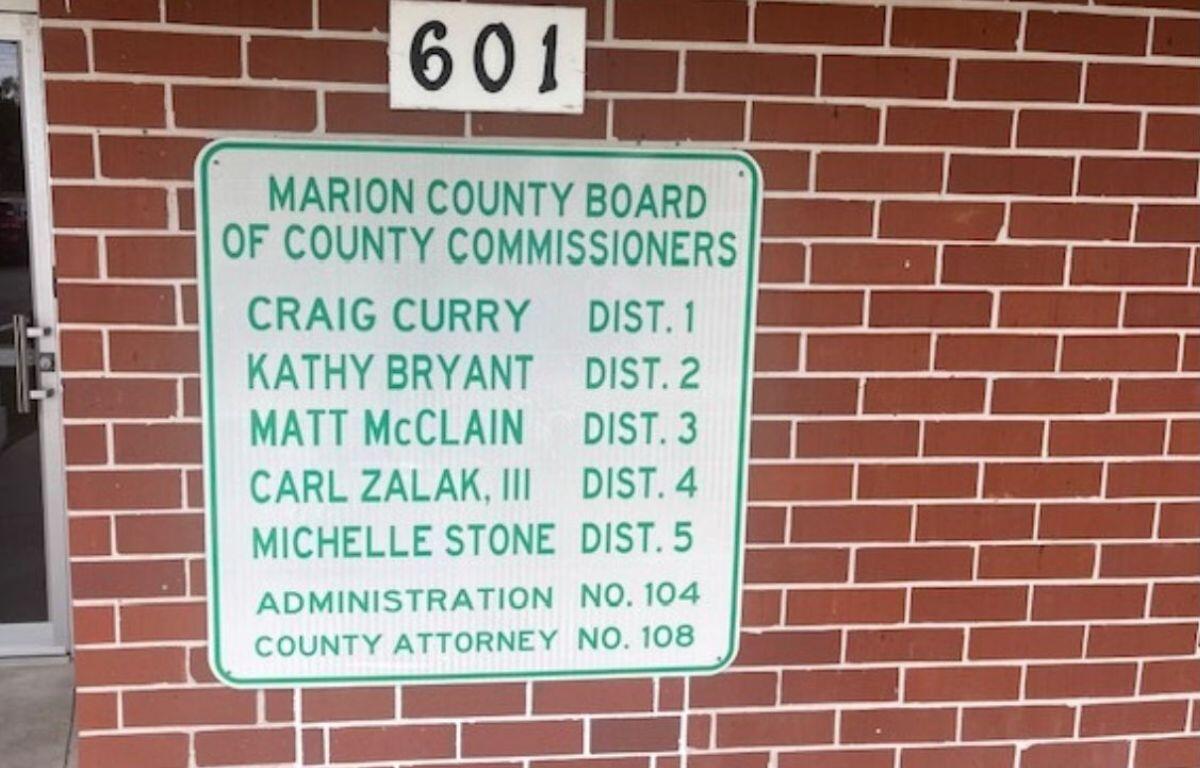

OCALA, FL (352today.com) – The Marion County Board of County Commissioners approved a special use permit with conditions for an Ocklawaha business for the on-site sale and consumption of alcoholic beverages within 1,000 feet of three churches in a regional business zone, by a 4-1 margin, with Commissioner Craig Curry, Dist. No. 1, as the dissenting vote. The vote occurred on Monday, Dec. 15, 2025.
The owner is JRB Property Management; the applicant is Wises Enterprises, L.L.C. The subject property is on a 0.21-acre parcel, north of Lake Weir, on 13490 E. HWY 25, in Ocklawaha. Marion County Staff did receive two letters of opposition, including one that was directly adjacent to the property. The subject property is located in the Alada subdivision, in the secondary springs protection zone, and is outside the urban growth boundary. However, there is an environmentally sensitive overlay zone, given the property’s proximity to Lake Weir, said Jared Rivera-Cayetano, Marion County growth services project planner.
The applicant intends for the subject property to be a deli/beer/wine tavern. They are within 1,000 feet of three churches. Typically bars and restaurants are allowed in regional business zoning, but the county’s land development code is very clear: If you’re within 1,000 feet of a church, you have to get a special use permit.
Capacity concerns
The applicant had initially proposed 66 seats, reduced it to 47, then eventually bringing down the number to 33 seats. The parcel is within an area that does have future commercial land use, with commercial zoning for regional business.
The structure itself dates back nearly a century, having been built in 1933, but it appears there may be evidence of the building dating back prior to that date. The University of North Florida has an image that dates back to 1928. There are future plans for the upstairs of the building, according to the applicant, but it’s sealed off at this time.
Marion County’s land development code requires one parking space for every four seats. The parking space needs to be nine feet by 18 feet wide, and the vehicle aisles need to be at least 22 feet wide if the parking is being angled, said Rivera-Cayetano.
Compliance and conditions
Because the applicant was proposing a more intensive use, the subject property needs to be brought up to code, and although technically it appears that there are seven parking spaces, the argument from county staff was there wouldn’t be adequate parking. The applicant would have to get a waiver to accommodate the parking requirement as well buffering requirements and other types of landscaping requirements, including one for the area where the garbage receptacle is kept. Technically they were supposed to provide an eight-foot wall; it has to be enclosed by a vinyl fence.
There were also questions about loading occurring on E. HWY 25. Older buildings are not required to provide certain site requirements unless determined by the county to address public safety, welfare and health. Parking can be within a subject property, so there won’t be any parking on the road.
Staff found that the special use permit would adversely affect the public interest, isn’t consistent with the comprehensive plan, and may or may not be compatible with the surrounding area. Staff recommended denial, but the planning and zoning commission recommended approval with conditions.
The planning and zoning commission agreed with staff conditions to provide a site plan to the development review committee within 60 days of approval. After six months, if the site plan is not approved, the special use permit will be nullified. The special use permit is to be operated with the concept plan, runs with the lessee as they are technically under contract with the property owner to operate the business. The applicant has obtained the majority of the applicable licenses to operate the business. However, they would need to obtain a new certificate of occupancy before they could begin selling anything.
The consumption and sale of alcoholic beverages originally requested would’ve been between the hours of 7 a.m. and 2 a.m., but has been changed from 10 a.m. to midnight, seven days a week, serving just beer and wine.
Parking and loading will occur within the subject property, not in the right-of-way. The applicant will have to provide adequate parking as determined through any type of waiver, as well as buffers and screening for the garbage collection area. The special use permit would expire in three years, and if the applicant remains in compliance, it would be renewable up to three times for five years each.
Patrons parking only
The applicant, Justin Wise, spoke before the commission, conveying to them that most of the permits have been obtained through the Department of Agriculture, the Environmental Protection Agency, etc… and didn’t want to open the establishment prior to getting approved for the sale of beer and wine, wanting to provide customers with the best experience. However, they wouldn’t be able to open at the moment as the applicant would need a change of occupancy certificate. The lot is deeper than just the width of the parking spots. All of the parking will be in the side lot, according to Wise. There is a space that could accommodate parking for up to six motorcycles. The handicap parking spot has to be paved on the subject property to fulfill the requirement. The county doesn’t have standards for motorcycle parking, and a waiver would provide some flexibility. The applicant has seven designated parking spaces and told the commission they have six motorcycle parking spots.
“We would rather have a great opportunity to give something good to the community, and for us to make a buck or lose a buck… and not disturb anyone else,” said Wise. “If anyone is disturbing anyone else, we don’t want them there anyway.”
One member of the audience spoke in opposition–Amy Rowell, whose family trust owns the property adjacent to the subject property, to the south and to the west, and leases it out to the U.S. Postal Service. There have been problems in the past with people parking in the post office parking lot and going into the other building, which is why Rowell had a fence put up. The opposition speaker didn’t believe the applicant would meet the parking requirements because of trees and the septic tank which she believed would preclude the entire parking lot from being used. The hours of the business operation were also a concern.
The applicant will have to chain off the septic tank area and put a “no parking” sign on it.
Towing the line
The applicant needs to adhere to the conditions of the special use permit, because if it’s not done well, it can be revoked, if the applicant’s business becomes a nuisance in the community, said Carl Zalak, III, Marion County Commission chair. A waiver had to be granted just so the applicant would be able to operate their deli.
Objections to granting the permit
Commissioner Craig Curry felt uncomfortable about granting the special permit as he didn’t believe the applicant’s business was aligned with the facility, or that the parking was adequate and that there would be overflow on other people’s property. He was also concerned about the proximity to the churches and the hours of operation and believed the commission would be creating a problem by granting the special use permit at the subject property.