


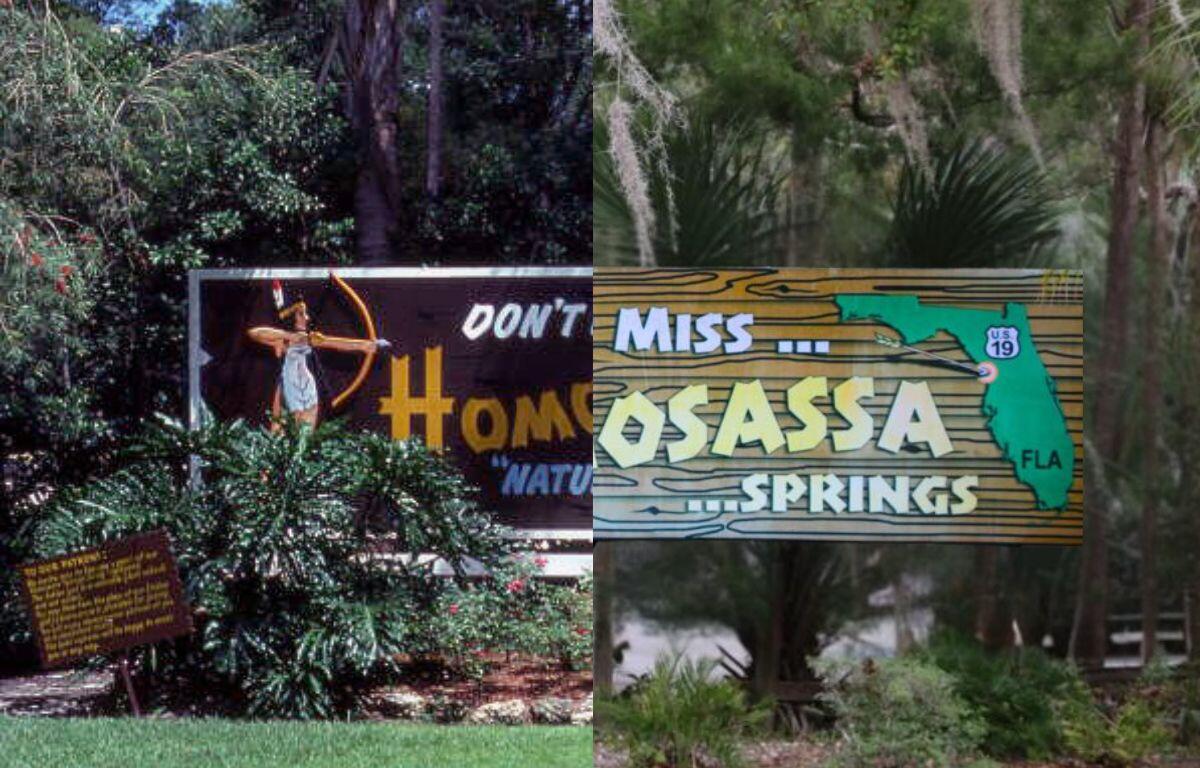

HOMOSASSA, FL (352today.com) – Long before it became a model for wildlife conservation, Homosassa Springs was a classic example of Old Florida tourism, blending natural beauty with roadside spectacle. Today known as Ellie Schiller Homosassa Springs Wildlife State Park, the attraction’s evolution reflects the broader rise and fall of Florida’s mid-century tourist economy.


The springs themselves have drawn visitors for centuries. Native people camped along the banks long before European settlement. By the late 1800s and early 1900s, a railroad system known as the “Mullet Train” ran along what is now Fishbowl Drive. It routinely stopped at Homosassa Springs, allowing passengers to disembark to picnic, explore and swim in the clear spring waters while cargo such as fish, cedar and spring water was loaded onto the train.
In the 1940s, early entrepreneurs developed the site into a roadside attraction. One of the first was “Nature’s Giant Fish Bowl,” where visitors could look into the spring’s vast, 40-foot basin from elevated platforms and early underwater observatories. A mix of freshwater and saltwater fish drew crowds looking for a new kind of nature experience.
Like many roadside parks of the era, Homosassa Springs expanded in the 1950s and 1960s. David Newell, a local fisherman and outdoor writer, built structures to allow better views of the spring and introduced one of the first underwater walkways beneath the water’s surface. Later, the Norris Development Company, headed by Bruce A. Norris, rebranded the property as “Homosassa Springs, Nature’s Own Attraction,” adding a larger floating underwater observatory known as the Fish Bowl, coin-operated squirrel feeding stations–eventually removed when the animals became too aggressive and replaced with ladies dressed as Indian princesses–and pontoon boat tours that took visitors through scenic waterways past wildlife exhibits.
The park also became home to trained animals used in television and film through an arrangement with Ivan Tors Animal Actors. Among them was Lu the hippopotamus, one of the attraction’s most beloved residents from the 1960s until his death in June 2025 at the age of 65, and a cultural bridge connecting generations of visitors.


By the late 1970s and early 1980s, changing tourism trends and increasing awareness of animal welfare placed pressure on attractions like Homosassa Springs. The Citrus County Commission purchased the property in 1984 to protect it from development, and a public referendum supported preserving the springs until the state could assume ownership. The site became a Florida state park on Jan. 1, 1989, marking a shift from entertainment toward conservation and education.
Under state management, exotic animals were phased out and the focus turned to native Florida wildlife and habitat protection. Today, Homosassa Springs serves as both a refuge and rehabilitation center for native species that cannot survive in the wild, including Florida panthers, red wolves, black bears, love birds and the manatees that seek the spring’s warm waters each winter.
Modern visitors enjoy interpretive programs, elevated boardwalk trails and the underwater Fish Bowl observatory–a legacy of past innovation–along with wildlife walks and boat tours that connect them to the same spring that drew railroad passengers more than a century ago.
What remains of the old Homosassa Springs roadside attraction is not defunct in the traditional sense but rather transformed: a preserved natural wonder where the echoes of Old Florida tourism coexist with modern conservation values.