


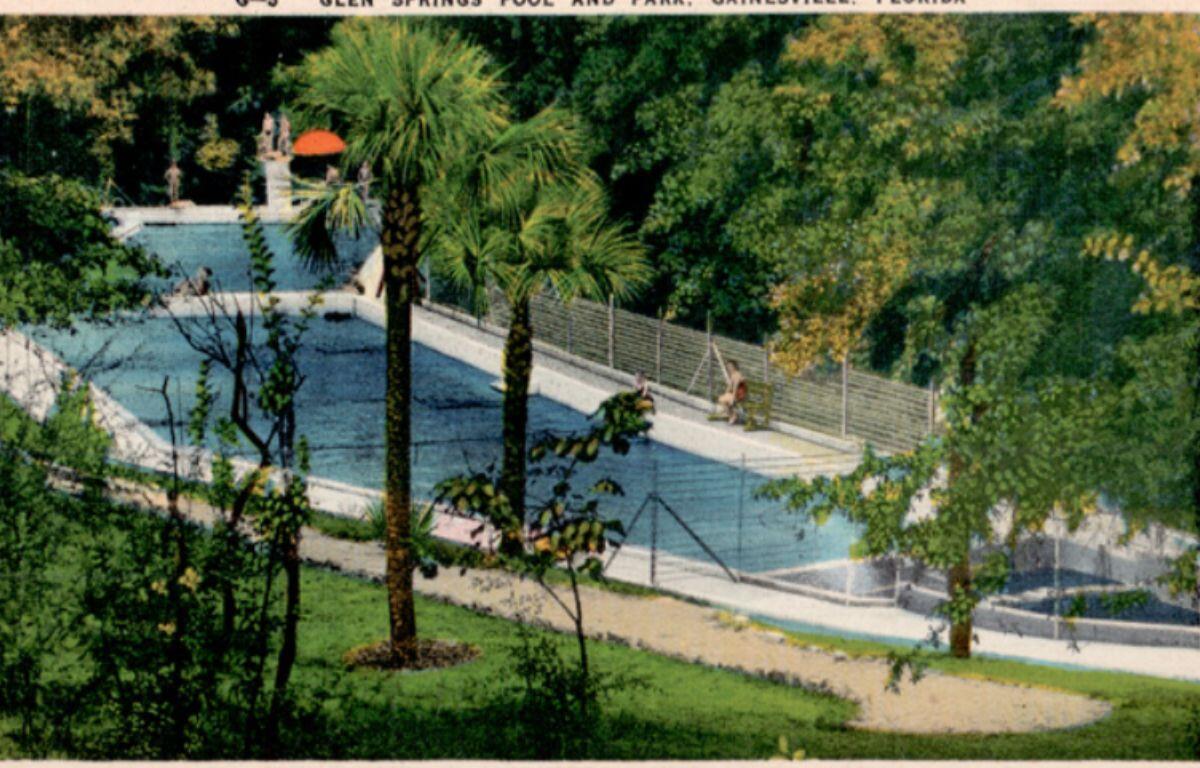

GAINESVILLE, FL (352today.com) – Once a shining gem among North Florida’s natural springs, Glen Springs was for decades a local hub for swimming, summer escapes and community gatherings. Today, what remains is a quiet ravine, overgrown pools and a murky echo of what once was.
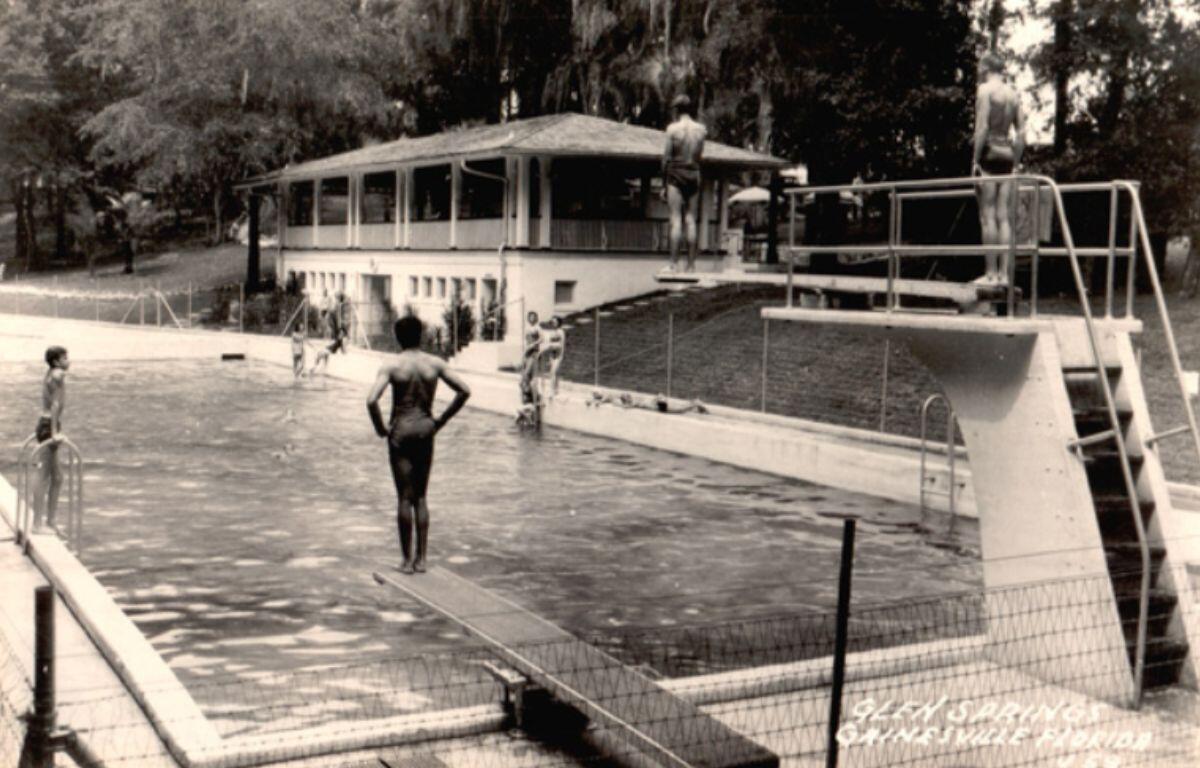
Courtesy: Matheson History Museum
An historic swimming oasis
First developed in the 1920s after spring-lover Cicero Addison Pound Sr. purchased the land, Glen Springs quickly became Gainesville’s premier public pool. Architect Guy Fulton designed the initial springhouse and bathing facilities, which included a spring-fed pool that tapped a strong natural boil from the aquifer–ideal for clear, cool water.
By 1940, the facility expanded to three pools, including deep sections up to 8 feet, a high-dive platform and a shallow pool for children. The springhouse boasted locker rooms, showers and an upper-floor dance hall, jukebox and concession stand. At its height, Glen Springs hosted birthday parties, Boy and Girl Scout outings, swimming lessons, traveling carnivals and even novelty events including a mermaid show. Locals and visitors alike made it a regular summer ritual.
The pool played a role beyond leisure: The swimming team of the nearby University of Florida occasionally practiced there before their own campus pool opened in 1930–underscoring how central Glen Springs once was to Gainesville’s aquatic life.
Decline begins, access ends
In 1970, a combination of changing water-quality regulations, the growth of city-owned pools and environmental concerns led to the closure of public swimming at Glen Springs. The site was sold to Gainesville Elks Lodge #990, which repurposed the spring area for private use and discontinued public bathing.
Over the subsequent decades, maintenance lapsed. The concrete pools deteriorated, diving boards and springboards went away, and nature began to reclaim the previously manicured grounds. While the spring itself continues to feed water, the flow has dramatically decreased–from historic flow measurements between 26,000 and 60,000 gallons per day to a 2010 reading near 6,000 gallons daily.
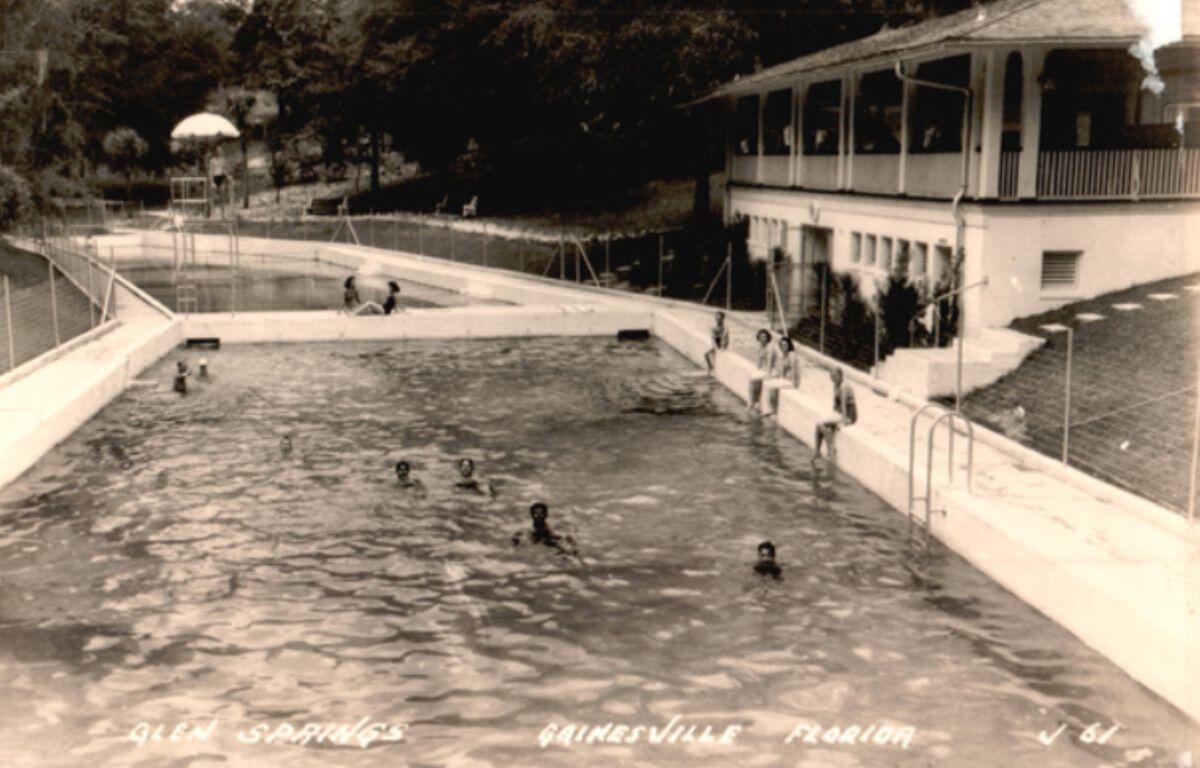
Courtesy: Matheson History Museum
Revival efforts and environmental concerns
Inspired by memories of childhood swims, local residents and environmental advocates formed the group Friends of Glen Springs (FROGS). They spearheaded cleanup efforts in 2011-2012, removing algae and debris to restore visibility to the spring boil and raise awareness about the springs’ environmental importance.
FROGS’ longer-term vision called for the city to purchase the property for permanent protection and restoration–removing concrete pools to allow the spring to flow naturally, transforming the location into a passive recreation and educational park. In 1984 and again in 1986, the city attempted to negotiate a purchase with the Elks Lodge, but both efforts failed.
Today, the head spring and pools remain on private property, fenced and closed to public swimming. The spring’s outflow, Glen Springs Run, flows under a pedestrian bridge into the adjacent Alfred A. Ring Park, which offers walking trails, creek access and a small wildflower garden along Hogtown Creek.
Quiet waters, lingering memories
Though the roar of cannonballs and laughter from high-diving platforms are long gone, Glen Springs remains a powerful reminder of Gainesville’s recreational past–and of the environmental pressures facing many of Florida’s natural springs. With clearer water, historic postcard imagery and community willpower, Glen Springs’ legacy lives on–not as a swimming paradise, but as a place many remember fondly and hope one day to see restored.