


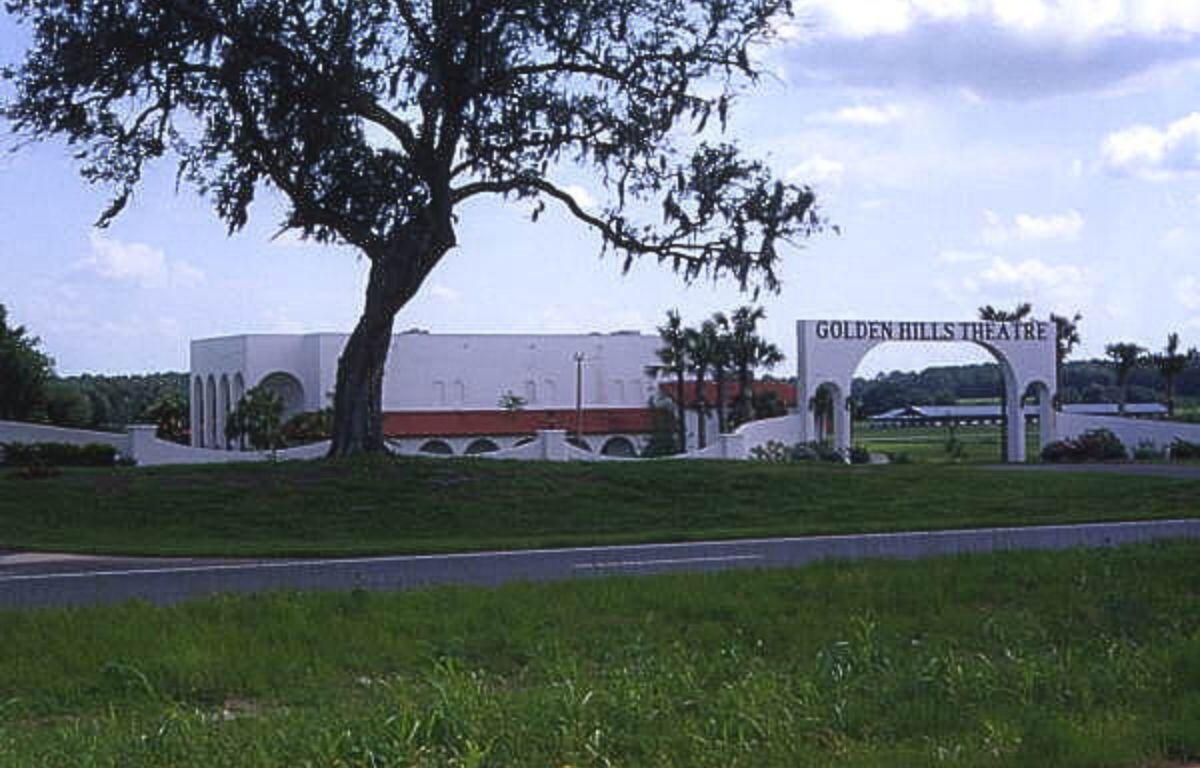

OCALA, FL (352today.com) – Tucked into the Golden Hills area near NW Highway 27, the Golden Hills Theatre was a small but cherished cultural venue that served the community for nearly two decades. Established around 1980 by Bernard and Theresa Castro, the theatre was part of the family’s Golden Hills development, which included the golf and turf club, the Golden Hills Academy and eventually residential neighborhoods that still carry the Golden Hills name today.
Unlike commercial cinemas, the Golden Hills Theatre was never intended as a major box-office operation. Instead, it functioned as a hub for charitable balls, cultural performances, community meetings and local social gatherings, reflecting the Castros’ vision of giving back to Ocala. Residents remember it as a venue that brought the arts to the area in an intimate, accessible way, hosting everything from holiday concerts to fundraising events for local causes. Vintage postcards and records show the theatre as a distinctive and elegant presence within the Golden Hills neighborhood during its peak.
The theatre was closely tied to Theresa Castro’s civic and philanthropic work. Theresa, wife of Bernard and co-partner in Castro Convertibles, was a longtime advocate for education, health initiatives and community enrichment. She co-founded the Golden Hills Academy, served on local boards and led fundraising for organizations such as the Florida School for the Deaf and Blind and the Ocala chapter of the Royal Dames for Cancer Research. He dedication to civic causes helped shape the Golden Hills area as a community-focused space that blended recreation, culture and education.
As the Castro Family shifted focus to commercial and residential development, including Golden Ocala and the Ocala National Golf Club, the theatre’s niche role became harder to sustain. Much like the family’s signature mansion, which sat vacant for more than 15 years before its demolition in 2014 due to structural damage and humidity, the theatre eventually closed, with upkeep and restoration costs likely outweighing its community use.
Today, the site continues as part of the Golden Hills residential and golf community, and the Golden Hills name still appears throughout Ocala neighborhoods, country clubs and local landmarks. The theatre itself exists only in memory and in vintage imagery collected by local historians and postcard collections. Its legacy remains as a reminder of Ocala’s small-scale, family-driven cultural history and of the Castro family’s enduring impact on the city through philanthropy, education and community development.