


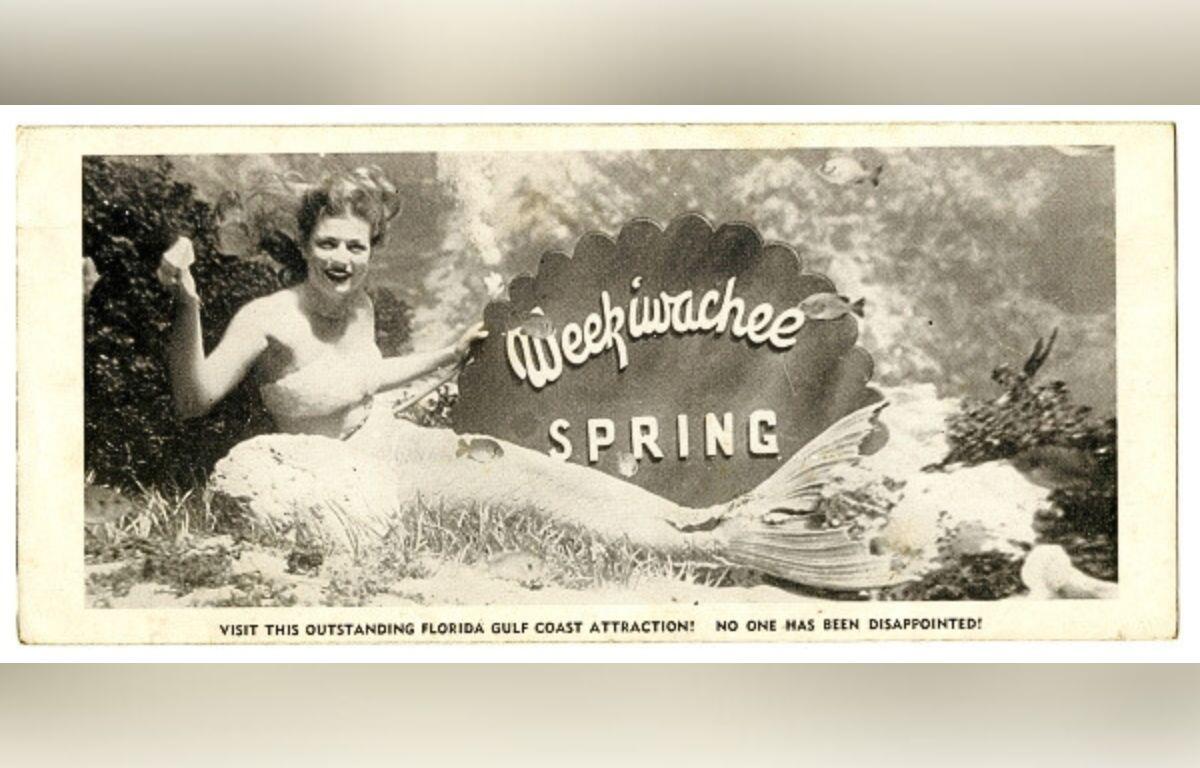

HERNANDO COUNTY, FL (352today.com) – Long before Florida became synonymous with theme parks and corporate attractions, Weeki Wachee Springs carved out a place in tourism history by doing something few others dared: turning a natural spring into a live underwater theater. In doing so, its mermaid attraction became one of the state’s most recognizable roadside destinations.


The name “Weeki Wachee,” derived from the Seminole language, means “little spring” or “winding river.” The spring itself is a first-magnitude spring, producing more than 117 million gallons of crystal-clear, 74-degree springwater daily. Its powerful flow, deep basin and visibility made it an unlikely but ideal stage.
The attraction debuted in October of 1947 under the direction of Newton Perry, a former U.S. Navy frogman who trained underwater combat swimmers during World War II. Perry developed a system that supplied performers with air through hoses hidden in the scenery, allowing them to appear unassisted while swimming and performing underwater for long periods. A submerged theater was carved into the limestone, placing audiences face-to-face with the spring.


The park featured live mermaid shows, jungle boat cruises, orchid gardens, a faux Native American village, and animal exhibits. Performers were trained not only in swimming but also in ballet and etiquette, presenting synchronized underwater routines that included eating bananas, drinking soda and acting out storybook scenes.
Weeki Wachee rose to national prominence in the 1950s and reached its peak after being purchased by the American Broadcasting Company in 1959. ABC invested heavily in infrastructure, constructing the 400-seat underwater theater still in use today and expanding productions into full-scale aquatic shows such as Underwater Circus, Alice in Wonderland and Peter Pan. During the 1960s, the park attracted hundreds of thousands of visitors annually, including celebrities and tourists from around the world.
As Florida’s tourism landscape shifted in the 1970s and 1980s, Weeki Wachee’s novelty appeal began to fade. ABC sold the park to Florida Leisure Attractions, Inc. and over the next 30 years, larger attractions in Central Florida offered newer rides, broader marketing and year-round crowds. Operating costs rose, attendance declined and many of the park’s peripheral attractions were phased out.


In an effort to adapt, Buccaneer Bay opened in 1982, adding waterslides and a man-made white sand beach. Still, the park struggled to compete. Weeki Wachee became run down to the point that the land’s lease owner took the operators to court over back lease payments, and eventually the park was donated to the City of Weeki Wachee. In 2008, the State of Florida acquired the property, transitioning it from a private tourist attraction into Weeki Wachee Springs State Park.
Today, mermaid performances continue as a preserved cultural feature, while the surrounding spring and river are protected for recreation, conservation and education. What was once a quirky roadside stop has evolved into a rare example of a Florida attraction that survived not by expanding, but by scaling back and preserving its most iconic element.
Once a novelty built on illusion, Weeki Wachee’s greatest trick may be its ability to endure–proving that some legends, much like mermaids, never fully disappear beneath the surface.