


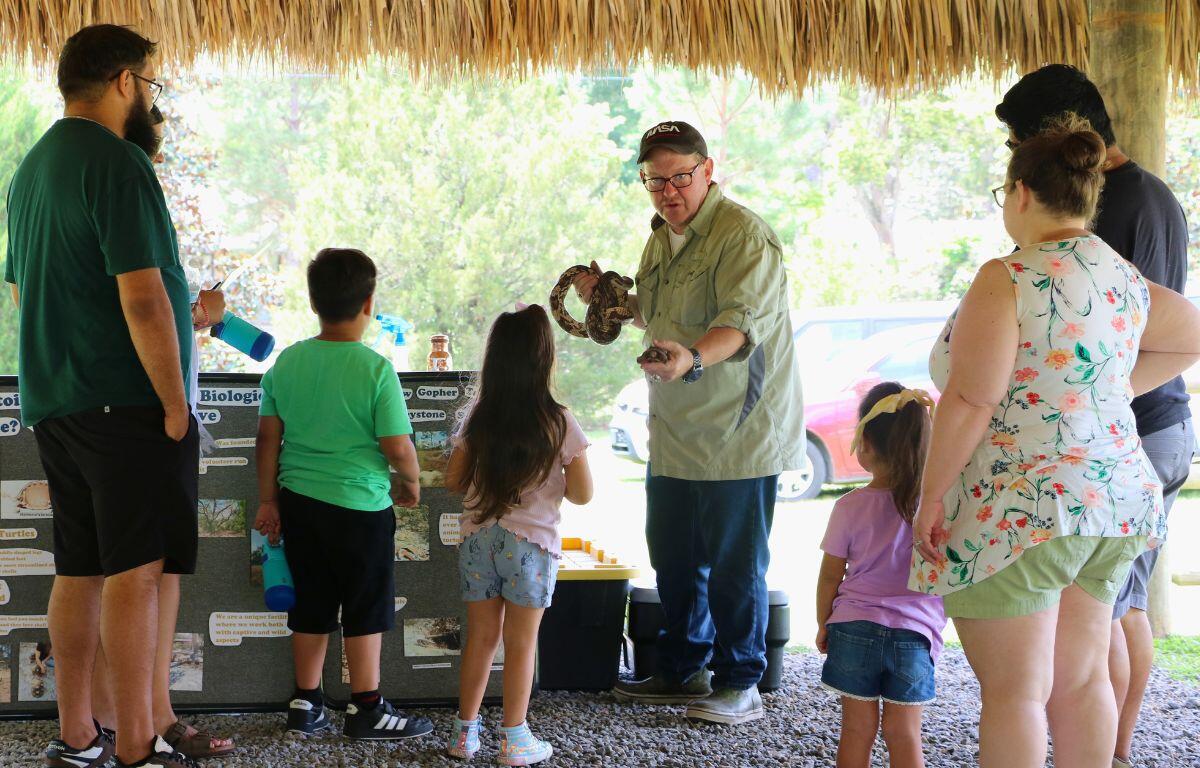

OCALA, FL (352today.com) – This weekend brought Gopher Tortoise Day on Friday, April 10, 2026, celebrating the only native tortoise species East of the Mississippi River. The Fort King National Historic Landmark hosted their Gopher Tortoise Day Celebration on April 10 & 11 from 10 a.m.-2 p.m. Organizations such as the Discovery Center, Ashton Biological Reserve and the Florida Fish & Wildlife Conversation Commission (FWC) visited the Fort King site with a variety of species including tortoises, snakes and a small turtle.
Gopher tortoises were previously designated an endangered species and are currently a threatened species. They are found throughout Florida and are protected under state law along with their burrows. Fort King hosted experts under the chikee to share some of the interesting facts about tortoises, how to protect them and allowing guests to see and pet them.
“Over 360 different species, both invertebrate and vertebrate, will use gopher tortoise burrows,” said Mac Barrett, Gopher Tortoise Recipient Site Biologist at the FWC. “Which is why they’re a keystone species.”
Courtesy: Amber Battillo/352today
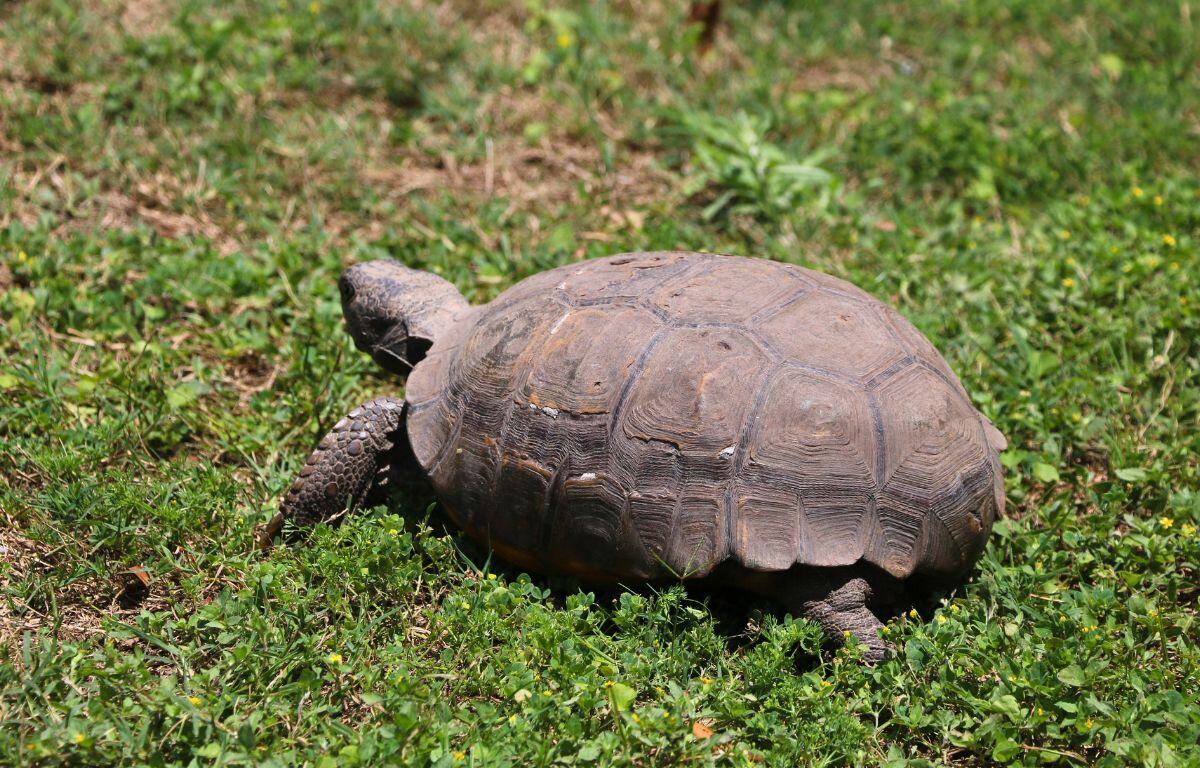
Barrett featured the FWC tortoise ambassador, Hunter, also known as Pops. He is a blind gopher tortoise who wondered around the grounds while guests followed. Barrett explained that people who find these tortoises nearby can support them by planting safe food sources such as shiny blueberries, huckleberries, blackberry vines, native grasses and more. Those who find gopher tortoises on farms can help by redirecting cattle around their burrows.
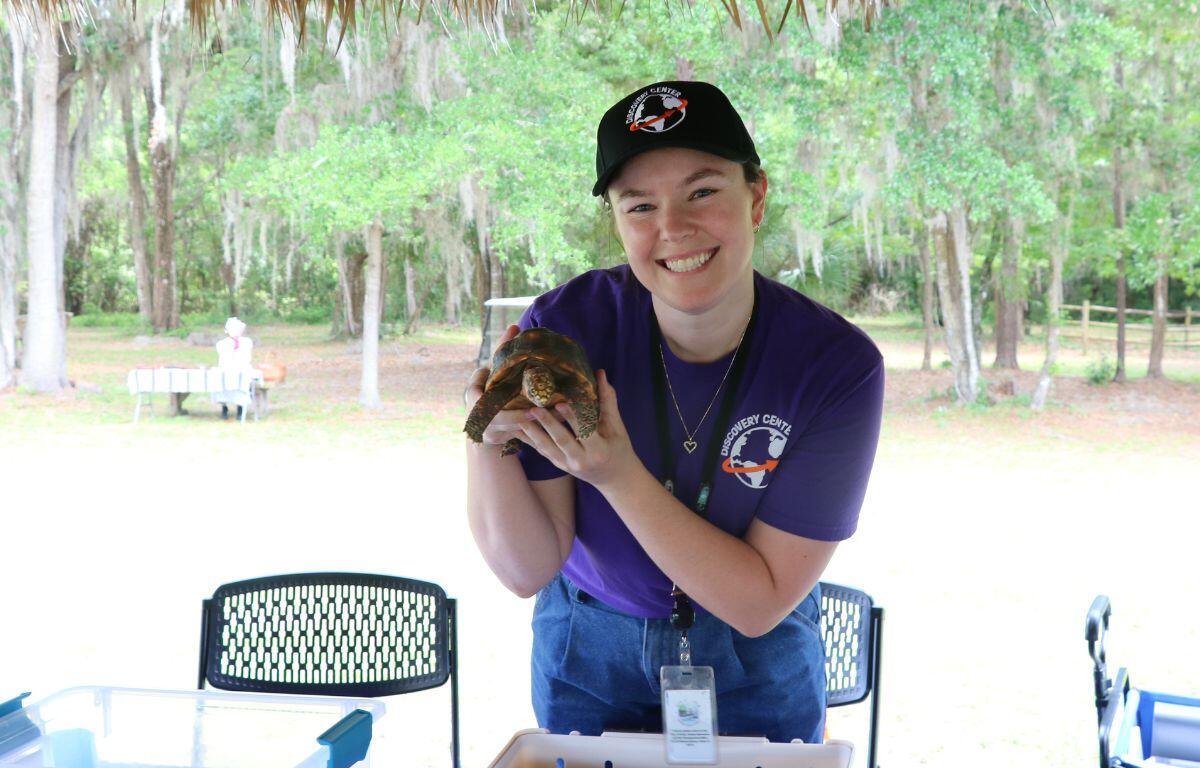
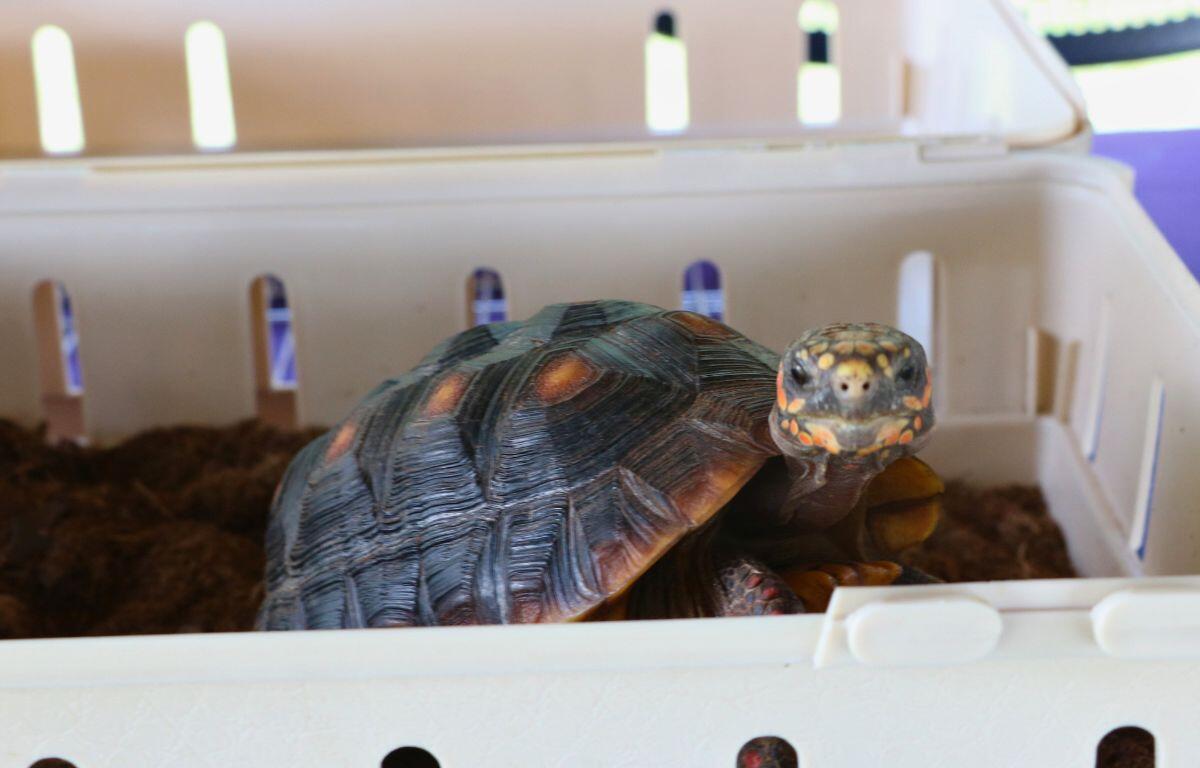
Multiple experts at the celebration shared that the best course of action when a gopher tortoise finds its way near homes and farms is to leave them and their burrows alone. Sam Mormile with the Discovery Center featured their tortoise ambassador, Pteri, a baby red-footed tortoise, whom guests could pet and greet while learning more about other tortoise species and the differences between them. Mormile explained that the gopher tortoise species can also bring in multiple other fascinating species due to the biodiversity of gopher tortoise burrows.
“They are there for a reason,” said Mormile. “They are also wild animals, so you don’t want to try and touch any wild animals out there. They are protected in Florida. Most people will find them in their backyards forming a burrow or at the end of a burrow. They’re really good to have around. Their burrows are a biodiversity hotspot, so that means lots of other species are using their burrows as well. You’re going to have so many other cool animals, not just the gopher tortoise, hanging around.”
Courtesy: Amber Battillo/352today
Courtesy: Amber Battillo/352today
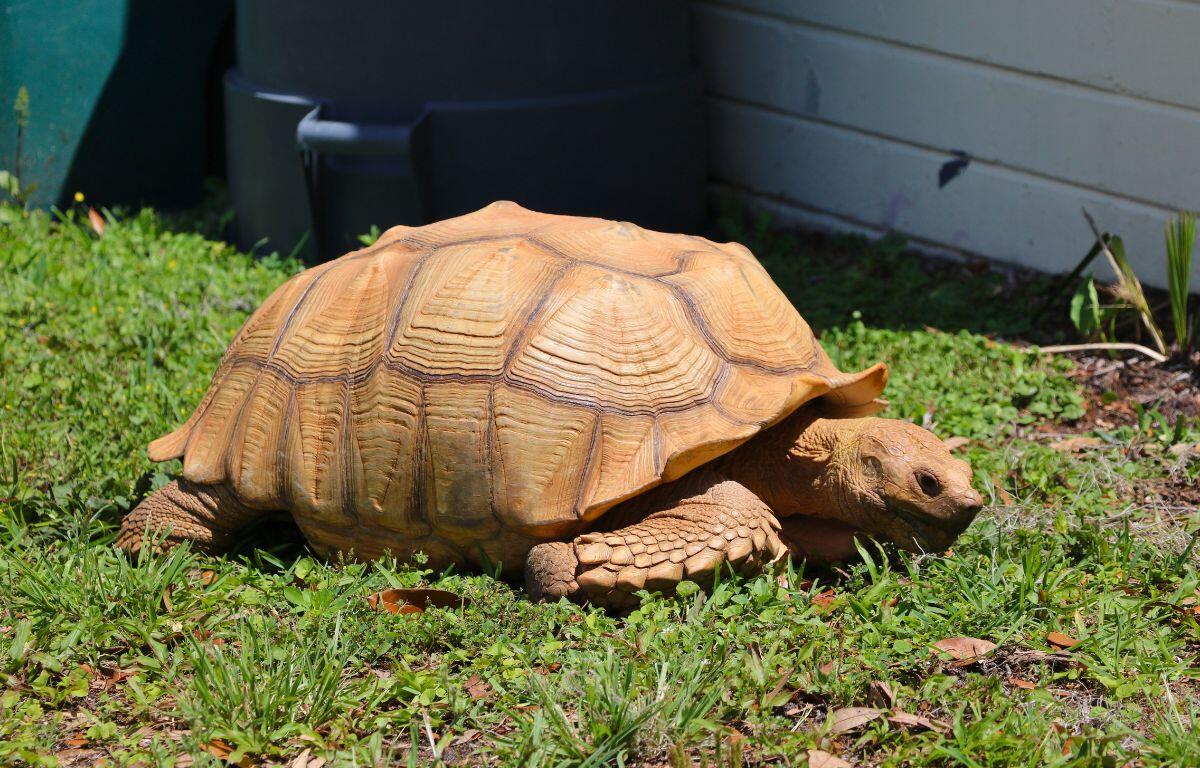
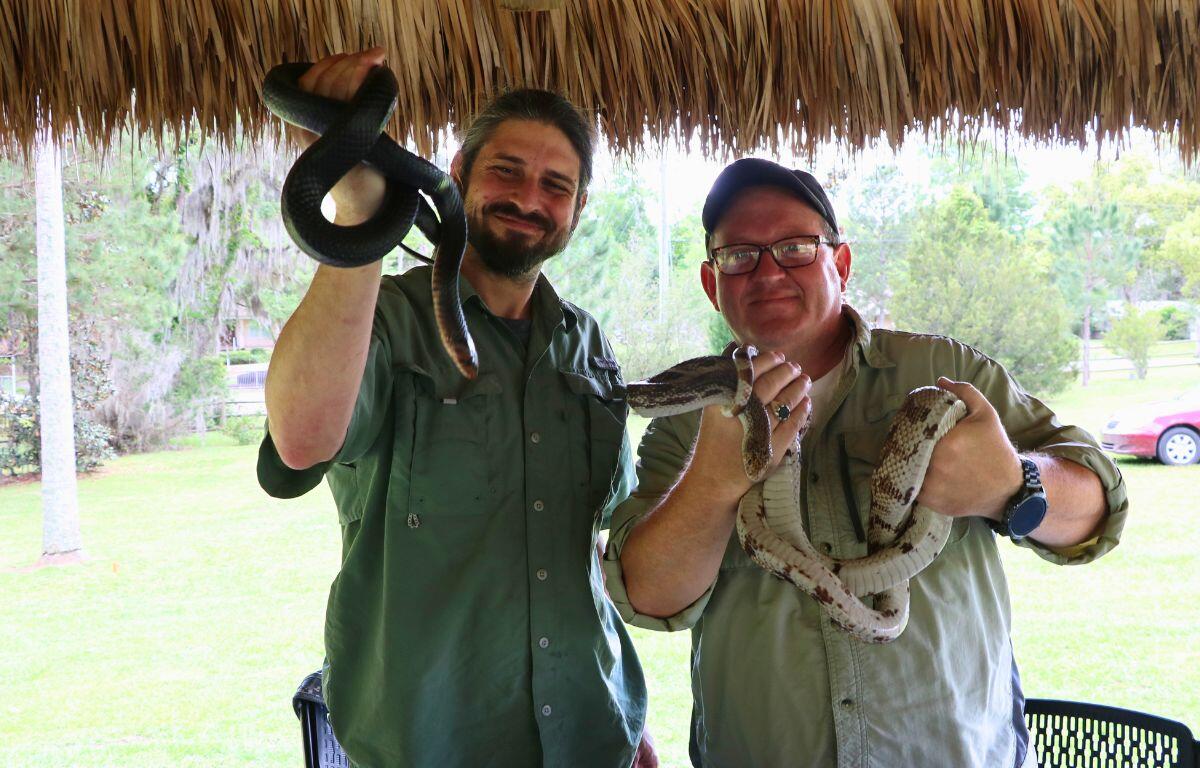
Along with the Discovery Center and FWC’s tortoises, the Ashton Biological Reserve featured two snakes and a baby tortoise that guests could pet and learn more about. Throughout the celebration, guests could watch Rocket, an African tortoise species, walk around the Fort King grounds, occasionally stopping for pictures or eating grass.
Courtesy: Amber Battillo/352today
Courtesy: Amber Battillo/352today
Guests also got a lively mix of celebrations at Fort King as multiple historical reenactments from the Seminole wars were taking place. Reenactment actors dressed in costume, walking the grounds and sharing history with guests while they visited the tortoises.


This mix on the importance of preserving both history and wildlife provided important insights into the necessity of the gopher tortoise species and why they need to be protected, as well as a lively demonstration of the Seminole war times. Guests were able to learn how gopher tortoises impacted the environment and how to support these animals if a gopher tortoise ever finds its way to one’s property.