



OCALA, FL (352today.com) – The return of an activity that has been synonymous with one of Marion County’s most renowned attractions may soon become a reality.
The Marion County Board of County Commissioners approved its 2026 state legislative priorities at its Aug. 5, 2025, meeting, and one of the appropriations requests to the State of Florida was for returning swimming to Silver Springs State Park. A request was made for $2.5 million that would cover construction costs to create a public swimming area at the Silver Springs State Park headsprings.
“This is a great project because it’s not partisan, I barely talk to anyone in the community that doesn’t want to see swimming back in the springs,” said Carl Zalak, III, Marion County Commission chair, who in 2022 composed a letter urging the State Department of Environmental Protection to return swimming to Silver Springs as directed in the state’s Unit Management Plan. “I feel like every year they delay, we risk being the generation that let this quietly drift away in the night. I don’t want to be that generation of a Marion Countian that doesn’t fight for this. We’ve been fighting as you know for a long time since the state took this park over. It’s in the management plan, so they’re supposed to do this.”
The community was extremely vocal when asked what they would like to see, and overwhelmingly, what people wanted most was to be able to have swimming return to Silver Springs State Park. It’s something that has been more than a decade in the making but has had to clear various hurdles.
“Silver Springs helped shape the community once and with the right follow-through by the executive branch, by us, by our legislation, it can be again for the next generation,” said Zalak. “That’s important to us. It is our number one priority is restoring Marion County’s story.”
The name of the globally famous attraction was changed to Silver Springs State Park on Oct. 1, 2013. It had been declared a National Natural Landmark in 1972.
The Florida Park Service took control and assumed management of Silver Springs, merging it with the adjacent Silver River State Park. The State’s 2014 Unit Management Plan for Silver Springs State Park included creating a public swimming area at the headsprings and constructing a mooring/convenience dock downriver from the headsprings, according to Marion County staff.
Wild Waters water park was closed and the infrastructure removed in 2019, and per the Unit Management Plan, swimming was to be allowed before the closing of the water park. Senate Bill SB2500 appropriated $1.5 million to Silver Springs State Park for the construction of a swim area and docks, according to county staff.
A rite of passage
The question remains: How is this going to happen, and who is going to make it happen? The Marion County Commission supported the state’s request to take down Wild Waters, but the exchange for that was that swimming would return immediately to Silver Springs. And more than nine years after Wild Waters was closed on Sept. 5, 2016, the community is still in abeyance, waiting for that day when they will be able to enjoy the opportunity to swim again in one of the world’s largest artesian springs–an experience synonymous with Marion County. It is a promise from the State of Florida that hasn’t been realized, causing a great deal of frustration not only for the Marion County Commission but the community as a whole.
“I look at my kids, and we can go make memories in all of these other springs, Salt Springs, Juniper Springs, all of these incredible places, but we can’t swim in the place that defines who we are, in Silver Springs,” said Zalak. “I think that’s the problem is that generations ago, our grandparents, parents of so many in the community have memories and they tell their kids about swimming, and spending the summer in Silver Springs, what that meant to them, and how that defined who we are as Ocala, Marion County.”
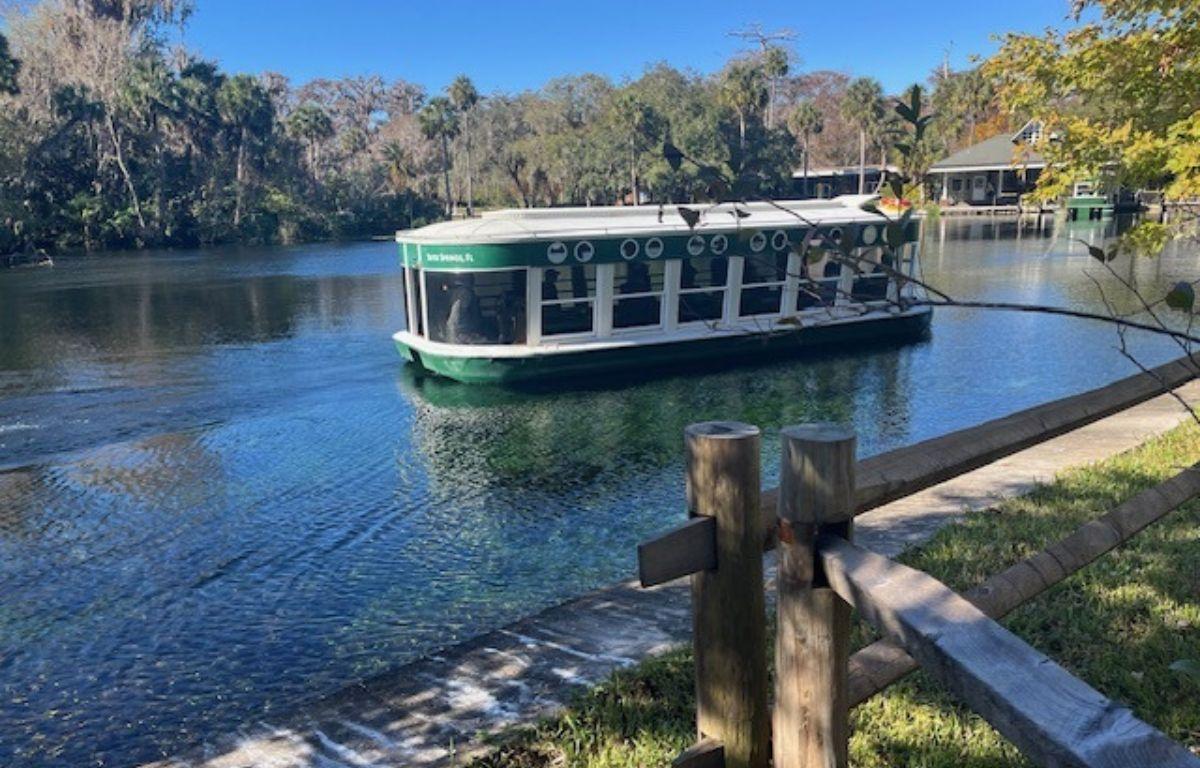
There are generations who may have had the experience of having gone on a glass-bottom boat ride, but they haven’t spent the summer at Silver Springs. Marion County is missing that legacy of community ownership in the springs, said Zalak.
“Sure, we’ve got plenty of tourists coming and enjoying the springs, kayaking and going on boat rides, but where’s that local ownership,” said Zalak. “Local ownership has come from those who’ve passed down the stories from generations ago when they swam in the springs, and that’s what we want to restore. We don’t want just our grandparents to tell those stories; we want us and our kids to be able to tell those stories, and that’s the importance. That’s the whole thing, sharing those memories. together as a family and a community.”
Cautious and cumbersome
There are challenges within the system, bureaucracy and blockades that have precluded things from happening at a faster pace, with many of the variables put in place to protect the springs, but some of those things are irrationally preventing the community from enjoying the springs.
“Our job as a community as a state, and hopefully as DEP, is not to be the agencies that just say no but are the agencies that help us to protect the springs but also steward them, so that the human beings that are around them can enjoy them,” said Zalak. “We’ve proven that we can enjoy them and steward them all across the State of Florida.”
One may ask, what are the hindrances? The list of impediments come from all directions, said Zalak.
“When there was swimming there in the ’70s and the ’80s, they had a sand beach,” said Zalak. “One of the obstacles that we had to overcome is that we can’t put a sand beach back there because of environmental reasons, we didn’t want to ruin the eel grass and all of those other pieces. And because of those environmental reasons, they didn’t want to put a sand beach in. So, the question was asked, what’s the next plan? In order to protect the grass underneath and allow swimming, they came up with a floating dock system. You won’t come in like a beach and walk into the water. You jump into the water.”
A call to action
Then there were questions regarding the size, not wanting to interfere with the glass-bottom boats, and there were answers to address that issue. And when one question was answered, another one arose, continuing the cycle, said Zalak.
What many people don’t understand is that the Department of Environmental Protection can’t issue a permit for itself, even though the agency has all of the regulations in place. The application that DEP filled out came from the St. John’s Water Management District, said Zalak.
“The water management district actually gave the permit (in 2024),” said Zalak. “We’ve been through this entire process to get the permit to actually construct this and the kayak and boat launch. There’s a lot of bureaucracy and a lot of things to protect the springs but it’s also irrationally keeping us from getting this done as well. We’ve heard every question, ‘What about the alligators? What about the monkeys?’ When is the last time you heard of an attack in Silver Springs? And there are hundreds of thousands of kayakers in that place every year. We can’t allow irrational fear to keep us from doing this.”
Glass-bottom boats were operated for decades along with swimming, and to say that can’t be done is irrational, said Zalak. The idea of swimming returning to Silver Springs isn’t just for nostalgia purposes; it’s primarily about stewardship. There are problems being addressed now, such as protecting the eel grass, that may have not been as much of a concern 65 or 55 years ago.
“We can figure out how to do this better, they came up with a system,” said Zalak. “It’s time to fund it, build it and let people enjoy it. That’s where we are.”
When the current generation thinks about Silver Springs, it thinks about the glass-bottom boats. But the younger generations don’t have those stories about camping next door and swimming in the springs as part of that adventure that existed just a couple of generations ago, said Zalak.
“With the taking down of Wild Waters and not supplying swimming in the springs, that’s a huge deficit to our community,” said Zalak. “I feel that way and I think that the community feels that way. You’re not building that story. I think that the difference is that in almost every other spring in Florida, you can camp, have a great time, but you could swim in it.”
Reminiscences and realities
Ponce de Leon came to Florida to find the Fountain of Youth for a reason. It’s the memories from the experiences of being able to swim in the springs that will help keep you young, said Zalak.
“These springs, you have to be in it, and when you’re in it there’s something special. There’s something special about this place we live in that’s worth fighting for,” said Zalak. “That’s why your commission every single year is fighting to make sure we keep the promise we made, and the state made to us. We’re just asking them to keep the promises they made, both in their master plan and to our state delegation.”
Will there be another generation that will miss the opportunity to have the story of swimming in Silver Springs? That’s what’s important to Zalak. This is the county’s number one priority project. The one thing the county wants is to have the story restored that the community is able to tell and share with future generations. The state has the ability to make this a reality. The state delegation has been pushing to see swimming return to the springs; however, they can’t force the executive branch to act. It appears that if the state gives the project the green light, the reality of swimming returning to the springs may become a reality sooner than later.
“Don’t give us all the money for one of the projects that we’re asking for, keep it, and put it here, just go get it done,” said Zalak. “That’s not governed by our legislature, it by the executive branch. That’s why we’re trying to say, ‘Governor, can you please help us. Governor, will you tell your agency to do what they promised.'”