



OCALA, FL (352today.com) – The Marion County Board of County Commissioners held a workshop Thursday, Dec. 17, 2025, and received an update on the Belleview Health Department project.
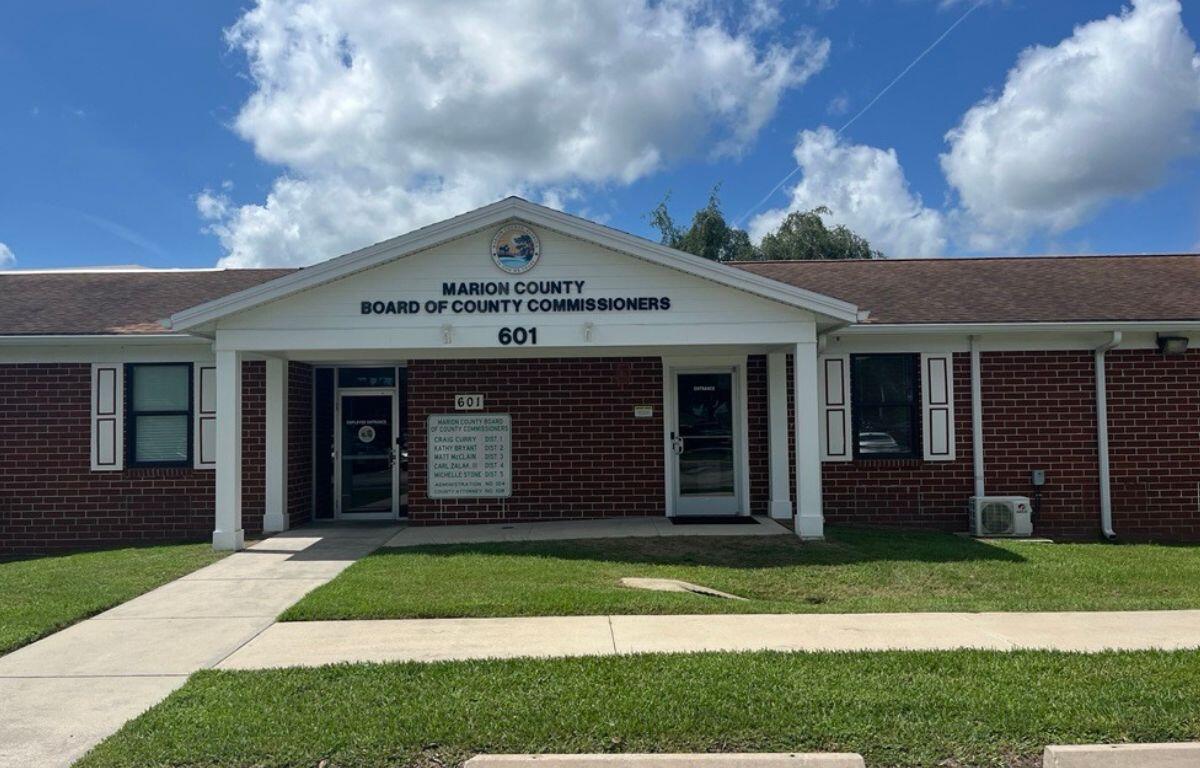
The current Belleview Health Department building was installed in 1998 and has about 5,000 square feet of interior space. When the facility was originally installed, it was a full-service clinic.
“That’s when we covered the primary care component,” said Mark Lander, Florida Department of Health in Marion County health officer administrator. “In 2011-2012, when we got out of the primary care piece of it, Heart of Florida came in and shared it for several years. About three years ago, they moved into another location.”
Keeping up with the growth
The facility currently serves as the Special Supplemental Nutrition for Women, Infants and Children (WIC) site, said Lander. At the site, the Florida Department of Health in Marion County has done some limited back-to-school immunizations and other programs at the location to serve that southern end of the county. Right now, with WIC being the major component at the site, it serves about 25 percent of all the WIC clients within Marion County, which is about 1,700 clients, 1687 currently.
Last fiscal year, the department provided more than 26,000 services out of the facility, said Lander. The numbers have steadily increased from 23,000 three years ago, to nearly 24,500 two years ago, and this past fiscal year, the number was 26,444.
“Some of the concerns that we have with the building, there are repairs needed, there are some leaks in the roof, so we’re going to need some work done out there for that,” said Lander. “There are divots and pits in the floor. I’m not sure how old those tiles are. I don’t know if they’re original, but they’re pretty old. The ramps and railings would need to be replaced, that we’ve seen around that building.”
A bigger building
Some of the room sizes are extremely small at the facility, 72 and 81 square feet, creating a challenge when moving clients around, said Lander. The hallway access has been limited. The hallways are about 3 foot 8 inches in width. The hallways don’t meet the Americans with Disabilities Act compliance, which is 60 inches. There would have to be larger hallways.
“What we’ve proposed for a buildout, is 8,400 square feet, and that would be the interior space,” said Lander. “We’re adding a training/meeting room, additional storage space,” said Lander. “We’re pushing those exam rooms from 100 square foot. We’ll have several that would be 150 square feet, and they’ll serve a dual purpose for client confidentiality and as an exam room, so there are several that are going to be a little bit larger.”
The hallway access would be increasing the minimum size, one size was going to be five feet six inches, which would be 66 inches, meeting ADA compliance, the other was going to be five foot seven or five foot eight inches in width, said Lander. There’s also a proposal for a WIC drive-through, and it would be a better opportunity when serving the department’s special needs clients.
“Some of the children coming in may be immuno-compromised, a waiting room may not be the best place for them.” said Lander. “So, we can service through the drive-through. It’s one of the plans that we’re adding with this building. We do want to increase services at the site as well. We looked at some of our client numbers, the non-WIC clinical services, we have over 6,000 clients that come from that end of the county, about 48 percent of our clinical services there are clients. And last year, we provided over 90,000 services to those clients, which was about 45 percent of all services provided to the clinical side of our shop.”
Increasing the ability to offer more services
The department has looked at having the facility serve as a site that would be opened up to more immunizations, back-to-school programs, disease investigation, health screenings, A1Cs and other health screenings and a family planning component, said Lander.
“We do want to position some environmental health down there at that southern end of the county, especially when you look over at Marion Oaks and that area which is growing,” said Lander. “There’s the potential, it’s our understanding that we’re looking at the septic tank program, at least taking it back in-house. If that happens in July, as I think it might, we’re going to need to position someone there. It limits travel time, creates opportunity for more field time. We would house those inspectors in the southern end of the county.”
They’re also looking at vital statistics, the birth and death records. Up until a year or 18 months ago, a client would be able to get the birth records at the tax office in Belleview, but when there were some issues with the IT structure that were statewide, those services were cut off, said Lander. The service for birth certificates is supposed to be brought back, and they would like to have the birth and death registries at the new facility, providing another access point.
“Last year, we served over 11,000 clients, 65,000 services, just out of vital statistics,” said Lander. “Some of those we’d be able to reposition, instead of them having to drive all the way up to get those records out of Ocala, you’d be able to get those records out of the south end of the county.”
Then there are programs like Healthy Start, where there are a lot of parenting opportunities, parenting classes, through WIC. There are also breastfeeding classes that could be offered at that location, said Lander.
“Our design with that community room we’re looking at, and even with the back-office space, and if there was the potential for a county office that needed to be down there, we talked about the paramedicine program being housed at that location, but there’s also the training room to offer other services for community organizations that wanted to come in and provide services to our clients and to other clients in that area,” said Lander. “That’s the scope that we were looking at, taking it beyond the WIC program. We know those other services need to be in that location where people are not having to drive to Ocala, where we could meet them down at that site.”
The Florida Department of Health has the designs. There’s the potential for a modular unit, and there is the option of leasing some space. But what’s been talked about for the past two or three years is putting some money aside in the health fund to help fund a portion of this building, said Lander. There have also been some discussions at the hospital district.
Design and options
“We were tasked a few years ago with trying to develop a site build, building that would fit their needs, as they expand their services in that location, they felt that location was the right site,” said Jared Goodspeed, Marion County director of facilities.
They engaged an architect, Monarch Design Group, that would increase the current 5,400 square feet to 8,394 square feet, said Goodspeed. The estimated cost of the construction provided by Ausley Construction previously estimated that it would have been a $4 million project.
- Low: $3,350,000
- Mid: $3,599,000
- High, $3,948,117
- Design: $443,920
- $285,988 has been expended to date
- 100 percent schematic design complete
- On Hold: Working on 30 percent Construction Documents
- Kimley-Horn is the civil engineer
The design criteria are larger, with wider walkways, more rooms, classroom, training, to fit the needs of the current services that they would like to provide, said Goodspeed. The new building would go at the existing location. There would be additional parking and walkways added, and pathways to get inside and outside the building. The proposed pre-engineered building would be on a slab. A lower elevation would have the ramps as there are concerns with the current building ADA ramps access at the location.
Options were also explored, including that of a modular building. Ausley Construction provided a range between $2.2 million and $2.7 million, to demo and reinstall the foundation and the new modular buildings at the location, that would possibly save about $1 million, potentially $500,000 to $1 million by going modular, but would more than likely have the same issues the facility is currently experiencing, if they were to go that route.