


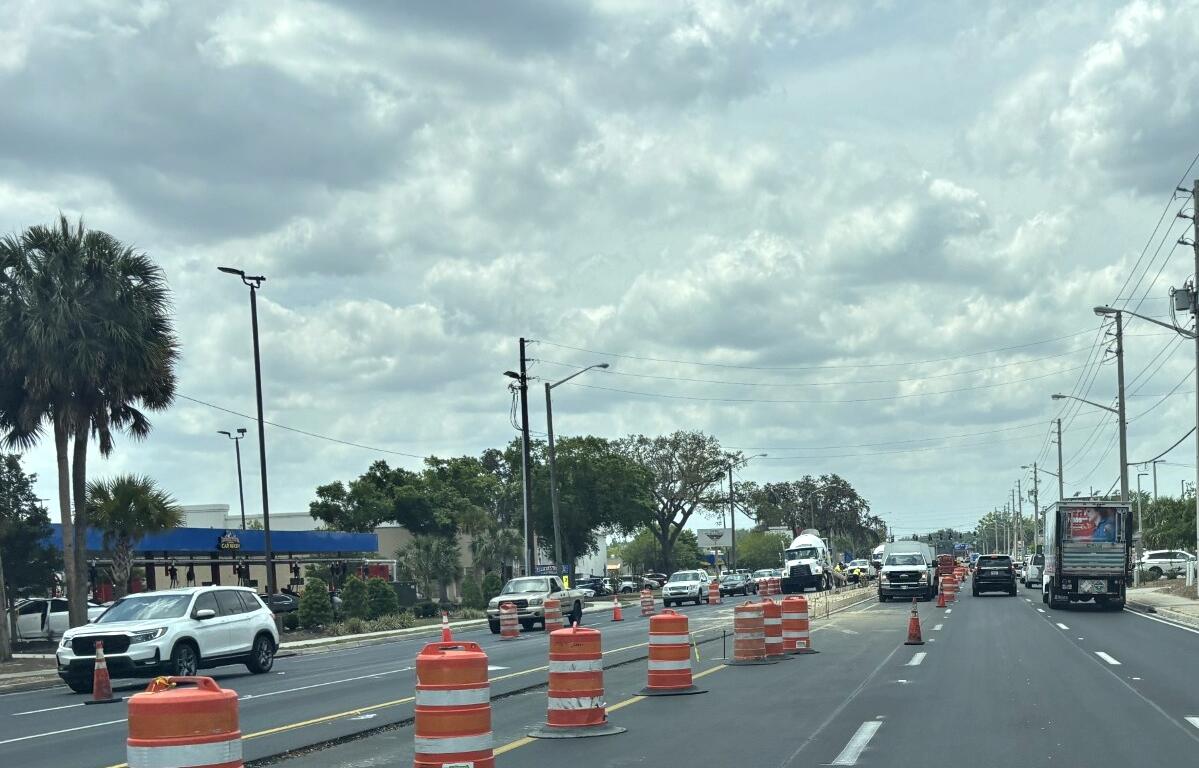

OCALA, FL (352today.com) – As traffic grows heavier and roads strain to keep up with new development, Marion County leaders have taken a major step to secure long-term funding for transportation improvements. On May 23, 2025, the Board of County Commissioners approved a new ordinance that raises transportation impact fees to help cover a projected $490 million shortfall in road and infrastructure funding. The move is aimed at ensuring safer, smoother travel for residents in the years ahead – but not without debate over how it might affect housing costs.
Extraordinary circumstances and long-term planning
The ordinance was built on findings presented during two workshops held earlier this year, where county staff and consultants discussed the growing funding gap for transportation infrastructure.
“This commission has a responsibility that they are setting this community up for long-term success,” said Commission Chair Kathy Bryant.
Bryant noted that Marion County faces $1.4 to $1.5 billion in transportation and infrastructure needs over the next 20 years, but only expects to collect about $900 million in revenue.
Key highlights from the study by Benesch consultant Nilgun Kamp:
- Shortfall range: $230 million to $248 million in capped scenarios
- Surplus range: $140 million to $190 million if fees are implemented at full levels
- The study’s findings and projections were entered into the county’s official record
Fee schedule: gradual increases planned
The board approved the following schedule to gradually increase impact fees over four years:
- Oct. 1, 2025 – Fees begin at 70%
- Oct. 1, 2026 – Increase to 80%
- Oct. 1, 2027 – Increase to 90%
- Oct. 1, 2028 – Increase to 100%
Heather Encinosa, outside counsel for the board, confirmed the phased increases are allowed under the extraordinary circumstances clause and will be incorporated into the final ordinance.
“We will get those numbers and incorporate them into the ordinance,” Encinosa said.
Pushback over housing affordability
The ordinance drew mixed reactions from the public and officials. Numerous letters were submitted by local governments, law firms, and the Ocala Metro Chamber and Economic Partnership. While many supported the need to fund critical infrastructure, some voiced concern about unintended consequences.
“This is a mistake, according to our own study, you’re already going to 100% and you only need 84%,” said McClain. “This hurts housing affordability for first-time homebuyers. This is raising property value which in turn raises property taxes. This only helps the big developers and the big builders. It hurts the small builders.”
Development agreements and flexibility
The new ordinance also modifies development agreement terms:
- Developers may request 20-year agreements
- Language was added to allow transferability, giving flexibility for project changes
County officials said the changes were necessary to maintain momentum on growth while still holding development accountable for infrastructure costs.
More news that matters to you…
-
352 WEEKEND WEATHER FORECAST NOV. 13-15: Moving back into the 60s with no rain in sight
The National Weather Service says nights in the 40s, and North Central Florida is here for it.
-
352 WEEKEND TOP PICKS NOV. 13-15: Seasonal Fun
Enjoy a weekend full of seasonal fun with crafts fairs, markets and more.
-
Student arrested over school shooting threat at Fort King Middle School in Ocala
Yesterday’s report of a potential school shooting threat caused a significant disruption.
-
Marion County School Board approves $52.5 million Belleview Elementary replacement and $6.4 million HVAC project at Belleview Middle
The board authorized a new 950-student campus combining Belleview Elementary and Belleview-Santos Elementary, along with the first phase of a major cooling system upgrade at Belleview Middle School.
-
Marion County School Board approves modest raises for non-represented staff amid tight budgets and state funding shortfalls
The Marion County School Board approved roughly 1% raises for non-represented employees after discussing tight budgets, inflation, and more than $50 million in annual general-fund shortfalls for transportation and exceptional student education.