



OCALA, FL (352today.com) – The Marion County Public School Board was presented with an internal audit update by RSM US, LLP, an audit, tax and consulting firm, at their administrative briefing and workshop on Thursday, Dec. 18, 2025.
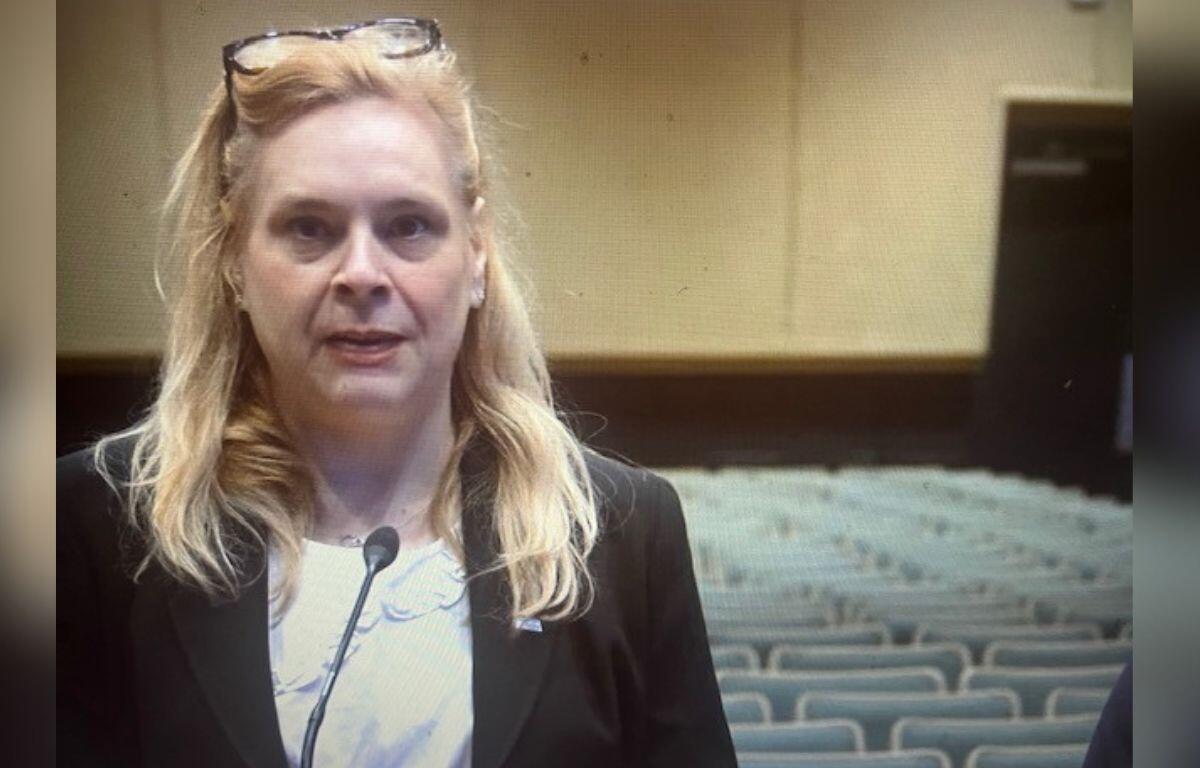
Clara Ewing, the RSM US, LLP’s managing director, presented an overview of the company’s risk radius, wherein RSM designates various risk components as high, moderate and low. How should the district prioritize the observations that they’ve identified? RSM did their follow-up session on their previously issued reports, covering data protection, time keeping, stimulus funding that’s still open, and where their observations were ready for follow-up. Employee recruiting and onboarding, purchasing and procurement will be in the next phase of follow-up, said Ewing.
“If you recall, we have the estimated completion dates on all the reports that we issued and the observations, and when management intends to remediate, and those are not ready yet, but they’re on track for timing,” said Ewing. “The first one is timekeeping. We issued this one two years ago, in Sept. 2023, we were able to close one observation this round, and there are four that are still open. But the story around the four that are still open, the district is in the process of implementing a new system.”
The system, True Time, is going to help with the enhancements and the observations that RMS had noted before, said Ewing. Those observations concerned the manual timekeeping process, timekeeping documentation, time authorization; the new system is going to help strengthen those controls and hopefully remediate the observations that were identified as part of that process.
“They’re in a very phased approach right now, which they should be, and it takes time when you’re implementing a new system, things like this take time to make sure that it’s working effectively, you have various vast amounts of employee, employee classifications, employee types, so not everything fits one kind of classification,” said Ewing. “You have to make sure that the controls and the processes work best for the various types of individuals and classifications you have working at the district.”
Monitoring details
The internal audit of the planning, design and construction process, which is one of RSM’s traditional internal audits, was presented by Matthew Blondell, RSM US, LLP’s risk consulting director, whose primary focus is construction. RSM consults on construction for a lot of government services clients, school districts, counties, cities, state agencies, and also on the commercial side, said Ewing.
“He’s looking at construction processes day in and day out, with a variety of entities, and has been doing this for more than 10 years,” said Ewing.
Blondell presented the results of the planning, design and construction audit. RSM looked at the entire process that the school district uses for planning, procurement, construction project management, invoice review, change order review, all the way through to close out, and sampled a selection of projects that the district has most recently gone through.
The auditor understood that there were some changes made over the past few years to many of these processes, so RSM primarily focused on what the current process is, rather than going back too far to the prior processes, said Blondell.
“What we did was select a sample of projects that had recently gone through the procurement process, obviously those had not necessarily completed through the closeout process, so we selected a separate sample project, focusing on the project management process through closeout,” said Blondell. “We approached this in multiple phases, the first phase included walk throughs to understand what the current processes are, looking at procedural documents that the district has, reviewing that with the team and understanding what the controls are to identify those primary controls, and how they’re intending to be operating,”
Attention to detail
There were four moderate-rated observations at a fairly high level, said Blondell. The first one is related to contract cost support documentation. The district’s construction contracts are currently structured in a way that requires documents to support actual costs incurred; in many cases that can mean a simple invoice from a vendor, but other cases can be rather complicated, when it comes to labor and types of transactions that a construction manager might use to support the actual labor costs.
“As is relatively common in government entities and the industry as a whole, the district has elected in many cases to negotiate things like labor rates and insurance rates as opposed to considering them at cost,” said Blondell. “This is an effective way to do this to save administrative burden on the team, so you can negotiate things up front, to make sure that everybody is understanding and feels the rates are appropriate for the marketplace. We understand that the district has been doing that. However, it just didn’t see a connect between the actual contract documents and the negotiated rate.”
There are two options. The school district can continue to require the construction managers to provide everything at actual cost, to reduce the administrative burden on the team throughout the projects. The other option would to be conduct audits at the beginning of the project or the end of the project to validate that the construction manager is billing those more complicated things than actual costs, like labor and insurance, or if they are going to negotiate specific rates to execute an amendment to the agreement to just very clearly state what those rates are, said Blondell.
“Those are the two options that we would recommend the district do,” said Blondell.
Based on the conversations with management, and management’s response, it appears that the district is going to lean toward a hybrid approach with some of the contracts that are currently ongoing–they’re intending to conduct some audits at the end once they’ve reached closeout, whether they can validate there is any recovery opportunity there, said Blondell. In some cases, moving forward, the district may choose to document these negotiated rates in actual contract amendments, stating very clearly what they’re supposed to be.
RSM didn’t have any observations related to how change order or how pay applications were processed, and there didn’t seem to be concern in that respect. However, RSM did note that the processes that are currently in place being used by the team is very manual, with a lot of spreadsheets and paper documents. They’ve seen larger school districts who’ve recently moved toward using construction project program management to corral all of the project data and information into a software system that will allow for data mining later on, said Blondell. Vendors can upload contracts, workflows can be established where vendors can upload their documentation, so they can be reviewed in a structured way, which on the backend allows for data mining.
“We recommend the district explore some options for getting project management software,” said Blondell, with management’s response being supportive.
The power of partnerships
The third need was related to “high need” maintenance asset reporting; this concerns the decisions that need to be made when larger assets near the end of their useful life and are becoming too costly to maintain rather than to replace. Those decisions need to be based on specific data, said Blondell.
“As we understand, there’s a pretty frequent, informal, anecdotal discussion between the facilities and the maintenance departments, to identify things that are high need, like assets that may be aging or that might be costing more to maintain and would make more sense to replace,” said Blondell.
RMS recommended supplementing those already recurring conversations with some data-driven information on what to replace instead of continuing to repair, said Blondell. Management’s response was supportive of the recommendation and would implement a quarterly process where the reports will be run in the maintenance system to drive conversations with the maintenance and facilities team.
Processes and practices
The last observation was in relation to the current decentralized administration of construction procurement, said Blondell.
“Right now, there is a collaborative effort between facilities purchasing and legal to go through a construction procurement, statutes, district policy, construction procurements are pretty unique in terms of how procurements are done, and there is certainly an understanding and a need to have a significant facilities involvement as an expert there in the process, however, understanding that all statutes change, and that procurement requirements from the statutory level and from the board policy level are going to require a strict, regimented set of rules, and procurement should be involved,” said Blondell.
RMS recommended continuing the collaboration but defining who is responsible for which specific task, said Blondell.
The district is in the process of creating a contract manager position that will focus specifically on construction procurement.