


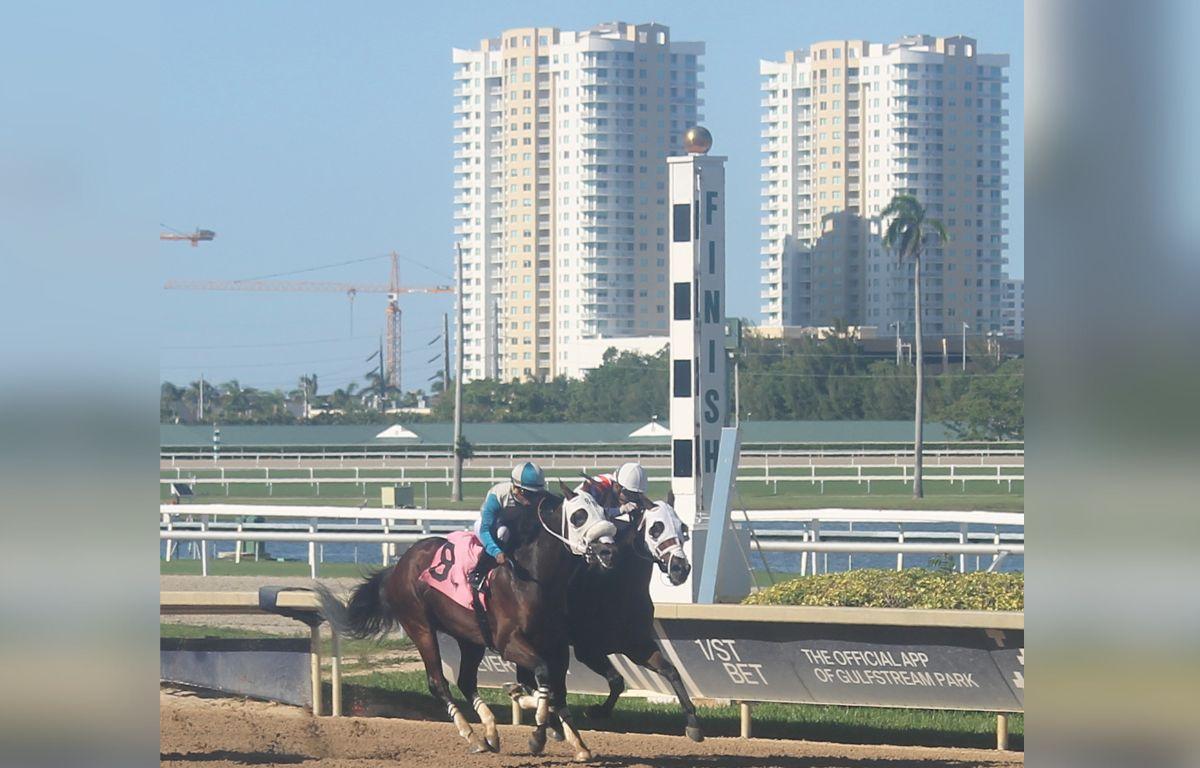

OCALA, FL (352today.com) – The companion bill to HB 881, which passed in the Florida State House of Representatives and would allow Florida thoroughbred tracks to cease racing while keeping their other gambling facilities in operation, took a far different turn in the state senate. SB 1564 didn’t receive a hearing before the Florida Legislature’s 2026 regular session came to an end on Friday, March 13, 2026.
However, even this recent development doesn’t provide all the stabilization the thoroughbred industry needs in Marion County for the solid future it deserves, said Lonny T. Powell, Florida Thoroughbred Breeders’ and Owners’ Association executive vice president and chief executive officer.
For the FTBOA, Marion County’s breeding industry and the statewide thoroughbred industry, there was a sense of relief as the FTBOA predicted even before the recently concluded legislative session, that the movie plot would stay true to the prior year, said Powell. One of the plot twists in this year’s session was the movie was shorter during this year’s legislative session. However, it’s possible that a decoupling bill can be introduced again, even as early as next session.
“We are thankful but humble victors in the decoupling fight, but there are still sessions ahead and we remain forever vigilant,” said Powell. “But the good news especially here in Marion County, where thoroughbred racehorses have such a major impact along with the rest of the equine industry, it gives our farms, our breeders, our economy, where we’re 22 percent of the county’s gross domestic product, when you look at the total of billions of dollars of economic impact we have and the tens of thousands of jobs that the industry provides.”
Issue of interest
Powell has been in Ocala for more than 14 years, and for half of that time, there has been serious debate in Tallahassee regarding the topic of decoupling, running concurrently with the breeding season, making things more challenging; however, he looks at it as a positive experience, a learning experience, and a moment of pause in all the action.
“We have a little bit of stability,” said Powell. “We have a year ahead that we’ve put some economic programs in place just for these very times, reworking an incentive program for Florida-sired Florida-breds, our first ever out-of-state Florida-bred incentives, our complimentary Red Bull registrations, we’re doing everything to posture for this year because of these results. We’re so appreciative, but we still have more session to go. But for right now, we humbly appreciate those who made it possible for this bill not to move forward, the plot was nicer whereas it didn’t even make it into the senate, last year it made it into one committee. We so appreciate the support that we have in every part of the government.”
The industry, and the FTBOA as an association, has a responsibility to use whatever tools and assets are available, because there’s a need to work toward the future with solutions as it is a draining process, said Powell.
“With this session, at least from an industry standpoint, it was a much easier one to navigate,” said Powell. “Our industry stakeholders are truly in alignment on the decoupling issue and any bill that had that decoupling and that type of language in it. I tip my hat to the folks at OBS, the Tampa HPBA, the folks from TRI (the Thoroughbred Racing Initiative), the Florida Horseman. Those folks were in unison. I know, all of the years that I’ve been up there. It made the job so much easier because last year was much more complicated. We were able to target the weaknesses of the legislation and message in unison, and that’s a tip of the hat to all of those stakeholders.”
Exploring innovative ideas
A wholly owned subsidiary of the FTBOA, simply called Ocala Thoroughbred Racing, has the state’s only remaining thoroughbred racing permit. It has existed in state law since 2011, said Powell.
“Toward the end of last year, we officially announced we were taking it off of ice because we had serious concerns after the session before with both racetracks.” said Powell. “Just like this year, with both [Florida] racetracks (Gulfstream Park and Tampa Bay Downs) pursuing decoupling, we had to take control of our own future, and that wholly owned nonprofit subsidiary, Ocala Thoroughbred Racing, is very likely part or all of the solution. We’re going to, after this session concludes, step up our efforts to another level to come up with an economically viable and first competitive model. That’s going to be a big part of it going ahead.”
However, the rest of the industry is also being taken into consideration, with different elements needing to be adjusted, no matter how the existing tracks may run or if there are future tracks–language that needs to be re-tweaked in the statutes to be modern, fair and more inclusive of not just the owners and trainers, but also the breeders, the farm owners, everyone in that agricultural part of the business. It needs to be more centric to that, said Powell.
“We have to somehow take control of our own destiny,” said Powell. “If the horse people don’t control the destiny moving forward then nobody else is going to assure that, that industry is going to go forward, and I say that with cautious optimism for our industry.”
There have been so many people, globally, who have shared their thoughts with Powell, and if there’s any place that justifies some type of horse-centric facility, it’s the Horse Capital of the World. Under current law, the Ocala Thoroughbred Racing permit is the only one that exists, and with that permit, the track must be based in Marion County, which would create additional jobs and have a greater economic impact. However, at the present time, nothing is being taken for granted and there is still a lot of work to do.
“We will not build something that can’t be competitive with purses, and doesn’t work financially,” said Powell. “We have too much knowledge, expertise and history to something like that. We have plans to pursue, and we’re excited [about] what it could mean to Marion County. We would go through the necessary processes to make that happen, it’s not a guaranteed thing, but so far, we’ve done pretty good at taking some shots when the odds were against us and doing okay. This is going to be a big part of what we do and think moving ahead, it’s starting to come forward with those solutions. A Florida thoroughbred industry that is basically speaking with one voice about the need and the importance of live racing, about the importance of agriculture, about the importance of the economic impact, and when it comes to a county like Marion County, it’s in our fiber, it’s our culture. It’s just too special of a signature industry, for Florida and Marion County, and we have to make sure it continues. When we benefit our industry, we benefit home and we benefit Marion County, the surrounding counties and the whole state.”