


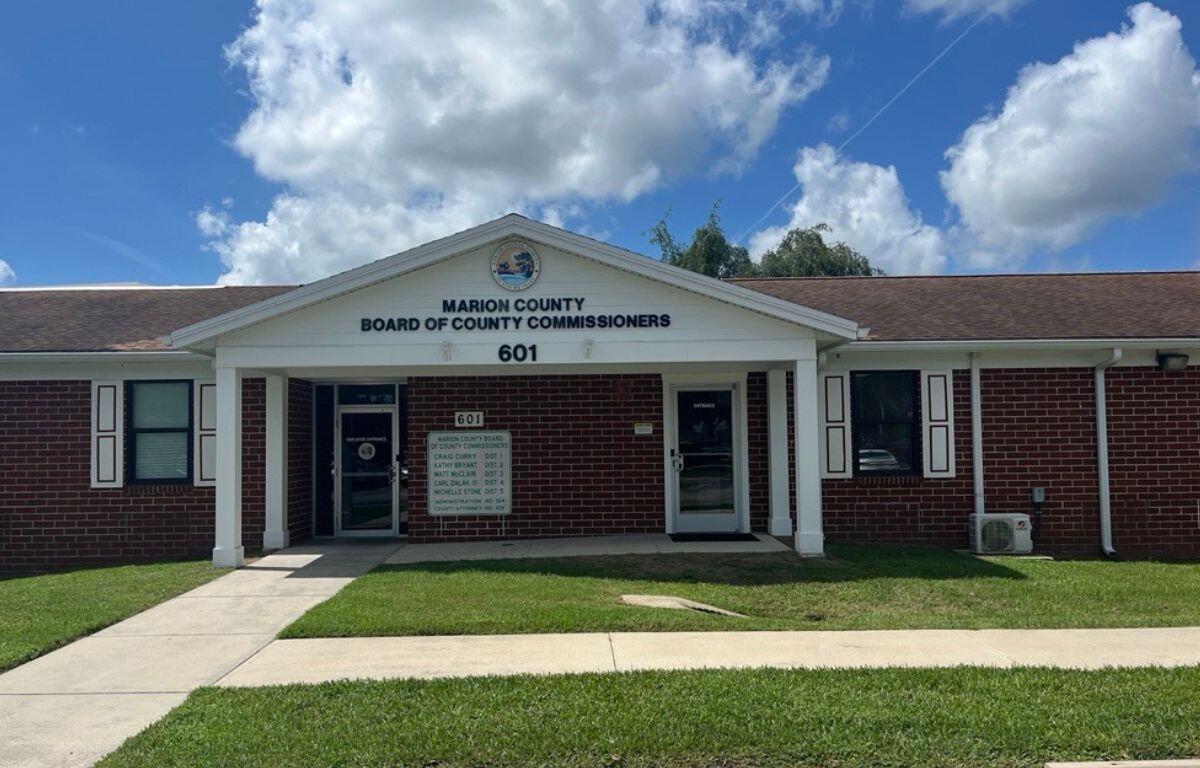

OCALA, Fl (352today.com) – A public hearing was held Tuesday, March 17, 2026, at the Marion County Board of County Commissioners meeting, for the Canterwood Acres Community Development District, which was established by an ordinance that was adopted by the board, by a unanimous 5-0 vote.
Canterwood Acres is a project that consists of two phases, east and west. These were a pair of planned unit developments that were previously approved by the Marion County Board of County Commissioners.
The owner is SW 100th, LLC and the applicant is Brian K. Lamb, Inframark, LLC. The location is the south side of SW 100th St. between SW 49th Ave, and SW 62nd Ave. Road.
The proposed community development district, Canterwood Acres is 100.81 acres. To the west, the Canterwood Acres west, was a zoning case in 2021 and is 55.75 acres. Their PUD approval was up to 222 units, but they’ve actually proposed 203. They have a pool/clubhouse and sports facilities proposed. The east, a zoning case in 2021, is 45.06 acres, where they have approximately 180 single-family homes proposed. They have their clubhouse/pool facilities that have been proposed, as well as an athletic field and some outdoor gathering space. The two subdivisions are currently under construction, said Chris Rison, Marion County growth services senior planner.
The project is comprised of two subdivisions that are progressing in tandem; they will be under the CDD, said Rison. Community Development Districts are provided for by the Florida Statutes, they’re a version of an independent Municipal Service Benefit Unit or Municipal Service Tax Unit type situation, and then they can be created by the local government. They are independent functional entities. They function as a limited form of a local government. They’re granted powers through their work with their county. Their principles are eligible to design and construct improvements, and they can function in addition to any possible homeowners’ association. They also provide for the enforcement of some of the association’s activities. They’re governed by a board of supervisors that’s initially appointed by the developer when they create the CDD. Over the course of time, the supervisors rotate off, and new members come in from the community that are elected by the residents and the property owners.
The estimated cost for this project will be part of the bonding and funding activities, that they will look to offset, that will then be assessed back to the applicant. Under the county’s current provisions for the land development code, when creating a new subdivision, the county looks for either a HOA, a CDD or MSBU, and this one of the avenues the applicant is using.
The CDD operates much like a local government, with the exception that it doesn’t have any powers related to zoning or law enforcement–in that regard there will always be a need for an HOA with a CDD-type of community. The CDD is most cases can take care of 98 percent of the operations within a district like Canterwood Acres, said Brian Lamb, Inframark, LLC, the applicant and representative for the CDD.
The HOA will have a di minimis involvement in that it will operate the deed restrictions and enforcement, said Lamb. Generally, in some of the larger communities, the district will try to retain operations of the majority of the public infrastructure or the community infrastructure, with the HOA only retaining any infrastructure that aspires to retain as private in nature.