


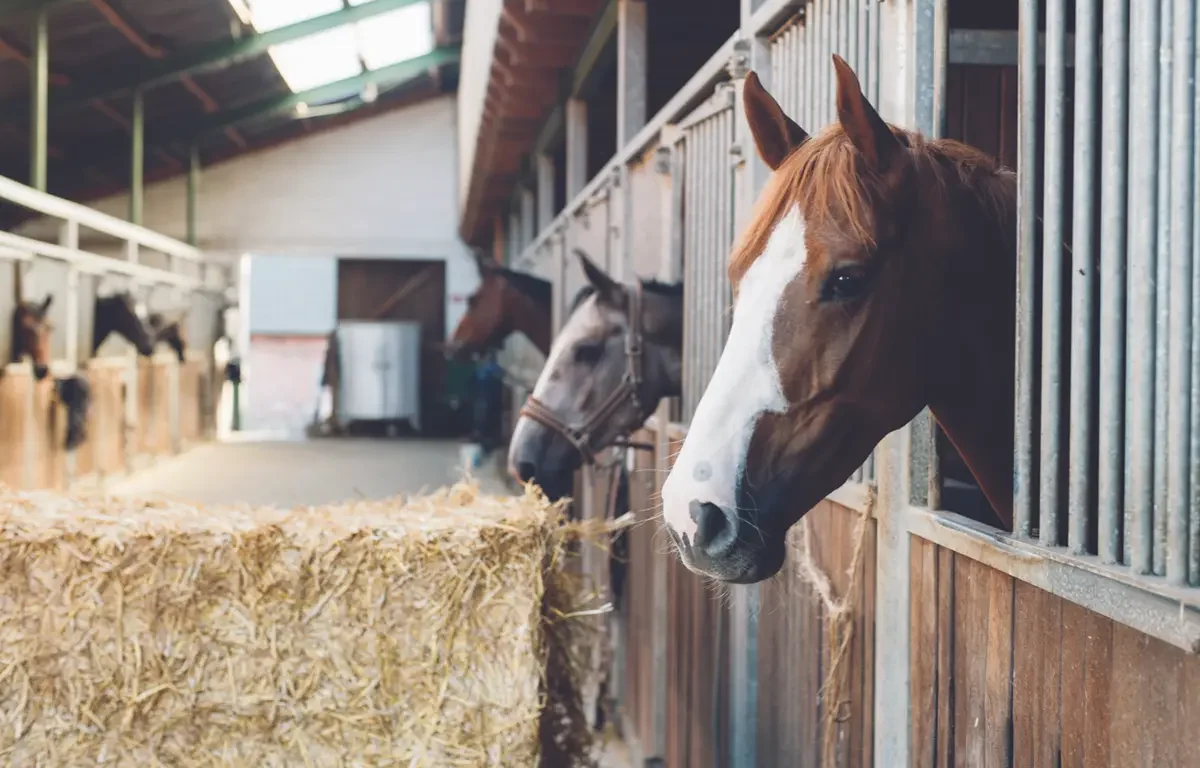

WILLISTON, FL (352today.com) – Hay and pasture are the foundation of a horse’s diet. A healthy mature horse eats roughly 1.5 to 2 percent of its body weight in forage every day, according to Kentucky Equine Research. That is 15 to 20 pounds of hay daily for a 1,000-pound horse, week after week, all year long.
In North Central Florida, that foundation faces four local pressures that generic feeding advice tends to ignore: heat, humidity, sandy soil, and storm season. This guide walks local owners, breeders, and barn managers through what actually goes wrong with hay here and how to stay ahead of it.
Start with quality, not the sticker price
How can you tell if hay is good?
The cheapest bale in the listings is often the weathered, the dustiest, or the highest in sand, and its hidden costs show up later: hay the horses refuse and waste, supplements to fill nutritional gaps, and vet bills when something goes wrong. Judged by the cost of a day of good nutrition rather than the price of a bale, better hay is usually the cheaper buy.
UF/IFAS Extension‘s quality markers are things any owner can check by opening a bale: it should be leafy rather than stemmy, hold good color, smell fresh, and be free of mold, dust, weeds, and foreign material. On a lab analysis, good horse hay generally runs about 30 to 40 percent ADF and 50 to 65 percent NDF, the two fiber measures that track digestibility.
When in doubt, do not guess from color. A forage test from a core sample of the actual lot tells you protein, fiber, and sugar content for a modest fee, and takes the argument out of it.
The humidity problem: storing hay so it does not spoil
How should you store hay in Florida’s humidity?
Hay that cured beautifully out west can mold in a Florida barn within weeks. Our humidity keeps bales from ever fully drying out, and moisture is what mold needs.
The fixes are simple and mostly free. Store hay off the ground on pallets so moisture cannot wick up from below. Leave room for airflow around the stack rather than packing bales tight against walls. Keep it under a roof, out of rain and direct sun. Feed first in, first out, so no bale sits long enough to go bad.
One risk deserves special respect: Damp hay can heat as it cures, and a hot, tightly packed stack can ignite on its own. Never stack hay that went up wet, and if a stack smells caramel-sweet or feels warm deep inside, pull it apart and get guidance before it becomes an emergency.
The local hazard most guides miss: sand
Why does sand colic matter here?
On our sandy soils, horses pick up sand as they eat, and sand that accumulates in the gut is blamed for a meaningful share of colic cases in sandy regions, according to Kentucky Equine Research.
The good news is that the fix is specific, and a University of Florida feeding study points right at it. Horses fed grass hay on top of sand consumed essentially no sand, while horses that dropped grain onto bare ground and retrieved it drove their sand intake up sharply. In other words, it is mainly the grain-off-the-ground habit, not hay feeding that loads horses with sand.
So feed off the ground: Use mats, tubs, or feeders, and clean up spilled grain rather than letting horses lip it out of the sand. Keeping forage in front of them helps too, since steady hay intake helps move ingested sand on through.
Match the hay to the horse
What hay is best for an easy keeper or metabolic horse?
There is no single best hay, because horses do different jobs. Performance horses burn more energy and often earn richer forage. Seniors with worn teeth need softer, leafier bales they can actually chew. Broodmares in late pregnancy and early lactation have some of the highest demands on the property. Hard keepers need calories; easy keepers need the opposite.
Florida has a large population of easy keepers and metabolic, insulin-resistant horses, and they need particular care. Kentucky Equine Research recommends forage with a sugar and starch content, measured as NSC, of about 10 to 12 percent or less for these horses, fed at roughly 1.5 to 2 percent of body weight. A forage test is the only way to know a hay’s sugar level; you cannot see NSC. Lower-sugar options such as teff and more mature first-cut grass hays often suit these horses well.
Change hay gradually
A horse’s hindgut digests forage with a microbial population adapted to the current feed. Switch hay abruptly and those microbes cannot keep up, which raises the risk of digestive upset and colic. Make changes over 7 to 10 days, mixing more of the new hay in each day.
That is easier said than done in Florida, where supply shifts with the seasons and a storm can interrupt deliveries overnight. Buying consistent lots and planning purchases ahead means a change of hay happens on your schedule, not the weather’s.
Storm-season hay prep
Hurricane season is the time of year when hay planning matters most. The University of Florida’s Large Animal Hospital and UF/IFAS recommend keeping at least 72 hours of hay and feed on hand, and ideally a week’s worth, in case roads or power go out. Plan on roughly 12 gallons of water per horse per day during an outage, since automatic waterers stop with the power.
Before a storm, get hay up on pallets, cover it with waterproof tarps, and store grain in watertight containers. Afterward, be ruthless: Do not feed hay that got wet, smells musty, or is contaminated with sand or debris. A ruined bale is cheap compared to a colic.
Questions to ask any hay supplier
- Where was it grown, and which cutting is it?
- Has it been forage tested?
- How has it been stored?
- Can I get the same type and lot consistently?
Quick answers for local owners
What is the best hay for horses in Florida? The one matched to the individual horse: clean, mold-free, and bought from a consistent supply. For easy keepers and metabolic horses, that usually means a tested, lower-sugar grass hay.
How can you tell if hay has gone bad? Trust your eyes and nose: mold, heavy dust, a musty or fermented smell, discoloration, or damp, warm spots in the stack all mean do not feed it.
How should you store hay in Florida’s humidity? Off the ground on pallets, with airflow around the stack, under a roof, used first in, first out.
How much hay does a horse need per day? About 1.5 to 2 percent of body weight in forage, per Kentucky Equine Research. For a 1,000-pound horse that is 15 to 20 pounds a day.
How do I keep my horse from eating sand? Feed hay and especially grain off the ground in mats, tubs, or feeders, and keep forage in front of them.
The bottom line
Good forage, stored right and fed to the individual horse, is the cheapest health insurance an owner buys. In horse country, it is worth doing well.
(NOTE: This article was contributed. Delmar Ropp is a fifth-generation farmer and co-owner of Farmers Direct Hay and Feed, a family farm in Williston that grows and ships premium Western hay and helps North Central Florida horse owners match the right forage to the right horse.)