


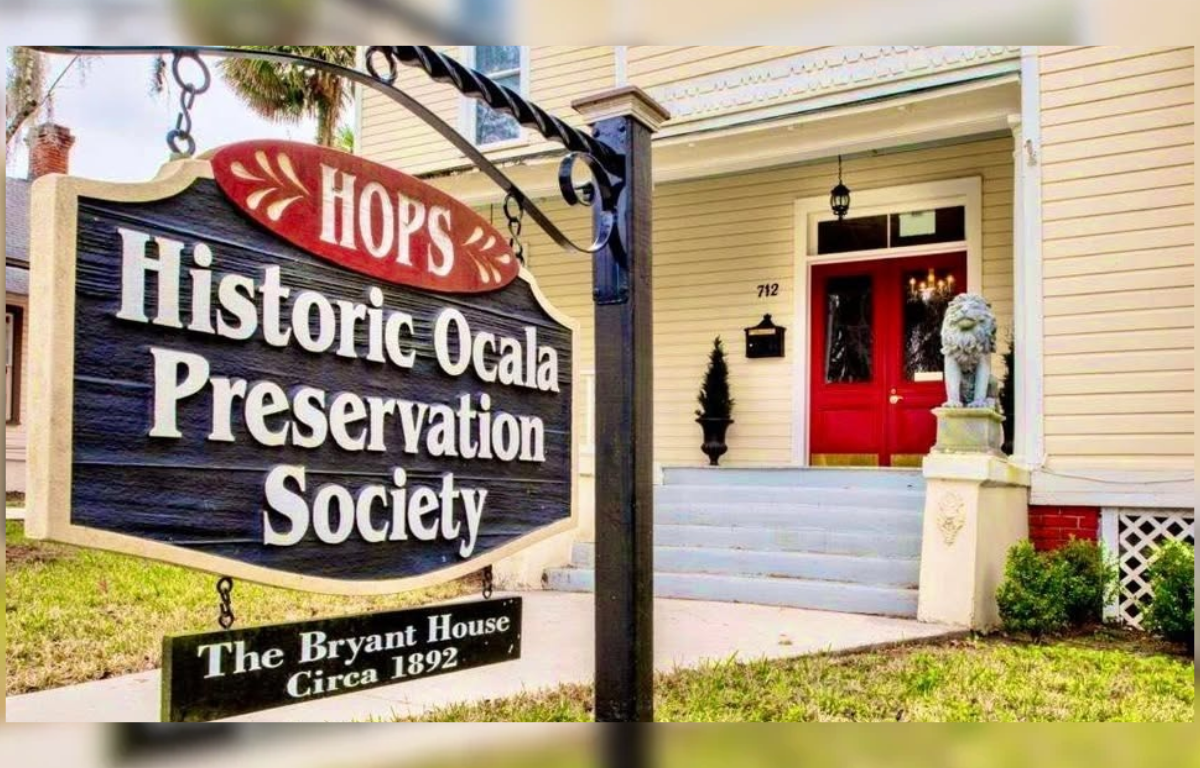

OCALA, FL (352Today.com) – The second floor of the Bryant House is starting to slope.
From the sidewalk on East Fort King Street, you can see it: the upper level of the 1892 Victorian Vernacular house is settling just enough that the lines no longer sit true. Inside, the list of needed work has grown from the original plan for the front of the house to a full restoration that includes structural integrity, windows, flooring, ceilings, the foundation and the porch.
That is the reality Amy Davidson is managing as administrative and marketing coordinator for the Historic Ocala Preservation Society and caretaker of the house. The group launched the “Bring Back the Bryant” campaign in September to fund the work. So far, it has raised about $1,000 and is actively seeking corporate sponsorship.
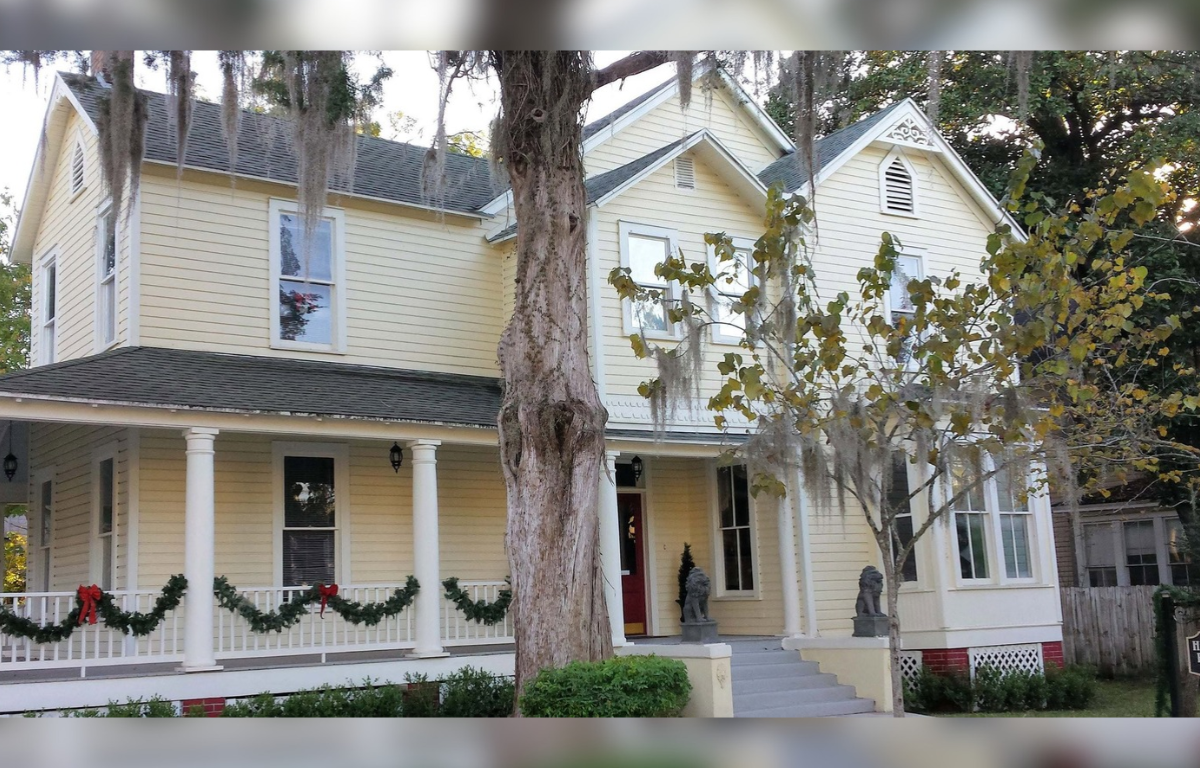
“When I signed on for this position…my primary focus was to raise about $60,000 just for the front part of the house that’s sloping,” Davidson said. “And as we went through the house, we discovered more and more damage, so it really is extensive. We’re talking everything from window sills to…the actual structural integrity of the building. We’re not in danger. You know, we’re not going to, like, fall apart literally, but it could lead to that without care.”
The second-floor stabilization was prioritized first because it is both structural and visible. Delaying the work, she said, means continued wear and tear and the risk that more damage develops. It also pulls resources away from other HOPS projects.
“As an organization, it really would interfere with the advancement of our mission, and our mission includes a lot of ambitious projects that we’ve had to put on the back burner as a result of trying to preserve our headquarters,” she said.
HOPS purchased the house in 2013 and has used it as its headquarters and a place to house local archives. Some restoration work was done then, and windows were upgraded in 2021. The house is also tied to the family of former Florida Governor C. Farris Bryant, whose grandfather built it. Davidson sees that connection as part of a larger story.
“We can have progress, and we can have a vested interest in preserving history,” she said. “I think there is enough of everything to go around that, even if you’re not a huge history buff, I think being a part of HOPS and being a part of this mission to save the Bryant House kind of secures everyone’s legacy in the story of Ocala.”
She is careful to distinguish HOPS from the city’s Ocala Historic Preservation Advisory Board. The advisory board handles permits and codes as a volunteer municipal body appointed by the city council. HOPS focuses on stories, archives, education and advocacy. Because the Bryant House sits in the historic district, the restoration will still have to follow applicable city codes and permits.
Davidson describes her role as public relations advocate and crisis manager. Part of the challenge, she said, is that HOPS was long identified with historic home tours, but homeowners have become more protective of their privacy. The organization is adapting while trying to stay connected to the community.
If the house eventually could no longer safely host events or store collections, Davidson said HOPS could continue. The group is already working on advocacy for Central Elementary School and has a long record of local preservation work. That record includes helping stop a plan in 1980 to widen Wenona Avenue into a four-lane road, which led to the founding of HOPS; previously purchasing and restoring the Snowden House; supporting street signs and lighting in the historic district; contributing to the Marion Theatre restoration; and assisting with national landmark designations.
“I just want people to remember the origins of this wonderful group and all we’ve accomplished along the way,” she said.
Long-term success, in her view, means more than finishing the current repairs. It means having the resources for ongoing maintenance and eventually securing accreditation as a museum, which would open additional grant opportunities and strengthen archival work.
“Living history is everyone’s history,” Davidson said. “And I think that when you realize how quickly the landscape can change, it puts more of an emphasis on preservation.”
Residents and businesses can support the effort by donating through the campaign page on the HOPS website, signing up for the quarterly newsletter, becoming a member, volunteering, or, for those with leadership interest, joining the board. Sharing posts on the organization’s Facebook and Instagram pages also helps.
For anyone who drives past the yellow house at 712 E. Fort King Street and wonders why it matters, Davidson offered a simple answer.
“You look at that house, and it’s something that you are familiar with. You’re comfortable with. You see it, and you know that this is a protected area, the historic district,” she said. “It’s everyone’s history. It’s not just HOPS’ history.”
More information on the campaign and HOPS’ list of accomplishments is available here.