


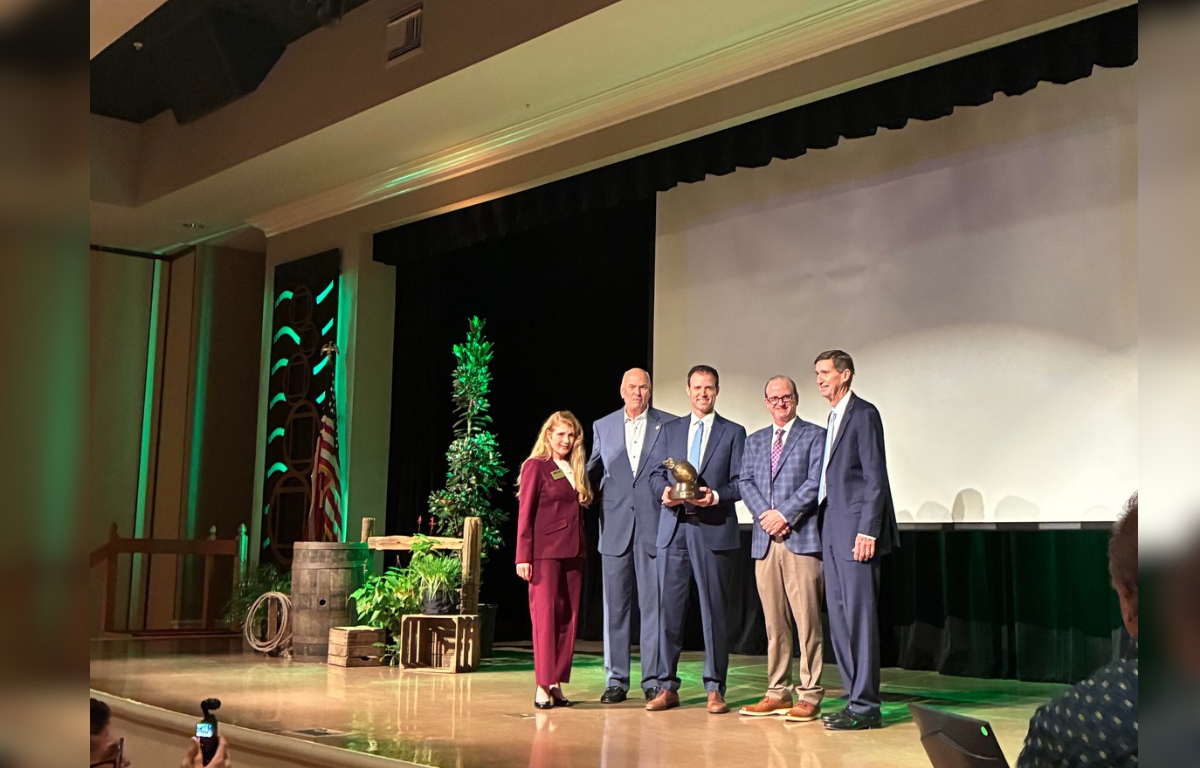

OCALA, FL (352Today.com) – On November 12, 2026, at Circle Square Cultural Center in Ocala, hundreds gathered for Horse Farms Forever’s seventh annual Conservation Summit. The theme was “The Great Florida Cattle Drive: Lessons for Protecting Farms, Ranches, and the Florida Wildlife Corridor” – centered on a straightforward idea: Marion County’s identity as the Horse Capital of the World depends on the land that sustains it.
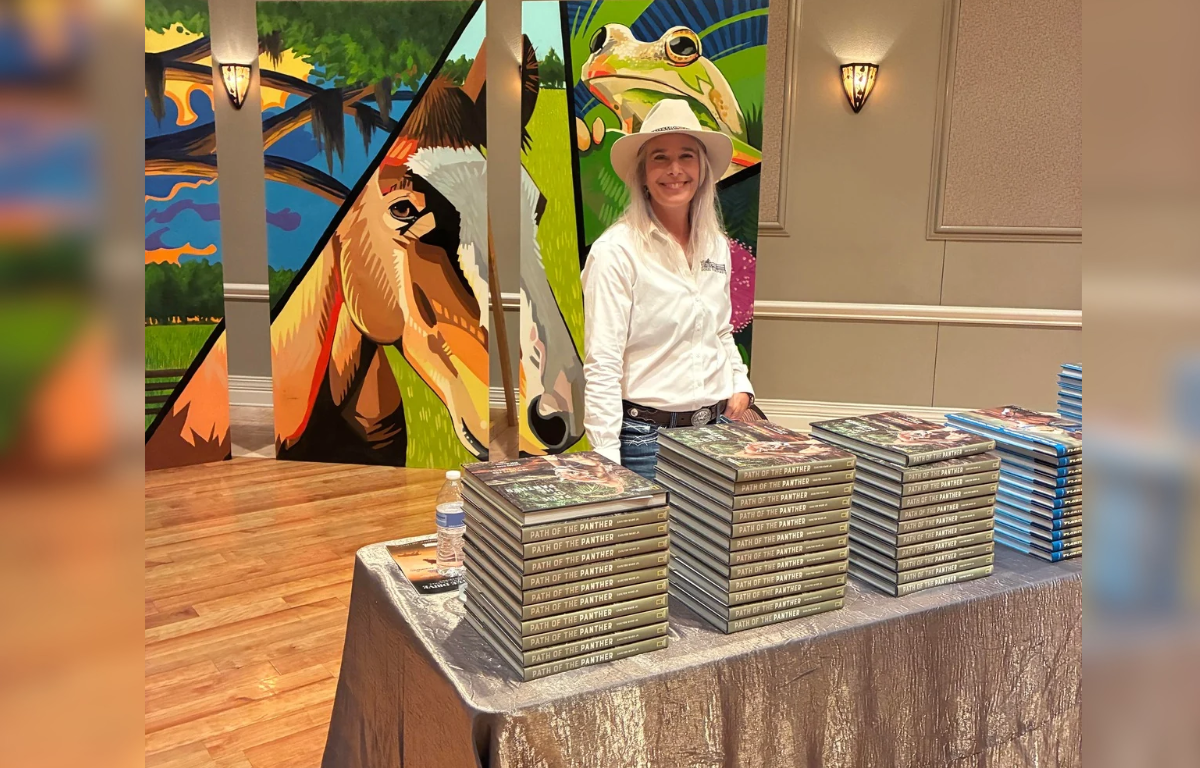
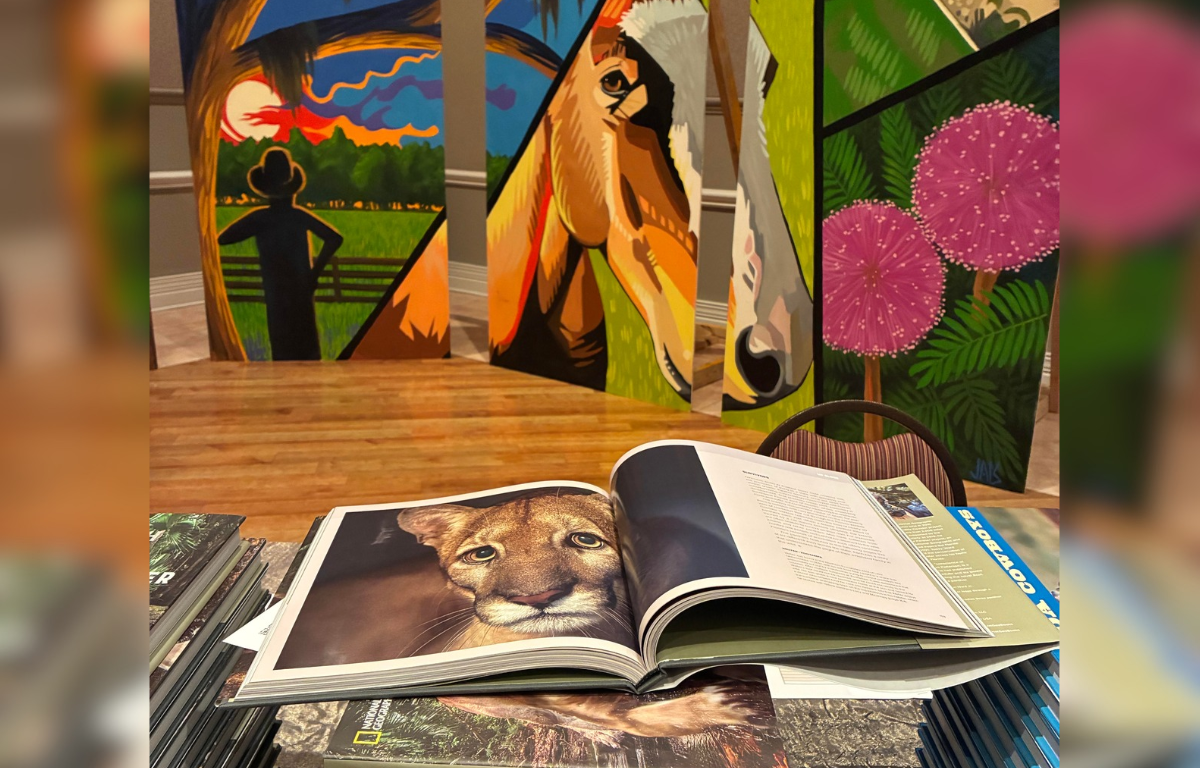
Doors opened at 5 p.m. with book sales of Carlton Ward Jr.’s Path of the Panther and Florida Cowboys.
Welcome and introductions followed, with recognition of title sponsor Brookledge Horse Transportation (returning for a seventh year) and presenting sponsor AdventHealth Ocala. A Brookledge representative described the company’s roots in 1955 as a family trucking operation that has grown into one of North America’s largest horse transporters while remaining grounded in the farms it serves. “There is no horse industry without the land that supports it,” the speaker said. “Protecting Marion County’s farmland is not separate from caring for horses. It is an extension of that.”
AdventHealth’s Amy Mangan highlighted the hospital system’s equine worker mobile clinic, the first of its kind in the nation, according to Mangan, which has already served more than 350 people on local farms and is expanding to support expectant mothers working in the industry. She tied the effort to the evening’s larger purpose: stewardship of both the land and the people who care for it.
The Acorn Conservation Award
Busy Shires, Horse Farms Forever’s Director of Conservation Strategies, presented the 2026 Acorn Conservation Award to the O’Farrell family of Ocala Stud. The award recognizes significant contributions to preserving land or horse farms in Marion County. Previous honorees include Charlotte Weber (Live Oak Stud), the Malones (Bridlewood Farm), the Rudnianyns, Guy Morrick, and last year’s recipients, the Drake family of Drake Ranch.
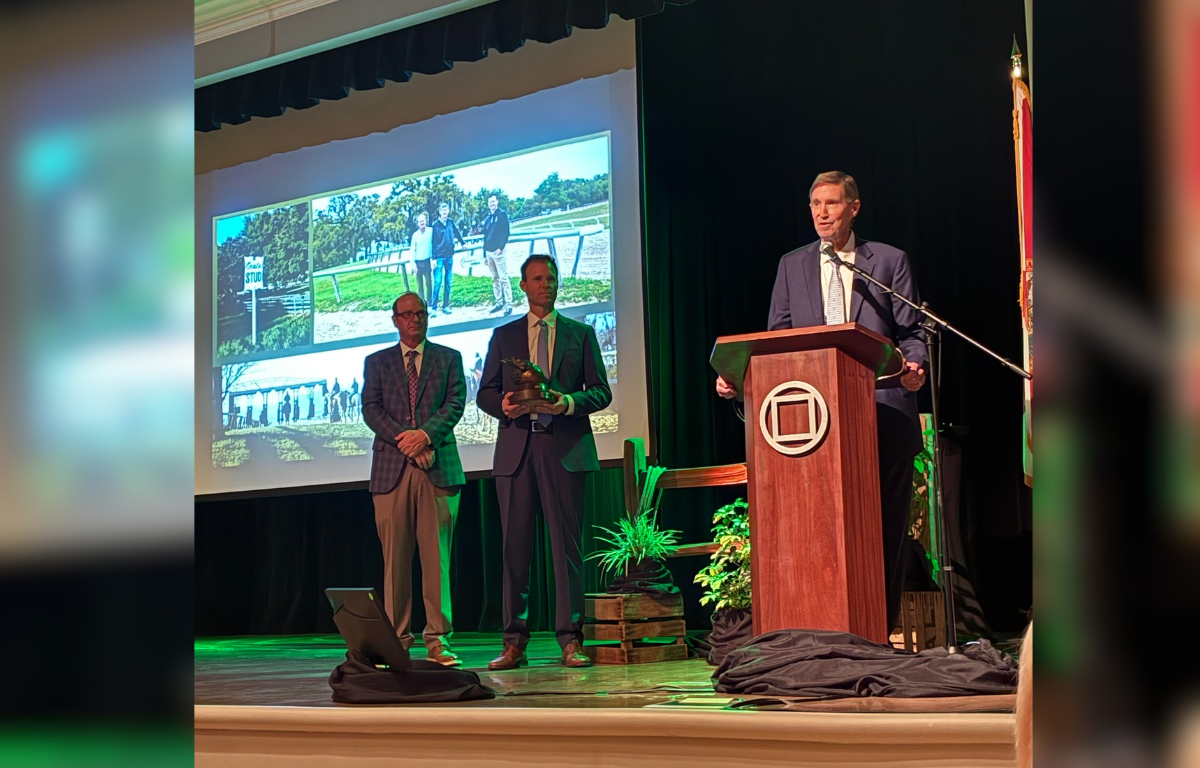
Ocala Stud, the oldest active Florida Thoroughbred operation, was founded in 1956 by a syndicate managed by Joe O’Farrell. It now encompasses about 500 acres across three farms and has produced more than 155 stakes winners, including a Horse of the Year and four divisional champions. From its first crop came the 1959 champion two-year-old filly; in 1961, Needles became the first Florida-bred to win the Kentucky Derby and the Belmont Stakes.
A short video traced the family’s move from Maryland to Ocala after Joe O’Farrell inspected a farm and called home with the instruction, “Nancy, start packing. We’re moving to Florida.” The land’s limestone base and grass remain essential, family members said. Employees have stayed for 30, 40, and even 50 years.
In accepting the award, Mike O’Farrell reflected on decades of change. When the family arrived, he said fewer than 10,000 people lived in the county; now roughly that many arrive each year. Growth, he argued, is mostly good: “I really don’t want to live someplace where somebody else doesn’t want to live,” but it requires vigilance. “The good thing about Horse Farms Forever…is that they’re here to be the watchdog,” he said. “It is a full-time job to watch what is going on or what’s being proposed…They’re doing a very good job of representing and trying to keep it so that it’s quality growth, not just growth.” He closed by affirming that “Marion County is still the best place in the world to breed, raise, and train horses.”
Elected Officials and Local Progress
Shires also noted the presence of Florida Commissioner of Agriculture Wilton Simpson, Ocala Mayor Ben Marciano, County Commissioners Matthew McCLain, Craig Curry, and newly elected Mike Crimi, among others.
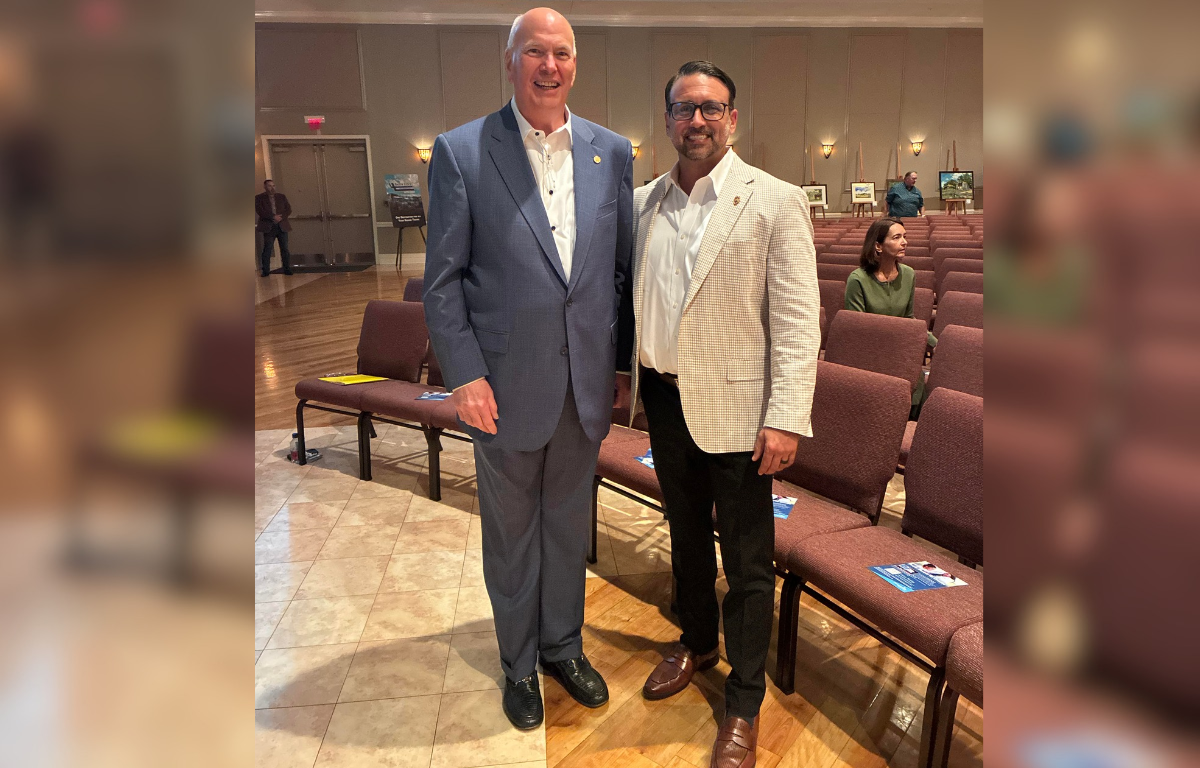
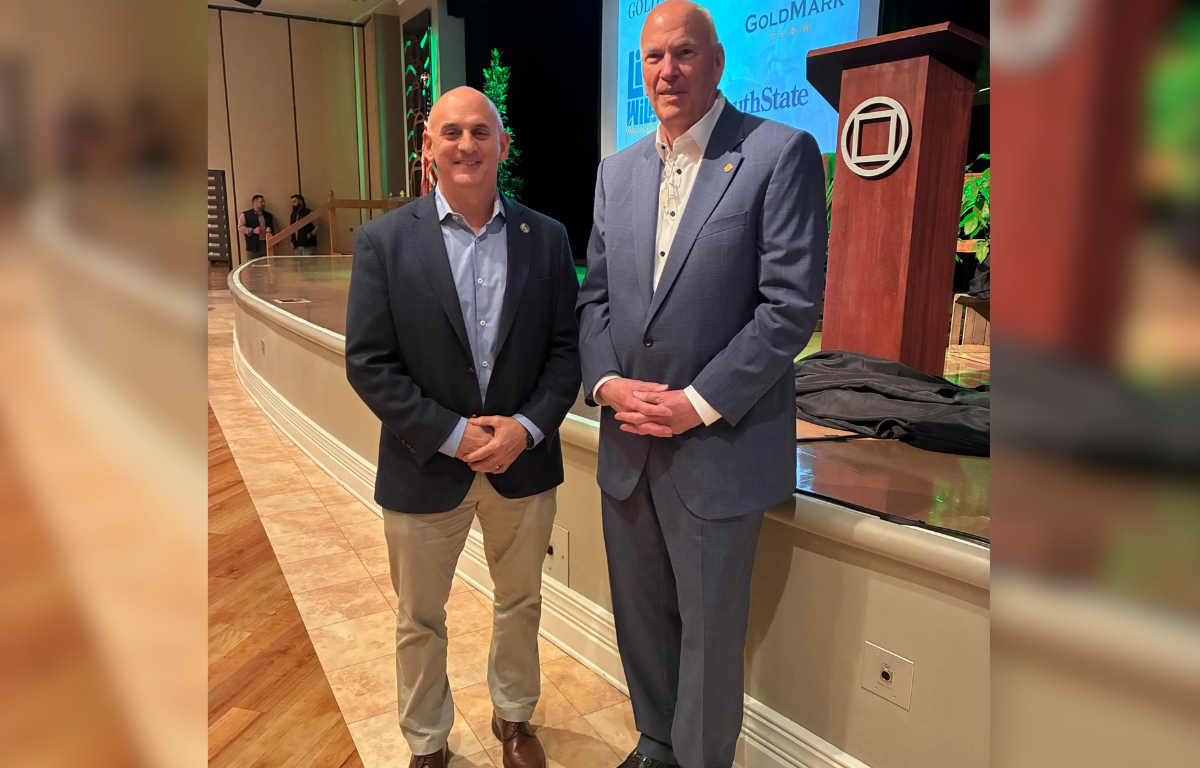
Shires highlighted Marion County’s recently approved parks and conservation bond, which passed with 75% of the vote and can provide up to $140 million, with 10-20% of the funds earmarked for land conservation and preservation of farms, forests, and natural areas that protect water resources.
Board President Bernard “Bernie” Little later outlined the organization’s dual role: catalyzing education and awareness while serving as a watchdog that reviews land-use applications and monitors hearings in the rural and Farmland Preservation areas. The equine industry, he noted, accounts for roughly 20 percent of the county’s land use, employment, and economy. “For there to be horses, there must be horse farms.”
Commissioner Wilton Simpson
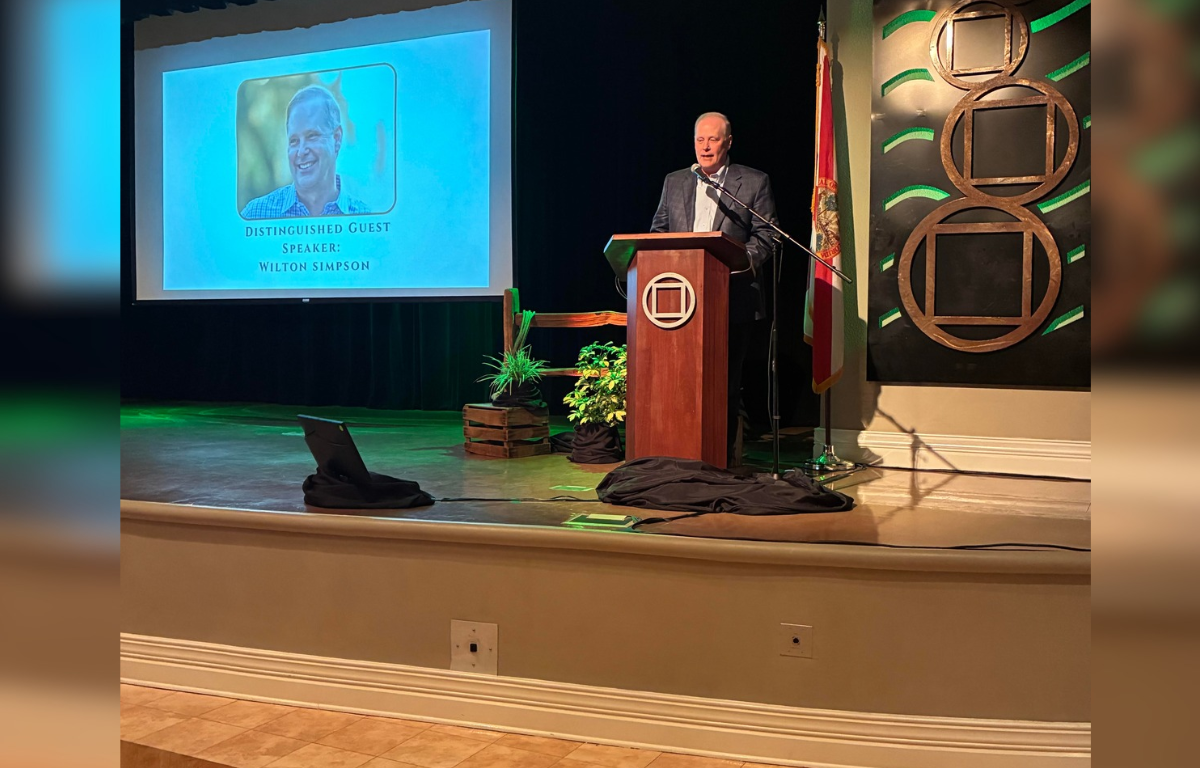
Little introduced Simpson, a fifth-generation Floridian and lifelong farmer who previously served in the Florida Senate, including as Senate President. Simpson’s department oversees more than 4,500 employees across 17 divisions. Since 2022, he has helped secure more than $1 billion for the Rural and Family Lands Protection Program, including $425 million in the current budget.
Simpson framed agriculture as a national security issue. Florida’s agricultural sector generates roughly $200 billion in economic output and supports about 2 million jobs; in winter it supplies a large share of the fresh vegetables consumed along the Eastern Seaboard. “What if there was no food in the grocery stores for the next six days?” he asked. “You’d have panic in this country. And in thirty days, you’d have people probably starving to death.”
He discussed tools including the Rural and Family Lands program (which buys development rights from willing sellers so land stays in agriculture), first-right-of-refusal provisions for decommissioned solar farms so they can return to farming, and growth-management changes requiring unanimous votes for certain developments in small rural cities. He urged Marion County to partner with the state program: a 50 percent local match can move a project higher on the priority list. Over his first term, the program has preserved more than 250,000 acres; statewide, the Florida Wildlife Corridor covers nearly 18 million acres, about 40 percent of the state’s land mass, with more than 10 million already protected. “If our grandchildren’s grandchildren are going to have a similar quality of life…we have to protect that wildlife corridor,” he said. It recharges aquifers, supports biodiversity, and produces food.
Keynote: Carlton Ward Jr. and the Cattle Drive
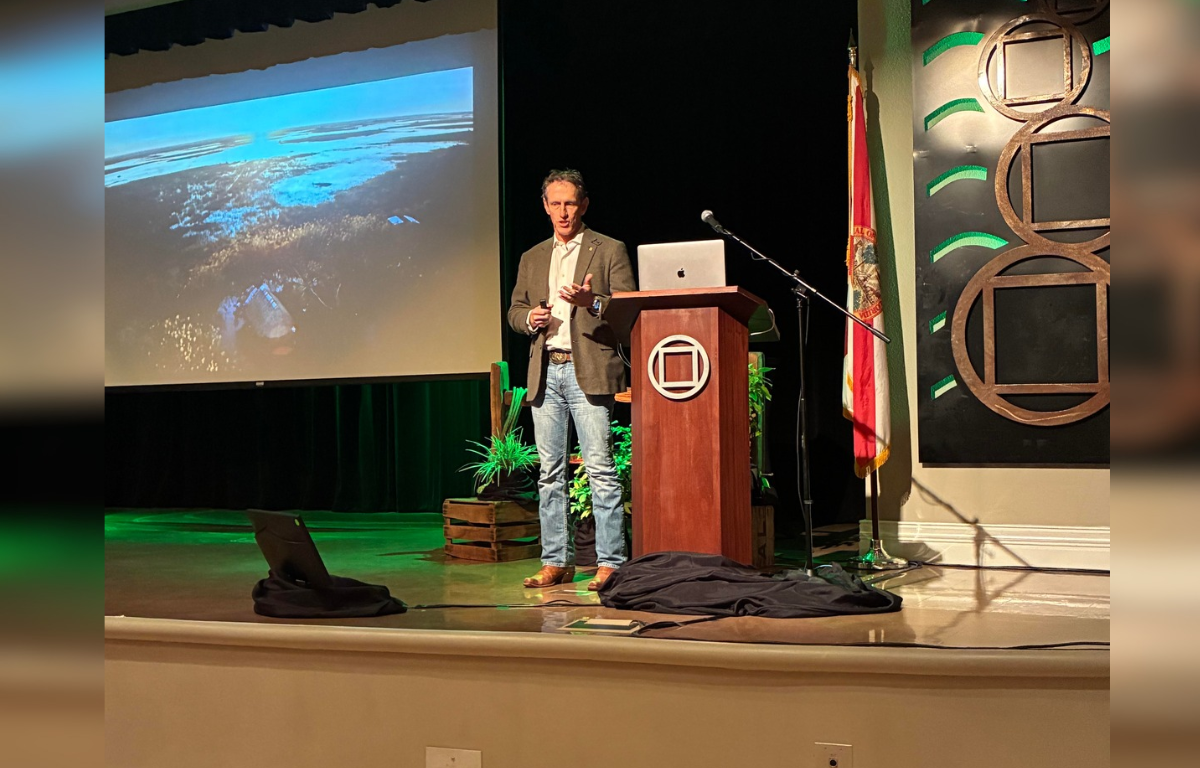
Carlton Ward Jr., Emmy Award-winning filmmaker, National Geographic Explorer, and founder of the Florida Wildlife Corridor project and WildPath, delivered the keynote. He has photographed four iterations of the Great Florida Cattle Drive (2006, 2016, 2022, and 2026). The 2026 drive, which marked 500 years since the arrival of cattle and horses in North America, followed a route almost entirely within protected lands in the corridor. It began at the 27,000-acre DeLuca Preserve (once the site of a proposed city called Destiny) and crossed three ranches protected by conservation easements since 2021. “Because so much of this land is in permanent conservation easement…you could do this same sixty-mile cattle drive next year, five years from now, fifty years from now,” Ward said.
He connected the drives to larger science and history: a 2009 black bear tracked traveling 500 miles across ranchland, citrus, and working forest before development near Interstate 4 forced it to turn around; the 2060 population-growth projections that showed Ocala National Forest becoming an island and the Everglades cut off from the rest of the state under a sprawling development pattern; and his own family’s ranching roots, including a great-uncle who described moving cattle for three days and nights without seeing a fence. “Uncle Doyle said that land belongs to God, and we’re just here to take care of it.”
Ward noted that the Farmland Preservation Area in Marion County is now a critical linkage in the updated Florida Ecological Greenways Network, connecting the Nature Coast toward Ocala. “What you do here is literally saving connectivity for the entire state,” he said. Since 2021, roughly $2 billion has supported nearly 100 properties and 500,000 acres of new protection in the corridor. His organization documents these easements in near real time. He closed by emphasizing that “there is no future for the panther without our farms and ranches. There is no Florida Wildlife Corridor without our farms and ranches.” An exhibit of his work is currently on view at the Orlando Museum of Art through January 3, 2027.
Mallory Dimmitt
Mallory Dimmitt, CEO of the Florida Wildlife Corridor Foundation, described the corridor’s roughly 18 million acres, of which more than 10 million are protected and about 8 million remain opportunity areas. She framed the work as “CPR”: connect, protect, restore. She highlighted storytelling tools, expedition films (including a recent local O2O expedition by veterans traveling from Ocala to Osceola National Forest), murals such as “Marion Flow” on an Ocala water tank, and a student poster contest coordinated with the Marion Soil and Water Conservation District. Winners across grade levels were recognized.
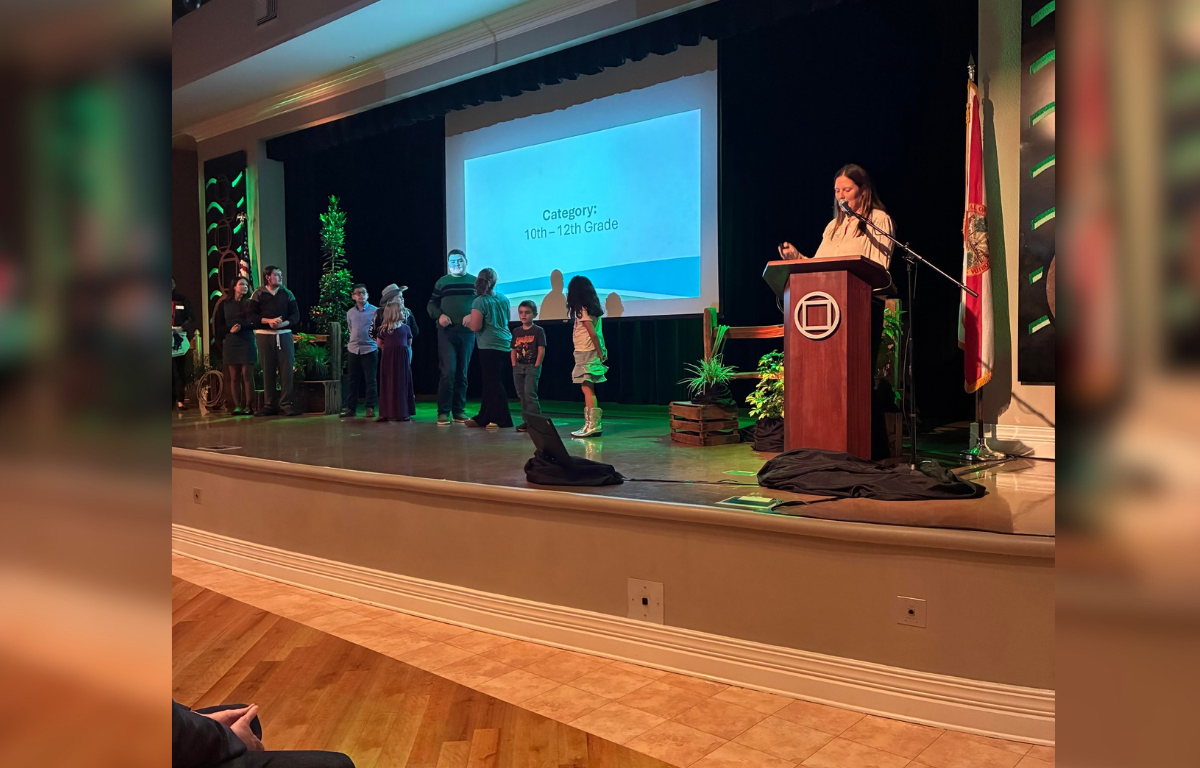
A brief Q&A with Ward followed, after which the evening closed with remarks and a book signing by Ward
.
The summit’s purpose, repeated across speakers, was to show that growth and preservation can coexist when rural lands, especially the Farmland Preservation Area that protects two major springs, are kept available for horses, cattle, wildlife, and water recharge, while development is directed to areas with infrastructure. As Executive Director of Horse Farms Forever, Sara Fennessy put it, “Protecting that legacy takes us all working together to ensure that growth and preservation move forward hand in hand.”