



OCALA, FL (352today.com) – A high school boy walked into a ‘Rock Room’ because he was hungry, but when he left, he had received more than just some food for his empty stomach. The Rock Room volunteer on staff noticed the student’s shoes looked worn and started talking with him. It turned out the boy had no soles left on his shoes. He was walking around in what amounted to his socks, and the shoes were a size too small.
According to Troy Weaver, executive director for The Rock Program in Ocala, it was an eye-opening moment.
“We were able to get him a brand new pair of shoes that fit properly, along with several pairs of socks,” Weaver said. “I saw a picture of the shoes he had been wearing, and it was unbelievable. He had been walking to the bus stop on sandy roads basically in his socks.”
The Rock Program is quietly transforming lives like this across North Central Florida. Now celebrating its 10th anniversary, the nonprofit provides essential needs, school supplies, clothing, hygiene items, food and more to students facing hardship right where they sometimes need it most: at school.
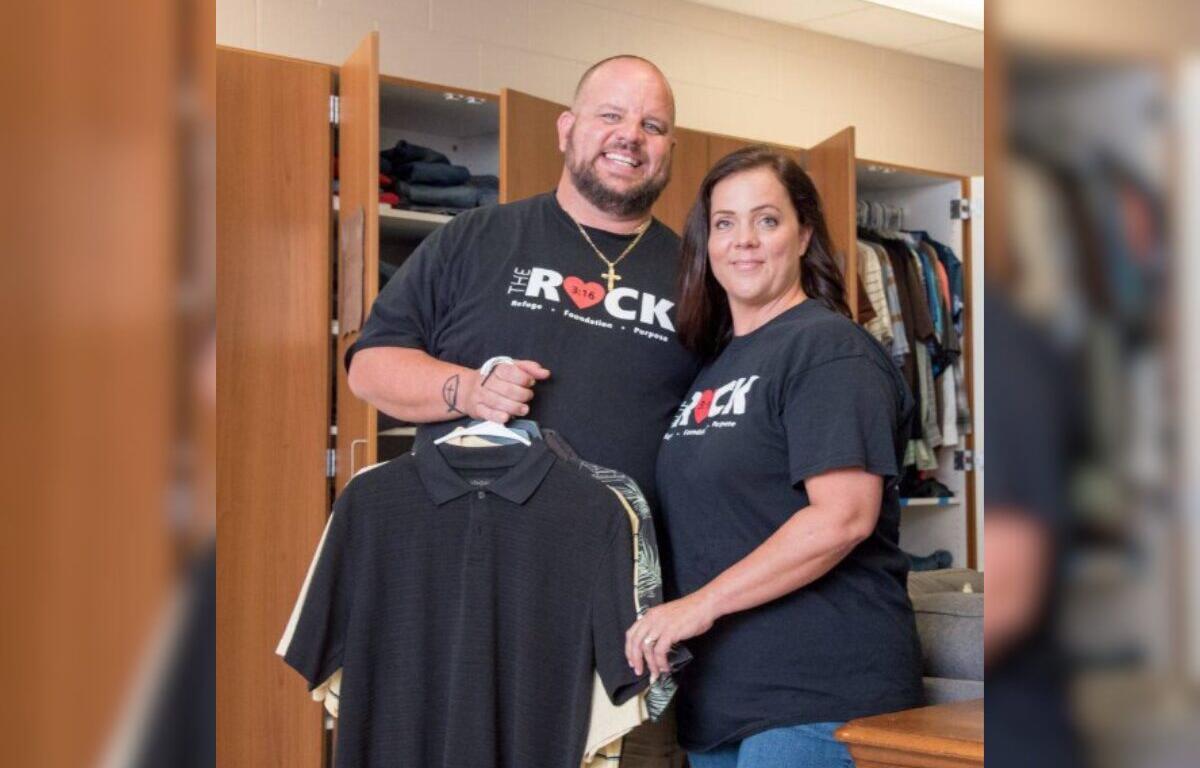
Founded in 2016 by husband-and-wife team Ron “Rondo” and Toby Fernandez, the program began with a single “rock room” stocked to meet students’ basic needs.
According to the organization’s website, Rondo grew up seeing his fellow students in need. As an adult, he is hoping to change that.
The name “The Rock” symbolizes refuge, foundation, and purpose, a solid base giving kids the tools to succeed.
What started small blossomed into a growing network. By the 2026-2027 school year, the Rock Program will serve nearly 30 schools across Marion, Lake, and Citrus counties (with plans for Levy County soon). It became its own 501(c)(3) under Empowered of Central Florida in 2021 after initially operating under another nonprofit. Executive Director Troy Weaver joined in late 2022, when the program served 15 schools; it has since expanded significantly.
The program recently opened a Rock Room at Arc of Marion, a nonprofit dedicated to providing support and opportunity to persons with intellectual and development. This partnership equips Arc participants with everyday essentials like deodorant, laundry detergent, toothbrushes and more, tailored to needs identified by Arc leaders. It’s another way the program meets people where they are.
How It Works
A typical scenario might involve a middle or high schooler from a financially unstable home arriving at school with dirty clothes or missing supplies. Depending on the school, students can get a pass from a teacher or counselor and visit the Rock Room during set volunteer hours, be discreetly referred by staff or have their needs fulfilled through order forms and the program’s three mobile “Rolling Rock” units.
While rooms vary by school, they consistently offer school supplies, clothing, shoes, hygiene products, food and a voluntary faith-based corner with Bibles and prayer resources, which are never pushed, only provided upon student request.
“There’s a faith-based corner, if you know, some of the children said, ‘Hey, you know, I’ve been really interested in learning more about the Bible.’ They can pick up a Bible, and so it’s quite a unique room on the campuses,” Weaver said.
The Rock Rooms also handle real-life emergencies that can otherwise pull students out of class. Children who have accidents or teenage girls surprised by their period can get clean clothes and hygiene items and return to class without embarrassment or missed school time.
Volunteers are often on hand on Mondays and Wednesdays from 11 a.m. to 1 p.m. Students don’t always have to initiate the process themselves; many are gently referred by teachers, counselors or nurses who help protect the student’s dignity.
Real-life success stories abound. Last year, more than 300 students across seven schools received dresses, suits and accessories so they could attend prom in formalwear they may not have been able to afford otherwise. According to Weaver, a volunteer taught a young man how to tie a necktie that perfectly matched his suit, which boosted the student’s confidence.
Impact on Homeless Students
The program tracks items distributed and partners with the school system to support “officially” unhoused students. In Marion County during the 2024-25 school year, 1,494 students were identified as unhoused out of 50,269 total, which is nearly three percent of the district’s student population. Many face doubled-up housing, motels or shelters. Weaver says the program’s direct aid makes a clear difference for these students.
Challenges and Growth
Ongoing needs include more consistent volunteers (even an hour or so per week) and age-appropriate donations for middle and high schoolers. Excess suitable items are shared with other nonprofits, strengthening community partnerships. The program’s logo and name are now trademarked, supporting thoughtful expansion.
At the heart of every Rock Room is a simple sign: “You are loved.” For students like the boy who once walked in worn-out shoes and the many others facing hidden struggles, The Rock Program offers more than supplies. It provides stability, confidence and proof that someone cares.
As it marks a decade of service and prepares to launch the 2026-2027 school year with a presence in 30 schools across three counties, its foundation remains as solid as its name.