



OCALA, FL (352today.com) – In Florida, certain registered sex offenders cannot live within 1,000 feet of a school, childcare facility, park, or playground. Many counties and cities add their own buffers and ban presence near places where children gather. Registrants must also report personal trips involving travel to the sheriff’s office in person. That residency rule, and the local ordinances built on top of it, is at the center of Florida Action Committee v. Mark Glass, et al.
The Florida Action Committee, a group that advocates for people on the registry, filed the suit on August 11, 2026, in U.S. District Court in Tallahassee, case 4:26-cv-00388. The complaint sues Mark Glass in his official capacity as commissioner of the Florida Department of Law Enforcement, the agency that runs the registry. The complaint also names 33 counties, including Marion, and 17 cities. Marion was served Aug. 26.
The group wants the court to declare the state registration scheme and related local ordinances unconstitutional and block enforcement. The claims include cruel and unusual punishment, retroactive punishment, the right to travel, vagueness, and free speech. Regarding Marion County, the materials attached to the agenda item say the suit challenges restrictions on where registrants may live and argues the local ordinance may be too vague to enforce. The packet does not quote that ordinance or give its buffer distance.
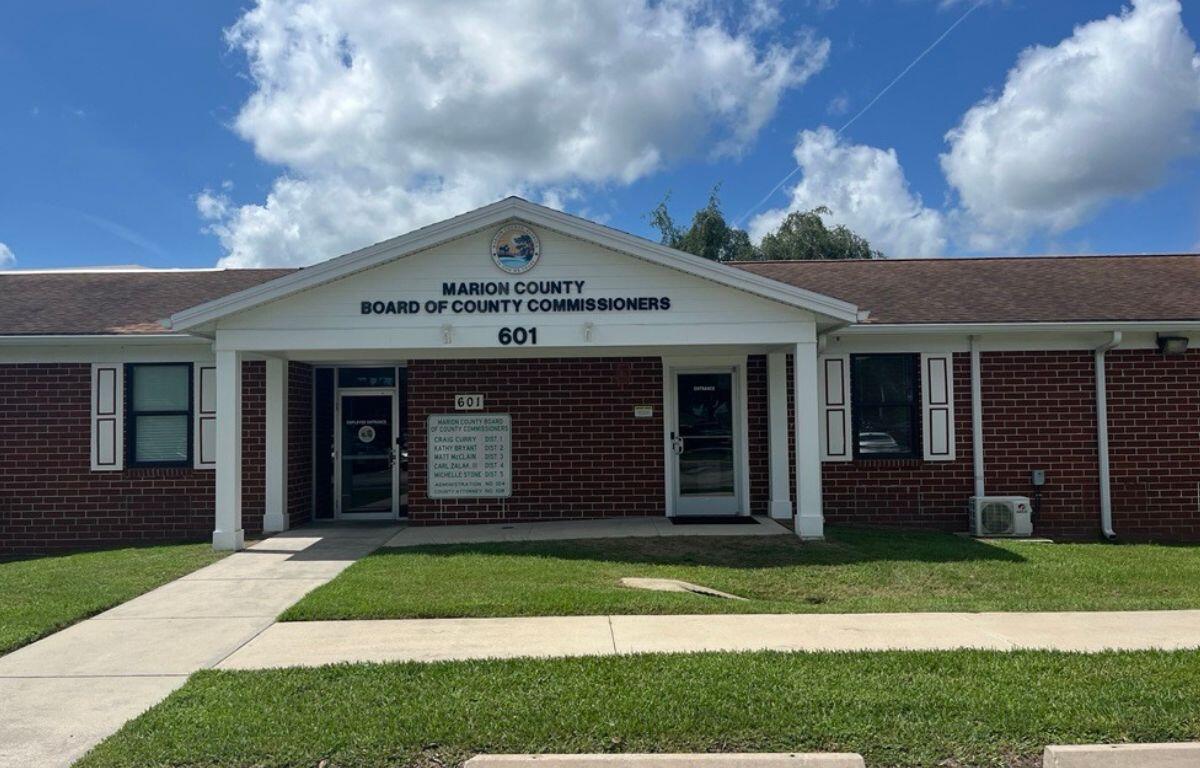
Marion County commissioners on Tuesday, October 6, 2026, authorized County Attorney Matthew G. Minter to hire the Orlando firm Roper, Townsend & Sutphen to defend the county. The posted record shows a motion by Commissioner Michelle Stone, seconded by Vice Chair Matt McClain, carried 5-0. The agenda listed no new appropriation. The firm’s Sept. 11 engagement letter bills by the hour: $212 for partners and senior attorneys, $173 for associates, and $106 for paralegals. Work shared with other county defendants the firm represents will be split. Work done only for Marion will be billed in full.
The request to hire the firm was a walk-on, an item added after the regular agenda was published. County records show the file, 2026-24371, was created Sept. 14 and first presented the next morning as item 8.4. The engagement letter is dated Sept. 11. Minter wrote that other county defendants were already hiring the same firm and that he had discussed the case with partner Cindy A. Townsend. The item does not cite a court deadline. Tuesday’s agenda carried the same file under that original walk-on title.
Minter wrote that he is familiar with the firm and that the rates are reasonable. Bills are in six-minute increments, monthly, and due on receipt. Shared costs are split the same way as shared legal work. Copying is 15 cents a page. Travel, lodging, meals, research, and court filings are extra. The county can end the engagement at will, but it still owes fees and costs incurred before termination. Townsend wrote that the firm had not identified a conflict.
The vote does not decide whether the ordinance stands. It only hires a lawyer. The Florida Action Committee said in a Sept. 29 update that the court set a November 8, 2027, trial date and a June 1, 2027, deadline for summary-judgment motions, and that an amended complaint adds a civil-conspiracy claim.