


FLORIDA, U.S. (352today.com) – November is the month when organizations throughout the U.S. work to raise awareness about diabetes, and that hits home in Marion County.
Diabetes is a significant health issue for Marion County residents. Diabetes was the seventh-leading cause of death in Marion County in 2024.
About 17 percent of the community’s adult population lives with diabetes. Another 10 percent have been told they are pre-diabetic, meaning they have elevated blood sugar levels that, left untreated, could develop into Type 2 diabetes.
Take Charge Of Diabetes
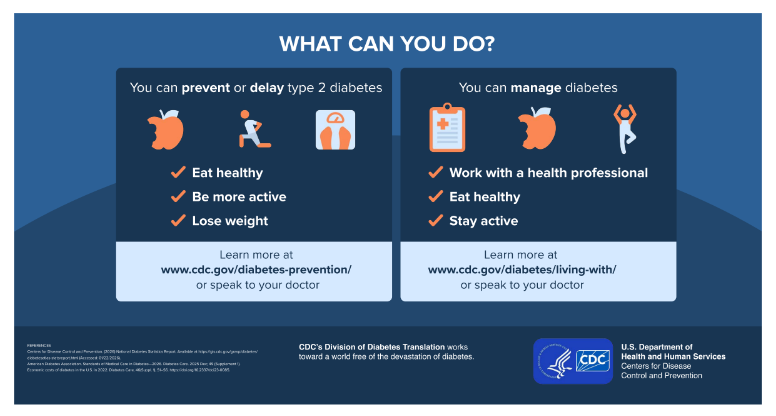
Although diabetes affects a significant portion of our population, it is largely preventable.
Unlike many health conditions, diabetes is managed primarily by the person it affects, with support from a health care professional. Lifestyle changes, such as shifting to a healthier diet and exercising regularly, can reduce the risk of diabetes.
But becoming smarter about diabetes and its causes, effects, and treatments is vital to avoiding the risk.
The Florida Department of Health in Marion County offers diabetes self-care education classes to help residents control their diabetes. The Diabetes Empowerment Education Program helps participants understand how diabetes works, realize the benefits of meal planning and exercise, and identify and prevent diabetic complications. The program’s goal is to help participants reduce their diabetes risk by making small lifestyle changes.
Classes meet once a week for eight weeks at locations around Marion County, and the next classes start January 5, 2027, at the Belleview Community Center. Call 352-644-2624 to learn more from health education staff.
What is Diabetes?
Your body breaks down most of the food you eat into sugar (glucose) and releases it into your bloodstream. When your blood sugar goes up, it signals your pancreas to release insulin. Insulin acts like a key to let the blood sugar into your body’s cells for use as energy.
With diabetes, your body doesn’t make enough insulin or can’t use it as well as it should. When there isn’t enough insulin or cells stop responding to insulin, too much blood sugar stays in your bloodstream.
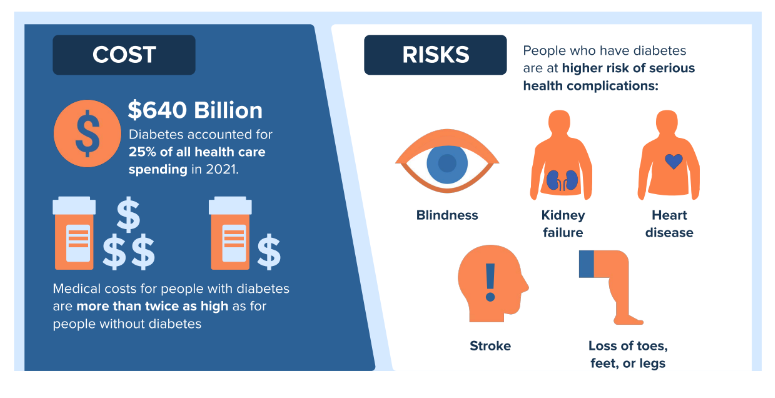
Over time, it can cause serious health issues, such as heart disease, vision loss, and kidney disease.
Prediabetes
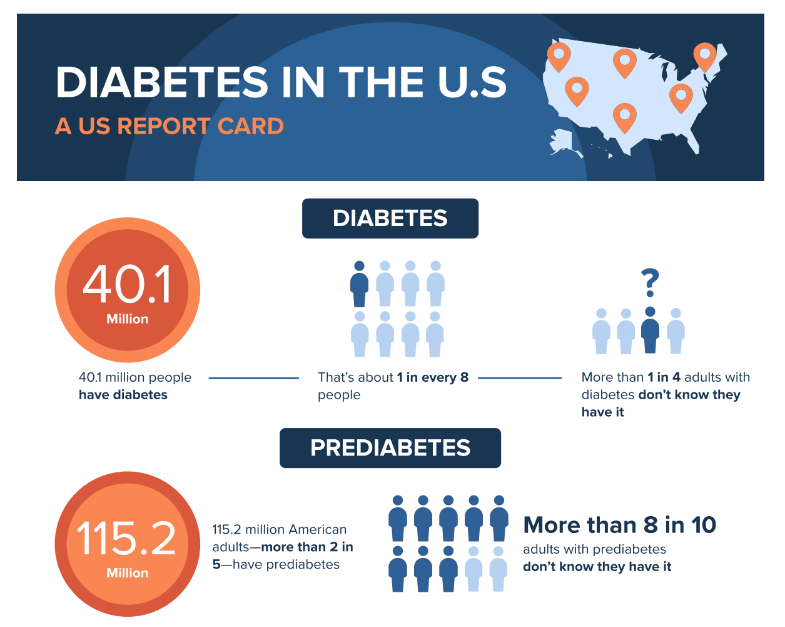
Prediabetes means your blood sugar levels are higher than normal, but not high enough for a diagnosis of diabetes. Prediabetes is a serious health condition that increases the risk of developing Type 2 diabetes, heart disease, and stroke.
It’s estimated that 98 million American adults have prediabetes. Nine out of 10 people with prediabetes don’t know they have it.
Without intervention, many people with prediabetes could develop Type 2 diabetes within five years. The vast majority of people with prediabetes do not know they have the condition.
Diabetes Types
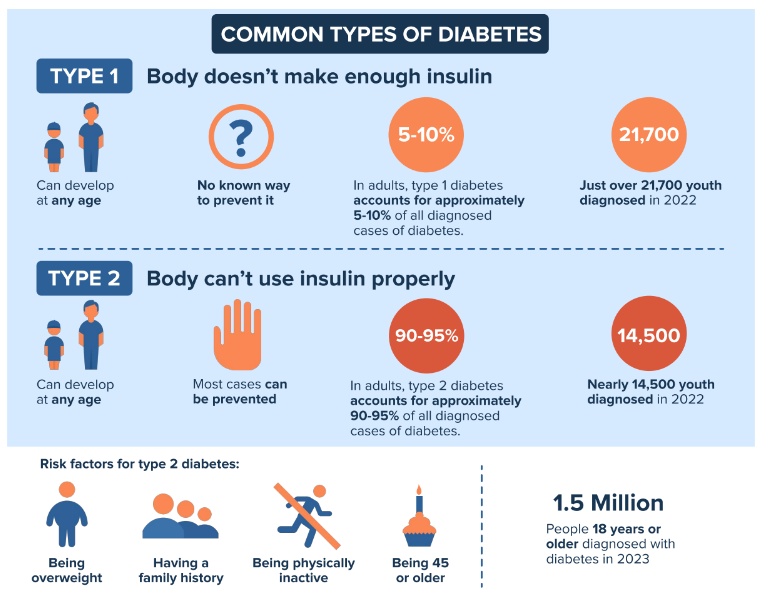
Type 1 diabetes is an autoimmune condition where the body’s immune system attacks and destroys the cells in the pancreas that make insulin. This means the body can’t control blood sugar on its own. Without insulin, glucose stays in the blood and makes blood sugar levels too high. Type 1 diabetes often starts in children and young adults, but it can happen at any age.
Type 2 diabetes is the most common type of diabetes—about 9 out of 10 people with diabetes have Type 2 diabetes. You can get Type 2 diabetes at any age, even during childhood.
In Type 2 diabetes, your body makes insulin, but the insulin can’t do its job, so glucose is not getting into the cells.
Gestational diabetes is a form of diabetes that occurs for the first time when a woman is pregnant.
This type of diabetes is caused by a change in the way a woman’s body responds to the hormone insulin during her pregnancy. This change results in elevated levels of blood sugar, also known as blood glucose.
Gestational diabetes develops in about 2 to 10 percent of pregnancies in the U.S. every year. It is important to diagnose and treat gestational diabetes to avoid health complications for you and your baby.
Self-Management
Diabetes education classes provides people with information to help manage diabetes, such as:
- Understanding the disease
- How medication works
- What foods are best to eat
- Coping with emotions and stress
- Working with your provider to get needed support
- Self-management tools and apps
- Reducing your risk for other health complications
You can learn more at Marion.FloridaHealth.gov/diabetes, or call 352-644-2624.