


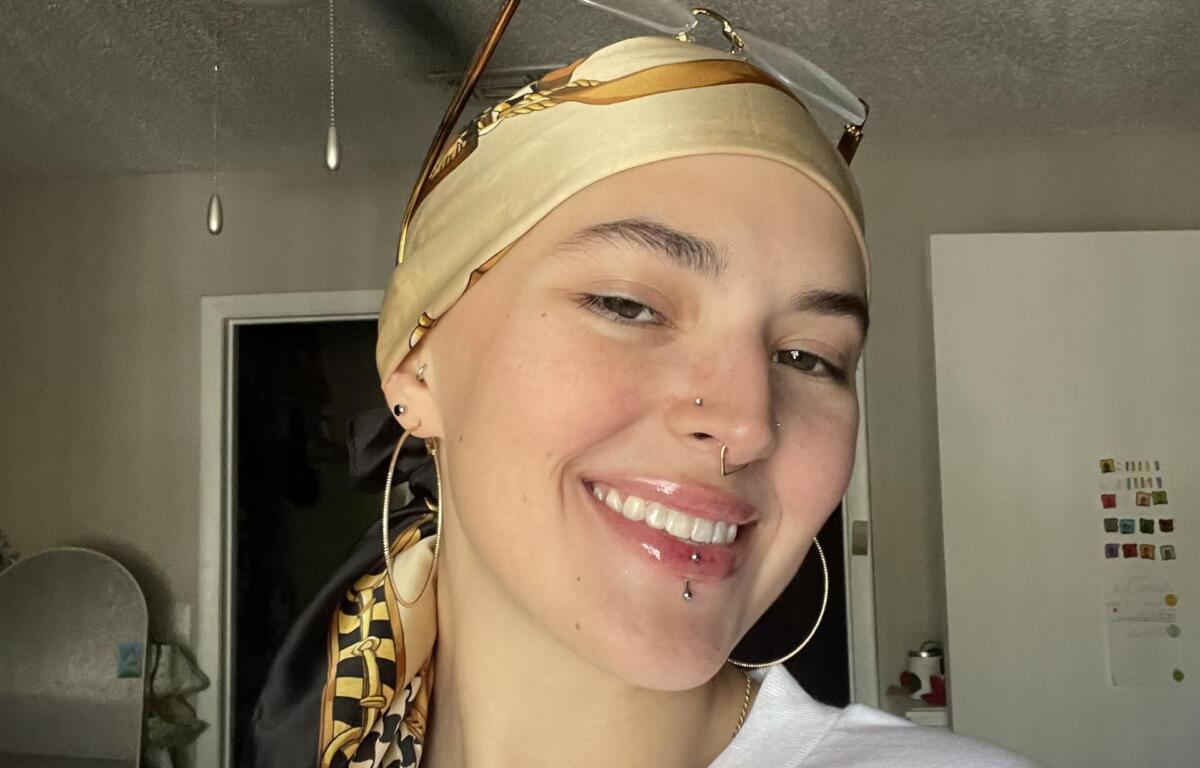

OCALA, FL (352Today.com) – Not many college-aged women have to learn to walk with a cane. For Amber Whitmer, it was not an option; it was necessary to cope with daily pain.
“When I was 19, I started walking with a cane due to severe joint pain. I woke up every day in pain. I ended every day in pain,” Whitmer said.
Whitmer, now 23 and a full-time student at the University of South Florida, lives with DADA2, deficiency of adenosine deaminase 2, a rare genetic disorder. She first developed symptoms in early childhood, before the age of seven. At age seven, she was diagnosed with severe chronic neutropenia and spent the next decade and a half undergoing tests that ruled out rheumatoid arthritis, lupus and other immunological conditions.
According to Whitmer, an accurate diagnosis of DADA2 did not come until 2023 or 2024. The confirmation came through a genetic blood panel test. Her parents and two sisters were also tested; she was the only one who came back positive.
“I first started having symptoms in early childhood before the age of seven. I was diagnosed at seven with severe chronic neutropenia. I received several tests since then that ruled out rheumatoid arthritis and lupus among other immunological conditions,” Whitmer said.
The long wait for answers is familiar to many people with rare diseases. Whitmer’s care eventually connected her with specialists at UF Health Shands, including Dr. William Slayton and leading DADA2 researcher Dr. Pui Lee. Today she balances school, daily treatment and clinical research while advocating for greater awareness. Friday, July 31, 2026, marks the first World DADA2 Awareness Day.
A typical day, she said, can look relatively ordinary from the outside.
“I wake up, get ready for work, come home and decompress like anyone else might. What differs is that I take a series of medications, including injections, daily,” she said.
“Right now, I’m working with the National Institutes of Health (NIH) on a treatment, so every day for the past three weeks, excluding weekends, I’ve gotten blood drawn,” Whitmer said.
The physical toll has been significant. Beyond the joint pain, Whitmer has faced serious medical crises and the ongoing work of protecting her health. Enrolling in clinical trials at the National Institutes of Health has brought both progress and setbacks.
“My experience at the NIH has been one of opportunity and hope, but also disappointment. The first round of trial meds didn’t work for me and I experienced health complications, ending up in the hospital. The second round, we’ve seen some success but some setbacks as well. Through it all, my nurse at the NIH has been a huge support,” she said.
Adjusting to the limits of her body has carried emotional weight.
“Adjusting to a body that can no longer perform as a healthy young adult has been the hardest. Adjusting to routines that both strengthen and protect my body and health has been a struggle; knowing my limits in the gym, on hot days, and how to utilize my supports,” Whitmer shared.
Living with a rare, relatively newly identified disease has reshaped her sense of independence and plans.
“Living with a rare disease means I have to fight every day to advocate for myself in the healthcare system,” Whitmer said. “It means I juggle a system of up to 10 specialists. It means that plans get pushed to the side in favor of my health, such as during a pandemic or if my counts are low; I tend to avoid crowds or strenuous activity.
“I don’t really get the luxury of being someone’s emergency contact because we can’t always rely on me to be here or be healthy enough. I won’t personally have children if they could inherit my disorder because I’ve lived the struggle and I would not be okay putting that onto a child when I am aware of it now.”
She is clear about what people often get wrong about chronic illness.
“Chronic illness doesn’t have an image, and young disabled adults owe people zero explanation. We deserve compassion and respect, not doubt or indifference,” she said.
Navigating the healthcare system as a young woman with a rare condition has required constant effort.
“As a young adult and a woman, I find myself having to fight extra hard to be understood. To this day, I’ve yet to find a neurologist that will see me,” she said.
“I’m often told by providers that they don’t know anything about my condition but will do their ‘best.’ It gets exhausting to never feel confident in the care you’re receiving because you’re a medical anomaly. Health insurance is a constant barrier, changes, deductibles, premiums and copays. My current medication that protects me from stroke symptoms has a copay after insurance of $5,000 and they processed the prior authorization so late that I would’ve missed my dose had it not been for the NIH. When I was younger, my parents struggled finding a plan that would take me with my ‘pre-existing condition.”
One resource that has made a difference is the DADA2 Foundation, which has helped her connect with others in the community.
Whitmer is on track to graduate in about a year and a half to two years. Taking semesters off for medical leave, a reality for many college students who live with chronic illness, was difficult but necessary.
“Taking medical leave was scary but necessary. Unfortunately, my university didn’t make it seamless due to the omission of information on how I could return. However, after advocating for myself, I was able to return after two semesters to take my elective courses before rejoining a cohort,” Whitmer said.
She believes wider awareness matters because the numbers are larger than most people realize.
“Raising awareness about DADA2 is important because while only 800 or so patients are diagnosed, an estimated 35,000 are living with the disorder without knowing. Early and accurate diagnosis can mean life-saving care,” she said.
For Whitmer, July 31 is more than a date on the calendar. It is a chance to push for earlier recognition, better-informed doctors and real compassion for young adults managing rare and chronic illness. Her story is one of childhood symptoms that went unexplained for years, a cane at 19, a terrifying septic crisis, daily injections, clinical trials that bring both hope and setbacks, and the steady, exhausting work of advocating for herself while still planning a future.
She is still in school. She is still fighting. And on the first World DADA2 Awareness Day, she is making sure the thousands of people still searching for answers know they are not alone.