


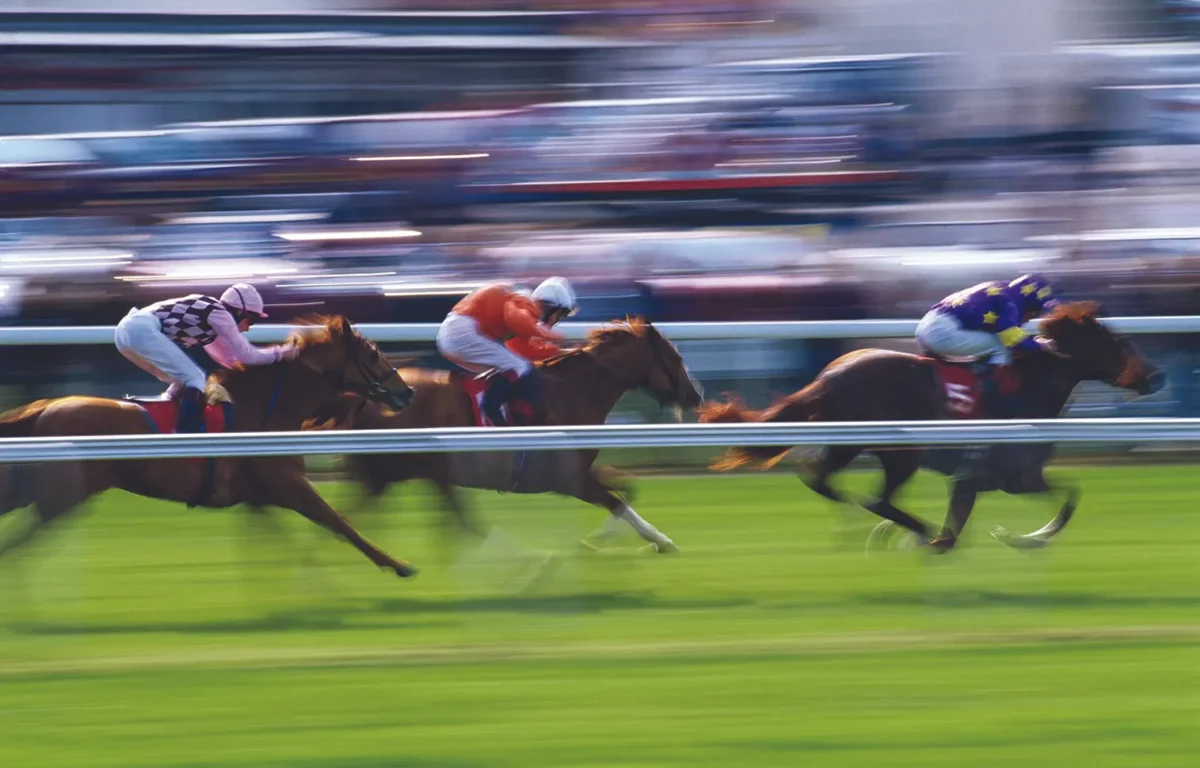

OCALA, FL (352today.com) – Two weeks ago, a new company named Gilligan Racing, LLC issued a press release announcing its intention to develop “a world-class Thoroughbred racing facility in Marion County, Florida.”
The release by Gilligan Racing—a consortium of business and horseracing interests, including Florida attorney John Morgan of Morgan & Morgan fame—seemed to give weight to the rumblings last year about a potential Ocala racetrack. Those rumblings got louder during the state’s spring legislative session amid uncertainty over decoupling gaming licenses from the remaining tracks in Florida.
OK, fine, so a group of investors and experts is looking to build a new Thoroughbred racetrack in Ocala. This group needs a racing permit, and there’s only one in existence in the State of Florida—one that’s been held like an ace in the hole for 15 years, under the stewardship of Ocala Thoroughbred Racing, a nonprofit wholly owned by the Ocala-based Florida Thoroughbred Breeders’ and Owners’ Association.
The story of that permit, from its legislative approval to its potential deployment via an exclusive deal between Ocala Thoroughbred Racing and Gilligan Racing, LLC, is, in the words of FTBOA CEO and Executive Vice President Lonny Powell, “quite extraordinary.”
The past
The creation of the permit during a 2011 state legislative session roughly coincided with longtime equine industry champion Powell’s integration into the Ocala scene via the FTBOA.
“It was part of a (Seminole) tribal compact renegotiation,” said Powell.
The permit was originally written as a Quarter Horse racing permit, with a small window of time in which conversion to another type of racing could be legally wrangled. Elements of the Thoroughbred industry in Marion County took advantage of that window, successfully lobbying to change it to a Thoroughbred racing permit.
“It was decided that Marion County should be a location for a Thoroughbred (racing) license as the Horse Capital of the World,” Powell said. “It would have to be a nonprofit one, it would have to be based in Marion County, and it could not be sold, transferred or leased.”
“It just made sense,” he added, “since two out of every four horses in the county are Thoroughbreds.”
Stewardship of the permit passed to Ocala Thoroughbred Racing. The FTBOA considered what it might do with it; after all, as a nonprofit, the organization hardly had the resources to locate a site, purchase it, and build a racing facility on it. The cost of such projects can run into the hundreds of millions of dollars.
The FTBOA was in favor of doing exactly nothing with it, for the time being.
“I thought it was a very nice tool that could be used down the road, sometime in the future,” Powell said. “I cautioned my new employers that it should be put on ice, looked at as the asset it could be if the future (of Thoroughbred racing) got worse.”
And so Ocala Thoroughbred Racing, and by extension the FTBOA, sat on the unimaginably valuable permit for a decade, until, ultimately, the future did get worse.
The most recent renegotiation of the compact between the Florida Gaming Control Commission and the Seminole Tribe of Florida occurred in 2021. At that time, an effort was made to do away with dormant or unused gaming licenses and permits as a matter of housekeeping.
Only the Marion County racing permit survived the purge.
“That permit was allowed to survive because it was the only nonprofit permit,” said Powell. “It’s the only permit that exists in law now, and its site is specific to Marion County.”
The present
The future, it seems, is now.
As the value of large parcels of Florida property and the costs of running a racetrack continue to rise (while regular season-long attendance at races has declined), elements within the racing industry in the Sunshine State have been lobbying ever harder in favor of decoupling—that is, removing the legal stipulation that a facility must host live racing in order to also operate slot machines and host cardrooms.
The state legislature has been inching inexorably toward passing a decoupling law. In 2026, it came closer than ever, as a bill passed the House but stalled in the Senate.
If decoupling Thoroughbred racing becomes a reality (as it already has for Quarter Horse racing and harness racing), it could sound the death knell for racing in Florida if the owners of its two remaining facilities—Gulfstream Park in Hallandale, near Miami, and Tampa Bay Downs in Oldsmar—decide to sell off parts of their property in favor of running a much less expensive operation.
Now is the time, Powell says, to put that last remaining permit to use.
“We have added the extra networking, the resources, the energy, the vision of a number of very bright people,” said Powell of Ocala Thoroughbred Racing’s deal with Gilligan Racing. “They are our advocates on the ground to bring back the economic solution to us, unbelievable work that will ultimately be decided upon by the FTBOA and the Ocala Thoroughbred Racing board.”
Whether or not the industry needs a new facility in Marion County to “save” Thoroughbred racing in Florida remains to be seen. But with the possibility of uncoupling still on the table and given the current explosive growth in Ocala and Marion County, the parties involved all agreed that the time had come to put their plan into motion.
“It just feels right, with everything else going on in Marion County right now,” Powell said.
The future
So, what happens next?
Quite a bit, apparently. It will still be some time before racing fans can flock to Opening Day. The money men are still looking for the perfect location in the region to build; there is a shortlist of sites at this point, but Powell isn’t at liberty to divulge details, saying “that’s a Gilligan Racing responsibility.”
The location and design must go together, Powell said, and once the site is locked down, Ocala Thoroughbred Racing and the FTBOA will “look at it from a pure racing end to make sure the type of facility we all want can be accomplished.”
“Thank goodness for folks like Gilligan, not just looking to make a regular racetrack, but looking to make the most unique economic and features model for a racetrack that’s ever been done,” he added. “Will it be the new Belmont? No, this isn’t New York. It will be something that captures all the park-like majesty of Marion County, and that feeling, that ambience of being our own special brand, and offer lots of activities, lots of entertainment, (the facility becoming) another huge economic magnet.”
Both the Gilligan Racing press release and Powell himself take pains to emphasize that they want the facility built with the community in mind, and with the community’s input.
“Absolutely. [The FTBOA has] been a part of this community for 70-something years, and we’ve been all about community from the word go,” he said. “So, anything we do is going to be in the community spirit of things.
We’ll [work with] the county commission, go through all the process we need to go through. We’re going to love to hear community input.”
While the news Gilligan Racing in August is evidence of the project moving toward realization, it’s a long way from done; it might even be a long way from a done deal. Powell is committed, though, and enthusiastic about the probability that a dream 15 years in the making will soon be a reality.
“There’s still a lot of work to do on this project, but it’s making big steps forward,” he said. “And I know that everybody involved, from us to the Gilligan Racing people, are looking forward to updating everyone, including the community, as we get toward the finish line of this venture.”