



This is the second story in a 352Today series on the cost of living in Marion County. The first followed a paycheck. This one follows two Ocala kitchens trying to stay open in the same economy that paycheck has to live in.
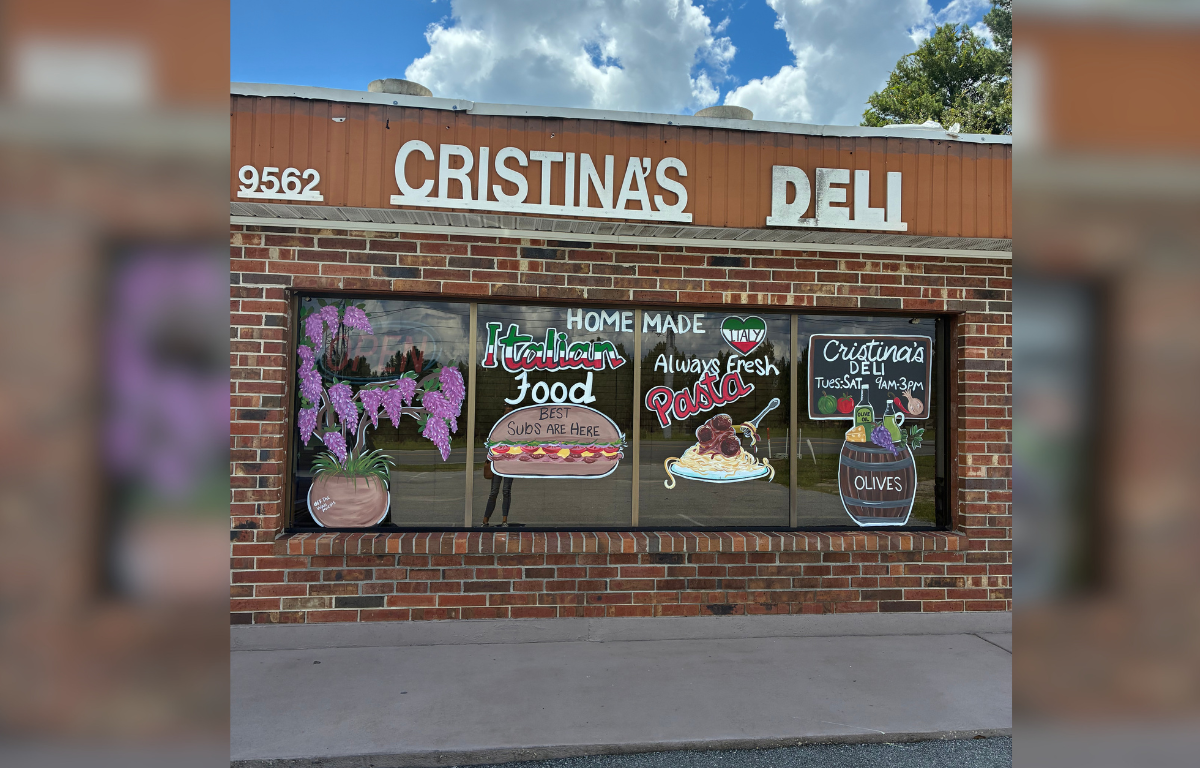
OCALA, FL (352Today.com) – On August 28, 2026, Cristina Nieto of Cristina’s Deli posted an update to Facebook that no small business owner wants to post.
“Due to increasing food costs, the pricing on some of our menu items are being adjusted. We sincerely apologize, but we’ve held on as long as we could,” the post said.
The post garnered over 300 reactions and supportive comments from locals. Deli regulars had told Nieto for years that the shop gave too much food for too little money. She still waited. And as she waited, quality meats and cheese kept climbing.
“My food cost is at 40-plus percent. Ideally, I need to be at around 30 percent, so I had to make adjustments,” Nieto said. “In this economy, it’s scary to make necessary increases because so many people are already struggling.”
She would not cut the portions; the restaurant’s reputation relied on robust helpings. “One thing I will never do is skimp out on portions,” Nieto said. “We are known for filling bellies. I won’t risk quality ever. I would rather go up a few bucks than change my reputation.”
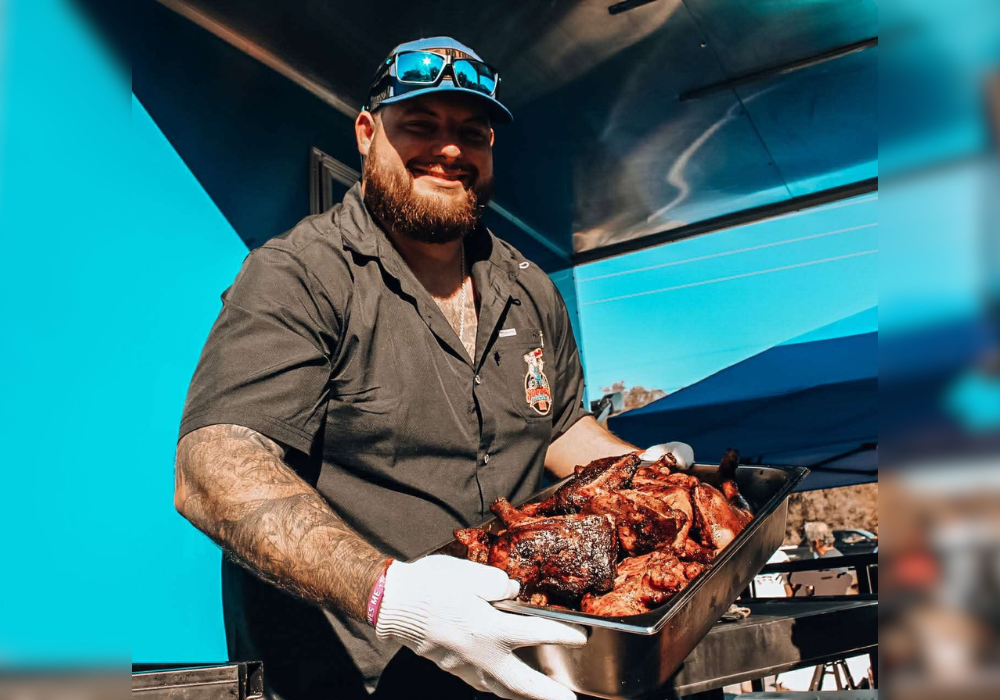
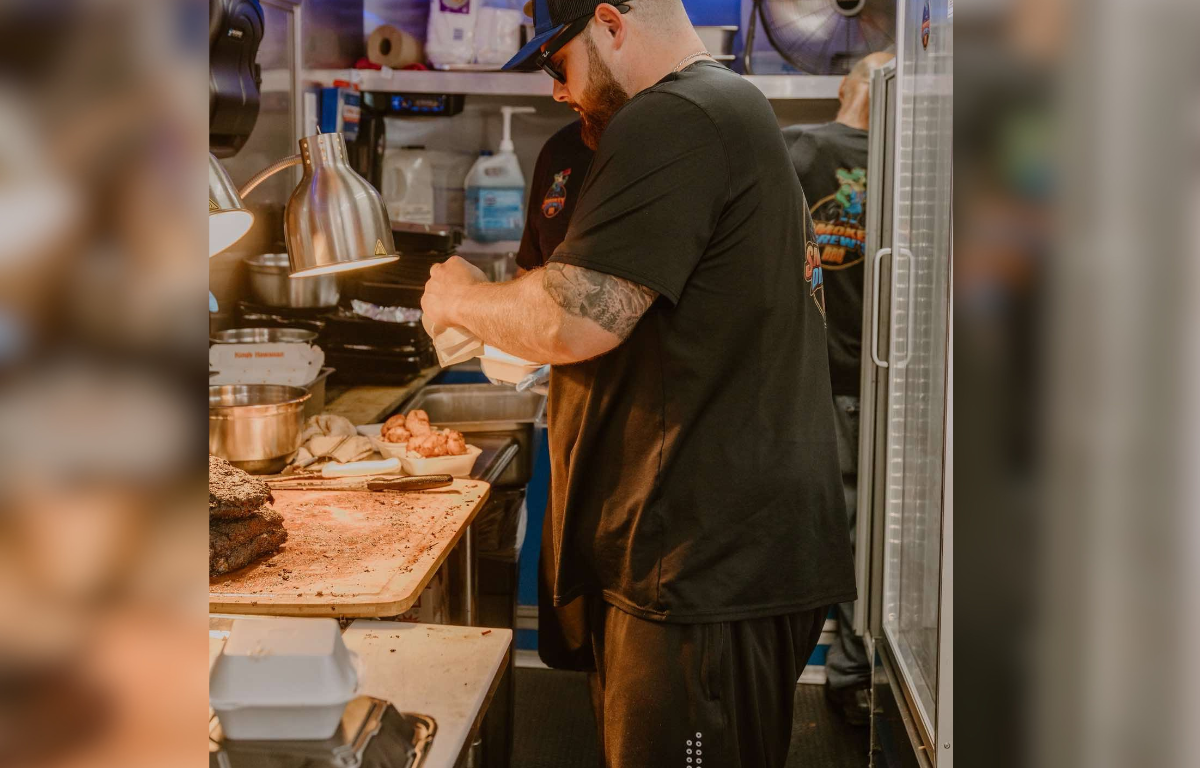
Across town, Drew Parson is making the same calculation on a smoker. Smokey Drew’s BBQ is open two days a week. Wednesday, Sept. 9, 2026, was the slowest day he has ever had. “We had no lunch crowd really… I was at the truck till 10 o’clock, and then we had to clean up, and I still had leftovers.”
“Everybody’s going through it,” Parson said, “and I’m going through it.”
The bill behind the sub
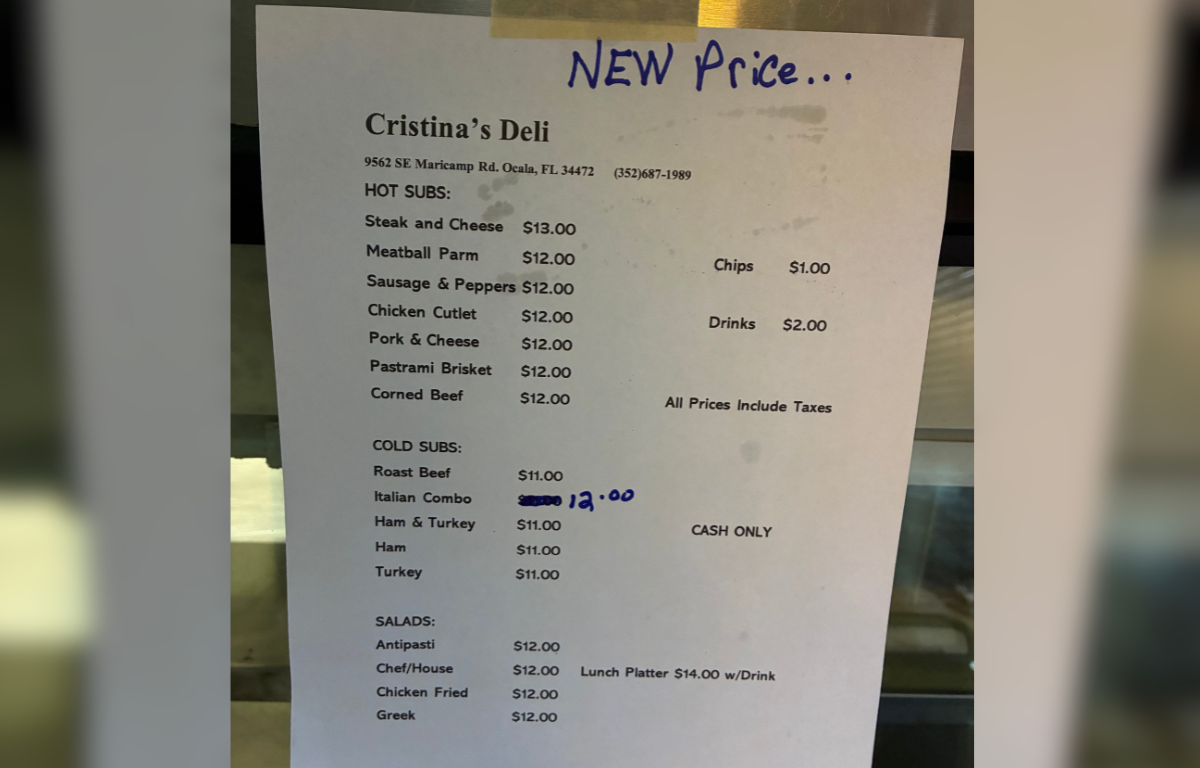
The Aug. 28 updated price list at Cristina’s was not a full rewrite. Steak and cheese went to $13. Meatball, sausage-and-peppers, and chicken parm went to $12. A hot plate with a drink went to $14.
“I ate the increase for years out of fear,” Nieto said. “After sitting down one day and doing some numbers, we were shocked with how little profit we were truly making. Veggies were skyrocketing just as much as meats, so I honestly had no choice but to raise prices.”
The first cost to move was beef. Insurance moved with it. The family owns 9562 S.E. Maricamp Road, so rent was not the bill that forced the increased costs. Siblings work the line in a shop their father opened more than 40 years ago. He died recently.
“When my dad passed, [regulars] stuck right beside us,” Nieto said. “There are weeks without pay because most of my money goes back into the business. You spend your days off cleaning and buying goods.”
“Inflation is a killer,” she said. “People continue to buy products even at these higher rates, so companies continue to push boundaries.”
Regulars split the subs because of the size, she said, not to hunt a discount. They backed the price increases.
What a pound actually costs
Parson left an engineering job at American Panel in June 2025, sold BBQ from his house, and opened his food truck Feb. 7, 2026. His father, Bob “Pop” Parsons, works it full-time. Most of his product now comes from Restaurant Depot.
At the house, brisket was $20 a pound. He was giving it away. He went to $23. It is $28 now. “When we first started out of my house, I was doing brisket for $20 a pound, and I realized I was just giving away brisket and not making any money. So then I had to do the math and figure out how we can make a profit on brisket. So I raised it $3 to $23…As of today, it is $28 per pound.”
According to Parson, pulled pork has also gone up in price. The brisket is where he finds a challenge. “I buy a 20-pound brisket, and I might get 10 pounds of meat that I can serve off that brisket,” he said. “Since I started two years ago, I would say [prices] probably rose at least 40 percent. It’s crazy.”
The cheapest combination plate is $20. Nachos are $16. Brisket is an upcharge. The $65 sampler looks like the deal on the board: half a pound of brisket, half a pound of pork, quarter chicken, sausage, four ribs, three sides, and it does not pay the week.
“If everybody ordered a sampler platter, I’d probably go out of business,” Parson said. “I wouldn’t have enough to pay my overhead.”
“Barbecue is a delicacy. That’s the reason I’m only open two days a week. People just can’t afford barbecue all the time at prices like ours.”
What the ticket does not show
The National Street Food Vendors Association puts food and paper at 25 to 28 percent of what a truck should take in. Nieto is already over 40 percent food cost with no rent and with family, not outside employees, on the clock. Parson does not publish a food-cost number. He will name the bills that never clock out: lot rent, utilities, a point-of-sale system at $200-plus a month, and electrical repairs that are as unpredictable as the crowd he draws each day.
“Running a business is expensive,” he said. “Meat, supplies, labor, utilities, insurance, equipment repairs. Everything adds up, and you can explain that to the customers when they see the menu price, but they don’t always see everything behind that price.”
If something broke the truck tomorrow, he said, he could live. He could not absorb a disaster.
“I’m just not financially where I want to be,” Parson said. “I want to have a savings that I can rebound on.”
The truck is covering household bills now. It is not padding a reserve. He works about 80 hours a week for two days of sales. His wife is moving toward staying home. The household has no mortgage; her mother bought the house years ago, and he is blunt about what that made possible.
“Not having to pay a mortgage payment is the reason I was able to open this business.”
The absence of a mortgage payment is no small asterisk.
Pew Research Center found in 2024 that only 45 percent of adults 18 to 34 said they were fully independent from their parents, and 17 percent had gotten help with rent or a mortgage in the past year. A later Pew survey, released in 2026, found 89 percent of adults under 40 said buying a home is harder than it was for their parents’ generation. That is the hole a mortgage would have punched in the truck. Parson did not have to jump it. Most people his age still do.
If brisket climbs again, he said, the board goes up. He has a family on his side of the glass too. “I’ve got to feed my family as well,” Parson said. “If the price of things continued to increase, yeah, I would have to increase my prices. There’s no way I’d be able to stay in business.”
“I’m working 80 hours a week, easy, and I’m only open two days.”
The next person
Parson would not sell Ocala as an easy market for a new small business. A new operator without a local following has to have a product that is actually good, not just praised by friends, and a brand people can see from the road. Then they have to work.
“Get ready to be probably as stressed out as you’ve ever been in your entire life,” Parson said. “You’re gonna cry some days. It’s not gonna be easy. It’s gonna be all right.”
Nieto compares restaurant work to a marriage: “It takes so much sacrifice and effort to be successful. There are weeks without pay because most of my money goes back into the business. You spend your days off cleaning and buying goods. You pour your heart and soul into your food. Maintaining equipment is also no joke.”
The first story in this series followed a Marion County paycheck that does not reach a basic budget. This one follows two kitchens that paycheck walks up to. Nieto held the portions and raised the prices. Parson held two days a week and raised the price of brisket. Neither move made the county cheaper. Both are what getting by looks like when the cost of living is printed on a menu.