


OCALA, FL (352Today.com) – If you open Facebook on any given day in Ocala, you might see a red-haired realtor standing in front of a new business, talking straight to the camera about what just opened. Or a man on a downtown sidewalk after dark, microphone out, engaging people as they come and go from the bars. Or a guy with a handlebar mustache who looks like Super Mario, geeking out over mattresses. If none of those three shows up first, you might see an artist walking the city he paints, telling the day’s story.
These are a sampling of the new faces of Ocala’s social media scene—the social media “influencers” showing up to produce content for a town they love to call home.
For those of you who still scratch your head and wonder, “What exactly is a social media influencer,” well, in the simplest terms, an influencer is someone who has built an audience by posting regularly about a place, a product, or a point of view, and whose posts now reach people who don’t know them personally. In a city growing as quickly as Ocala, that audience has become a new kind of town square. These four men have each found a different way to speak to it.
Steve Billington
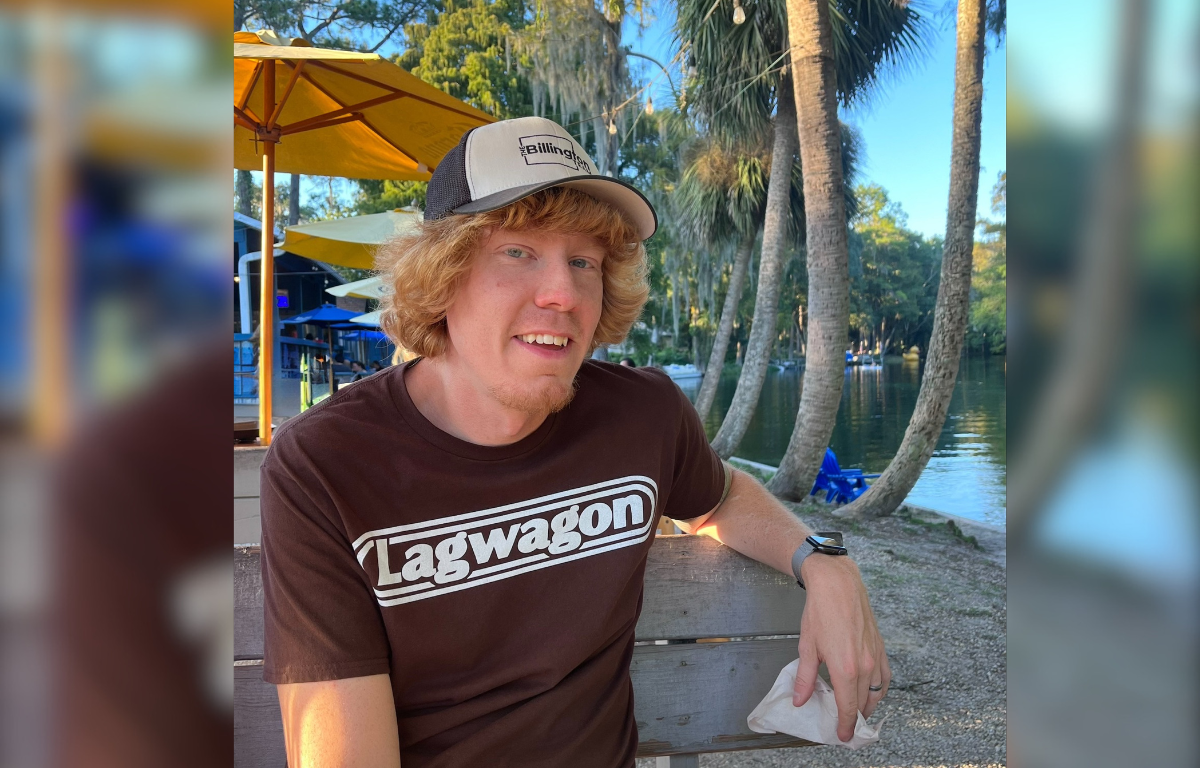
Steve Billington has built an audience of 8,200 followers on Facebook, and people now stop him in public because they recognize him from his videos. He plays along. He asks who they are and what they watch, so he can use it later. “It doesn’t bother me,” he said. “I enjoy it.”
Billington says he is a realtor first and foremost. The videos started as a way to get business, and turned into something else. He does not call it a job. “I do feel it’s like kind of a certain obligation,” he said, “just spreading awareness, teaching people things that they don’t know.” It still helps the brand. He gets a handful of business from what he puts online.
He is from a small town near Buffalo, New York, that most people have never heard of. His family started coming to Ocala in the mid-1990s, and he spent a lot of time back and forth before he officially moved. In 2001, he became a resident around the age of 12. Silver Springs was still an amusement park, one of the places he says they did not have back in New York. “It definitely made an impression on me,” he said, “enough that when the opportunity to move presented itself, it was kind of a no-brainer.”
Billington makes videos for people who have lived here their whole lives—and also for people who just got here. Most of the time, he says, he is flying by the seat of his pants. “Ideas will come to me, and a lot of the time it’s just spur-of-the-moment stuff,” he said.
Billington’s process usually starts with an idea. He writes a loose script, then figures out what B-roll to add. “The planning of it is really where the most time consumption comes from,” he said. He prefers funny content. “I’ve always been kind of like a jokester,” he said. “Anything goofy or funny, that’s my soft spot.” He used to do market reports, but he stopped because people weren’t watching them.
Billington is protective of the town. “There’s so much negativity online about Ocala and some of the problems that we face here, which no place is exempt from,” he said. “But it’s so frivolous to me. If you don’t like it, move. Don’t talk about it.” Newcomers, he said, “don’t know what they don’t know when they come here,” and some arrive with expectations that do not match the place. “I feel like people think Ocala is more Orlando than it actually is,” he said, and that can rub locals the wrong way.
He steers clear of politics and religion. “You can’t say anything political without being shunned by half of the people that probably watch your stuff,” he said. “So I don’t even touch it.”
People are sometimes starstruck when they meet him. “Which is crazy, man, because I’m just an ordinary average guy,” he said. A lot of them call him a reporter. “Which I guess I essentially kind of am.” His wife calls him crazy for going in 50 million directions at once. He says he thrives on it.
He thinks Ocala will become an Orlando suburb. “I’d like to think that every piece of land won’t be paved over with a home,” he said, “but that’s probably what it’s going to come to.” There will be more culture, more festivals, and more jobs with the growth, but getting there, he said, will be grueling.
The part he loves about being an influencer is simple. “Being able to share what I have to say,” he said, “and people actually want to consume that.”
Isaiah “Zayy” Alexander
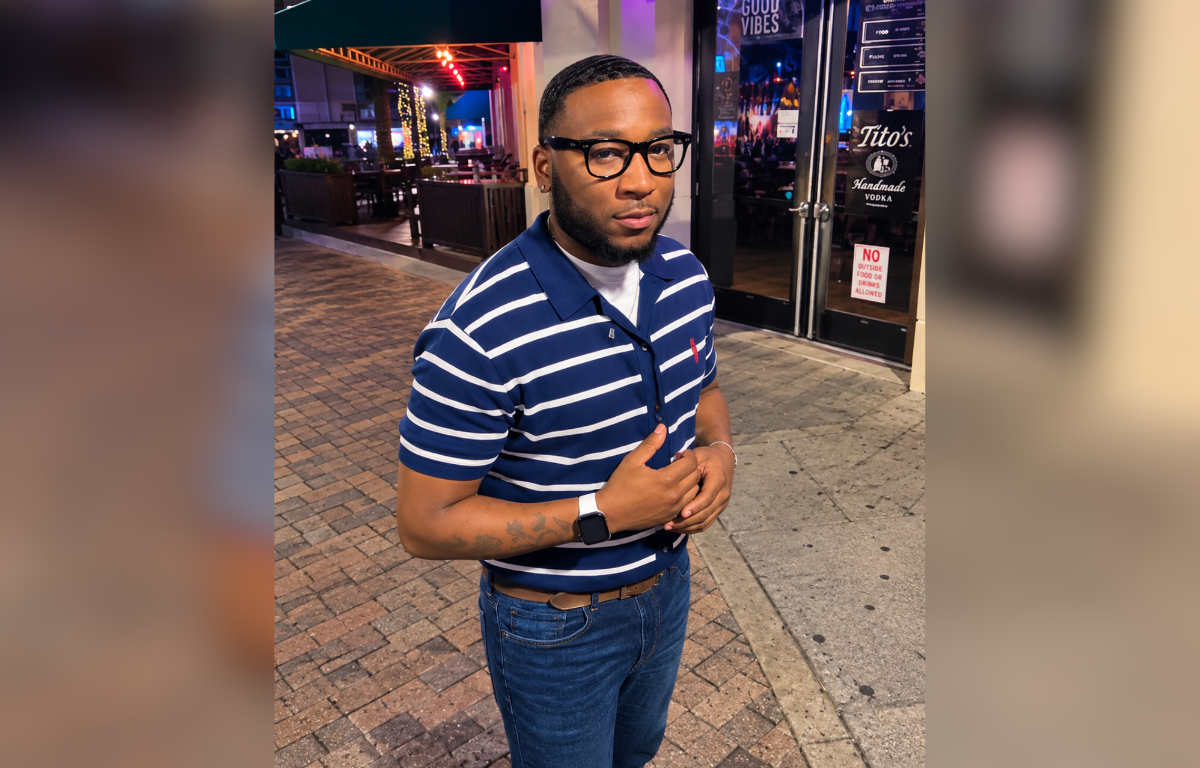
Isaiah David Alexander has built his “Zayy TV” audience of 11,000 followers by setting up solo on the sidewalk downtown most nights and waiting for people to stop. He is 30. His family has called him “Zayy” since he was a boy. He works alone, with a phone, a pair of microphones he bought himself, and what he calls his “million-dollar stand.”
When people recognize him and walk over, he asks them questions about the red flags they look for in dating, their relationship status, questions about how men and women should treat each other, and ice-breaker questions. While his subjects may at times be imbibing, he does not drink when he is downtown. “When people are like, ‘Can I buy you a drink?’ I’m like, ‘I’m on duty,'” he said.
The goal, he says, is to post five to ten times a day. “If I don’t post 10, I’m posting five. If I don’t post five, I’m posting three,” he said. “I feel sick when I don’t post.” He grew up in Ocala after his mother moved him from Miami at six, and he likes the slower pace. Nobody here was doing street interviews, so he did. “This is my home. It’s a small town, and nobody ever did anything like this.”
Speaking into his camera started as a private thing. “The reason I really started Zayy TV was because I was in a relationship and I really could not talk to my significant other about my feelings. Every time I talked to her about my feelings, she would throw it back at me, so I pulled out my camera and started talking to my phone about my feelings… I was like, ‘How can I, how can I get this off my chest?'”
On January 27, 2026, he took the stand downtown for the first time.
“I was scared, like I was really scared,” he said. “I didn’t know how to ask anybody for interviews. I was just standing there with my mic.” People gathered and asked what he was doing. “When I first opened my mic, everybody came to surround me, like, ‘Hey, what are you doing?’ and it went from there.”
He still asks about relationships because that is what gets people to stop and talk. “Everybody wants love,” he said. “That’s why I ask that question: ‘What does love mean to you?'”
The downtown scene, he said, for his content, is played out, but that was just to get him through the door. His real goal is the community, but not at the cost of bringing drama on the page. “I’m not with the drama, like ragebaiting,” he said. “I want no drama on my page.” He does not touch political issues, either. “I don’t want to be in politics. I want to make that very clear.”
He has no other job outside of this. “All I do is content. All I know is content,” he said. In a year, he sees himself on the road, on tour in Atlanta and New York, still doing his thing. “I’m never stopping.”
He never thought he would be doing this. “My vision, I just want to upgrade my community as much as possible,” he said. “Just take a leap of faith.” A lot of people talked about him when he first started. Now, he says, some of them are gravitating toward him. He wants people to know success is possible if they go in faith. “Hey man, you gotta take a leap sometimes.”
Drew Ramasco
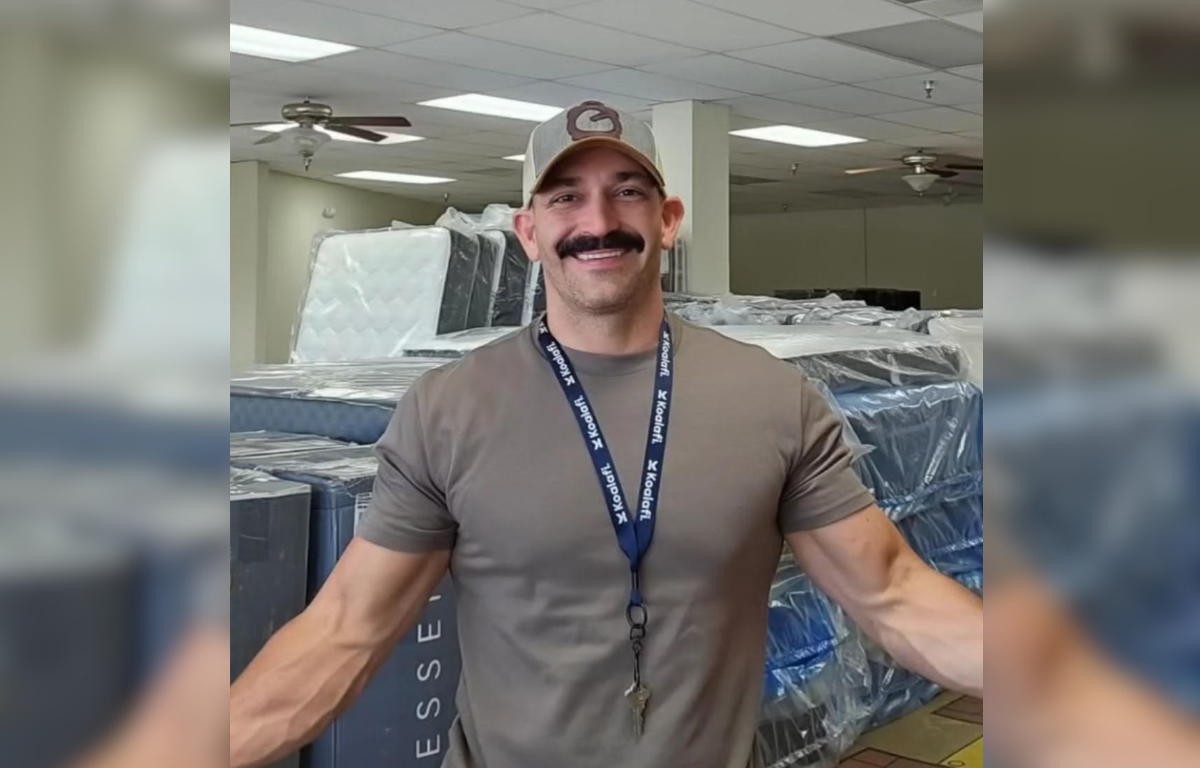
Drew Ramasco, aka “the mattress guy,” gets “stopped at stores and restaurants and everywhere,” he said, “and they say, ‘oh, it’s the mattress guy,’ or ‘hey, it’s the mustache guy.'” A lot of them call him Mario. “A lot of them don’t really know my name, and they think my name is Mario,” he said, “and a lot of times they’ll scream that out.” An artist painted Mario jumping from bed to bed on the wall of his shop so it would look less like a dungeon and more like a fun place to walk into. “I said, ‘it kind of looks like me,'” he said. He made it an unofficial logo and ran with it. “Don’t tell Nintendo. I’m not trying to get a lawsuit.” Remember the Mario. Remember the mustache. Remember him for mattresses. “It’s alliteration. It all goes together,” he said. “It’s friendly. It’s cute. It’s non-threatening, and it works.” That’s the whole idea.
He works 24 hours on, 48 off as a firefighter. The mattress shop was supposed to be a side thing. “I’ve been a fireman for 20 years, so you would think that’s my dominant job,” he said. “But the mattress store has kind of taken off so much that what was a part-time job is now a full-time job.” He fell into the mattress business accidentally, and it worked out. “Everyone needs a mattress,” he said. “It’s not like a lawn mowing service on every corner.” The videos started as a way to get customers. Funny car salesmen on TikTok made him laugh, and nobody else in town was making funny mattress videos. He figured he could do the same and winged it. People started to follow.
“I don’t see myself as like a traditional social media influencer,” he said. “It was like a business thing to get more customers, and it kind of evolved into this funny online personality.” At the station, he is the same guy until a call comes in. “The whole lighthearted joking aspect of my life goes out the window when it comes down to business,” he said. At the shop, he is still mostly alone, though that just changed. He brought in help because customers were getting frustrated when he was on duty at the firehouse. He has a four-year-old and a wife who works from home. “It’s very hard to manage my time,” he said. “But I have a schedule. That’s why I do the by-appointment model.”
Ramasco wants people who just moved to Ocala to know he has mattresses in stock, ready to go, so they can sleep on something tonight if they need it. He also wants them to know he is not trying to sell them the most expensive thing in the room. “There’s a lot of false information on the internet,” he said, and “people think that a $20 mattress on the TikTok shop is the same as a luxury mattress you buy at the store.” He learned that as he went. “Always support local business,” he said.
EJ Nieves
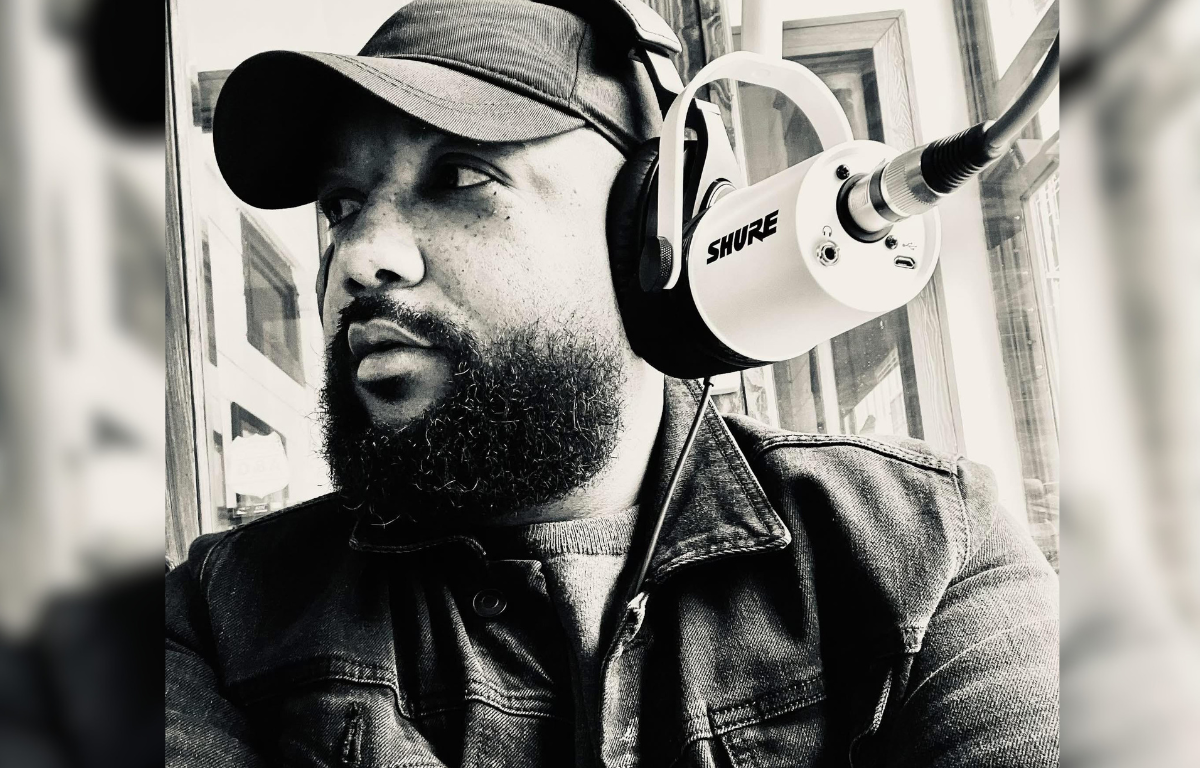
EJ Nieves has built an audience of 28,000 followers, but he does not call himself an influencer. “Creator or storyteller feels more accurate to me,” he said. He was drawing before anybody was watching. He taught, painted, and opened galleries. The social media came later. “Social media didn’t make me creative,” he said. “It gave my creativity distribution.”
He went to college at the University of Central Florida in Orlando, a city where, as he put it, “you can be incredibly talented, work incredibly hard and still feel like you’re one person among millions of people moving through the city.” Ocala was different. “Ocala was small enough that one person could actually make an impact, but large enough that there were real opportunities here,” he said. “I didn’t just want to live somewhere. I wanted to belong somewhere.” Some of his murals are here. He has watched children stand in front of things he painted, and people take family pictures in front of walls that started as a sketch. “There’s something incredibly fulfilling about walking around a city and being able to point at things and say, I was part of that,” he said.
The Paddock Mall mural is the one he comes back to. When he finished it, he sat in the food court. A father photographed his wife and daughter in front of it. Nobody knew he was there. “That moment meant more to me than somebody telling me they liked the painting,” he said. “The artwork had become part of somebody else’s memory.” That, he says, is what Ocala gave him. “It gave me a place where I could plant roots instead of just occupying space.”
He still uses the line he used years ago in a WUFT interview: “Build bridges, not kingdoms.” Ocala has artists. It has galleries. It has festivals. “Having artists in a city and building an arts culture are two different things,” he said. The painter should know the filmmaker. The musician should know the restaurant owner. The business community should understand that investing in creativity is not charity. “Does Ocala act like an arts town? Sometimes,” he said. “But I think the more interesting question is: What would happen if we really decided to become one?”
When someone recognizes him, he laughs and says thank you for watching. “It’s still strange,” he said. “I don’t think I’ve completely adjusted to it.” A view count is abstract. Twenty thousand views, fifty thousand views, one hundred thousand views; those are just numbers for Nieves. “When someone walks up at Publix and says, ‘EJ, I watch your videos every morning,’ suddenly one of those numbers has a face,” he said. “That keeps me grounded.”
He still sees himself as the guy making videos on his phone. “The public perception changed faster than my internal perception did.”
The subject matter may jump from development, restaurants, faith, and dating, but for Nieves it has always been about people. “That’s the answer. It has always been people.”
He wants Ocala to grow without losing its soul. “We don’t have to become Orlando. We don’t have to become Tampa. We don’t have to become Miami,” he said. “We can become a better version of Ocala.”
At 42, he is less interested in the numbers than in what lasts. “If someday people forget how many followers I had, I’m perfectly okay with that,” he said. “If a kid I encouraged becomes an artist… If a mural I painted becomes part of somebody’s childhood… That’s legacy.” Build something, he said, and then use what you built to create an opportunity for somebody else.