


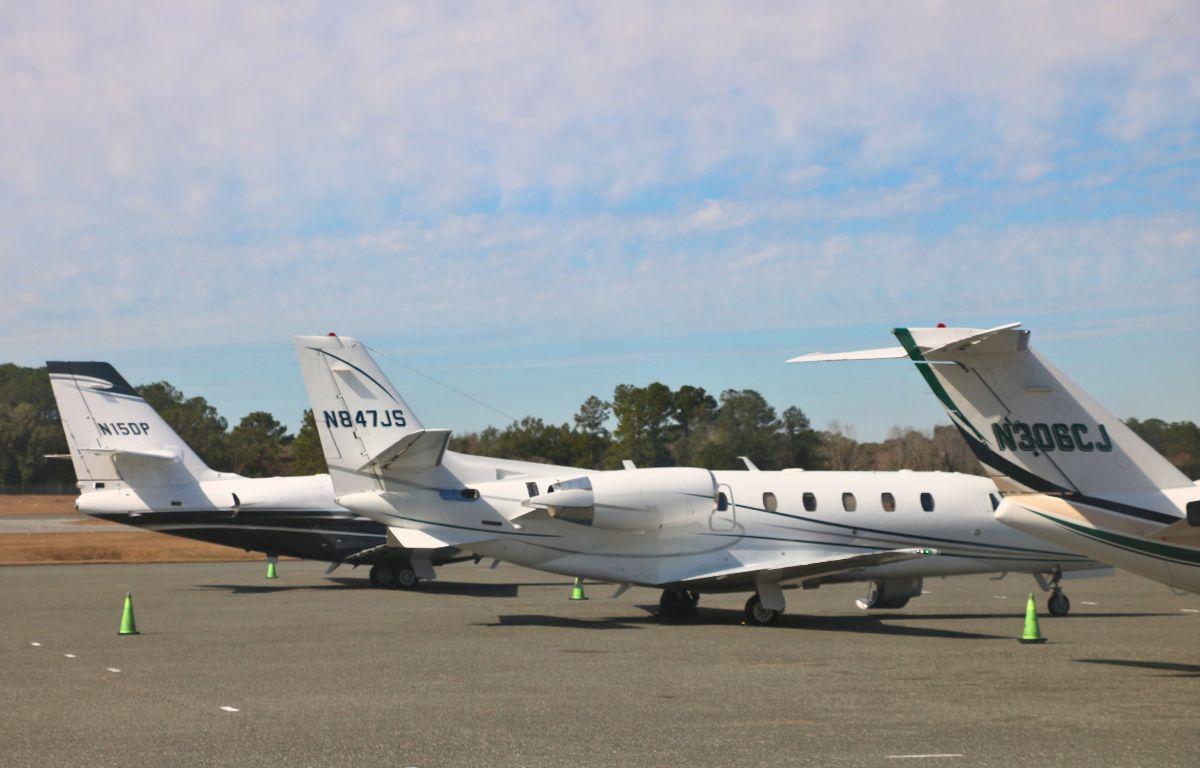

OCALA, FL (352Today.com) – On Tuesday, July 21, 2026, the Ocala City Council approved funding to design a new holding bay on Taxiway A at Ocala International Airport (OCF), a project intended to reduce aircraft congestion and boost operational efficiency.
Budget Resolution 2026-151, which amends the Fiscal Year 2025-26 budget, appropriates $178,558 in grant funding from the Federal Aviation Administration’s Airport Improvement Program (AIP) and transfers a $9,398 local match from the Airport Reserve for Projects account. The total cost for the design phase is $187,956.
Airport Director Matthew Grow told council members the project supports the city’s strategic goal of operational excellence.
“One of the things that came out of the airport master plan process, we’re almost done with it, was a need to provide a turnoff, for lack of a better term, non-aviation term, for aircraft to pull over and go through their pre-departure checklist and engine checks and whatever. Get out of line,” Grow said.
Grow noted that the airport is currently experiencing significant congestion on the taxiway.
“We’re so busy right now, there are six or seven airplanes that are stacked, ready to take off, and oftentimes they’re sitting down there at the end of the runway, waiting almost 30 minutes at a time,” he said.
“This holding bay was recognized through the master plan process as a way to alleviate that and provide some additional efficiencies in the movement of aircraft at the airport. The FAA has agreed. They’re funding the design for it,” he continued.
According to the public information officer for the City of Ocala, Greg Davis, a Taxiway A Holding Bay serves as a dedicated pull-off or bypass area. Without it, aircraft performing run-up and pre-departure checklists block the flow of other departing traffic.
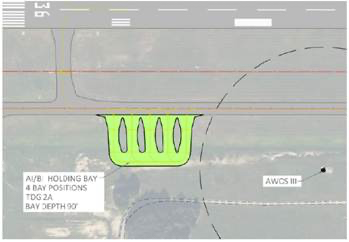
During discussion, Councilmember Jay Musleh asked about potential construction costs once design is complete.
“What do you estimate the cost to actually construct it once the design gets done? Are we talking $1,000,000?” Musleh said.
Grow responded that construction would likely be close to a million dollars and noted strong FAA support.
“It’s probably close to a million,” Grow said. “Again, it’ll be funded through the FAA. They’ve recognized the importance of the project. And they don’t like to fund design projects that they have no intent of constructing.”
According to Davis, the AIP grant is competitive and discretionary. The local match percentage aligns with current program guidelines. As of the end of June, the Airport Reserve for Projects contingency fund stood at approximately $2,551,350. A potential state grant could further reduce the local share.
Davis shared that design is expected to kick off around August 1, 2026, following issuance of a Notice to Proceed (NTP). The project timeline extends through final plans, bidding and a future construction grant application roughly 280 days after NTP.
The initiative is consistent with the airport’s master plan and is expected to improve capacity, safety and efficiency for general aviation and commercial operations by reducing taxiway delays.