




OCALA, FL (352Today.com) – When 352Today shared that the city of Ocala would be ending its curbside recycling program on Facebook, the feedback was mixed. While some were simply sad, others were angry and confused; some expressed a conspiratorial skepticism about how recycling works in the first place, if it even does.
“You guys should know that recycling isn’t real. It’s never been real. They are just throwing it in the garbage with everything else. It’s a hoax. Even PBS agrees. Google it,” one commenter wrote.
It’s now been just over a week since Ocala ended the program, and residents are adapting to the new reality of drop-off stations.
Public Information Officer for the City of Ocala, Greg Davis, said he has not seen major negative pushback.
“I’ve seen on social media, just from social listening, some people putting some comments and so forth, and I’ve seen it on both sides. I’ve seen some comments where certain residents have mentioned that the city didn’t inform them of this, but obviously, there’s a lot of material out there to show otherwise. But it goes back and forth,” Davis said. “At the end of the day, if anybody had any comments they wanted to say, I usually would just encourage them to go to a city council meeting.”
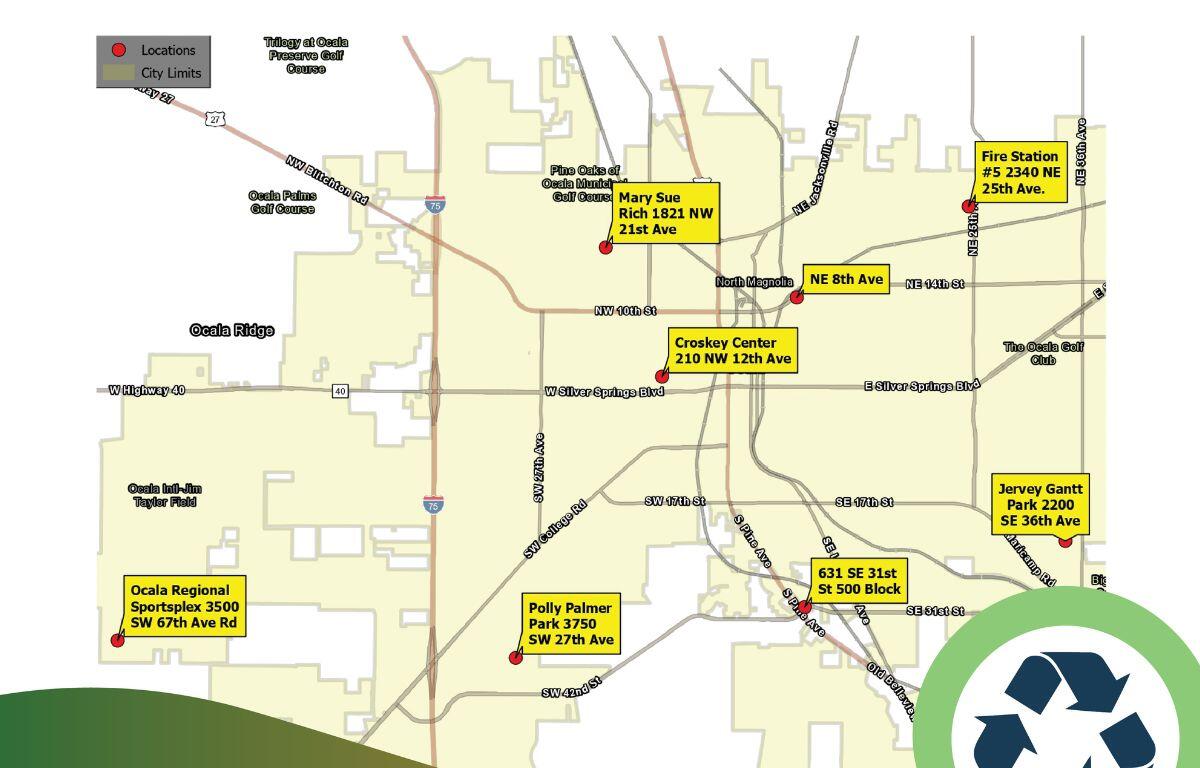
Drop-off stations seeing steady use
According to Davis, since the program shifted on July 6, residents have been using the new drop-off locations at Jervey Gantt Park, Fire Station #5 and the Eighth Avenue site. City officials say they need about a month of data for solid numbers, but the sites appear to be meeting expectations so far.
“The drop-off sites have met expectations, and we have noticed the locations at Jervey Gantt, Fire Station #5 and Eighth Avenue having the most traffic. A third bin has been added to Jervey Gantt due to the traffic and a third bin is planned to be placed at the other two locations shortly,” Davis said.
Materials dropped off are collected in front-load trucks and taken to Waste Pro’s Material Recovery Facility (MRF), the same facility that handled Ocala’s recyclables before the change. There, they are sorted and processed.
The reality of recycling contamination
One reason behind the program adjustment is the high contamination rates that make single-stream recycling unsustainable for many communities.
“Anywhere between 25 to 45 percent of the material is contaminated and winds up being landfilled,” Davis said.
Contaminants–items that aren’t actually recyclable–can ruin entire loads. When non-recyclable material mixes in, it requires extra processing and often ends up in the landfill anyway.
“When you’re unsure whether an item is recyclable, the best practice is to place it in the trash rather than the recycling bin,” Davis advised. “This helps protect the integrity of the recycling stream and ensures that more recyclable materials can be recovered and reused.”
City staff continue monitoring the drop-off sites and plan to share more detailed volume and usage data in the coming weeks.
To find out more, visit ocalafl.gov.