


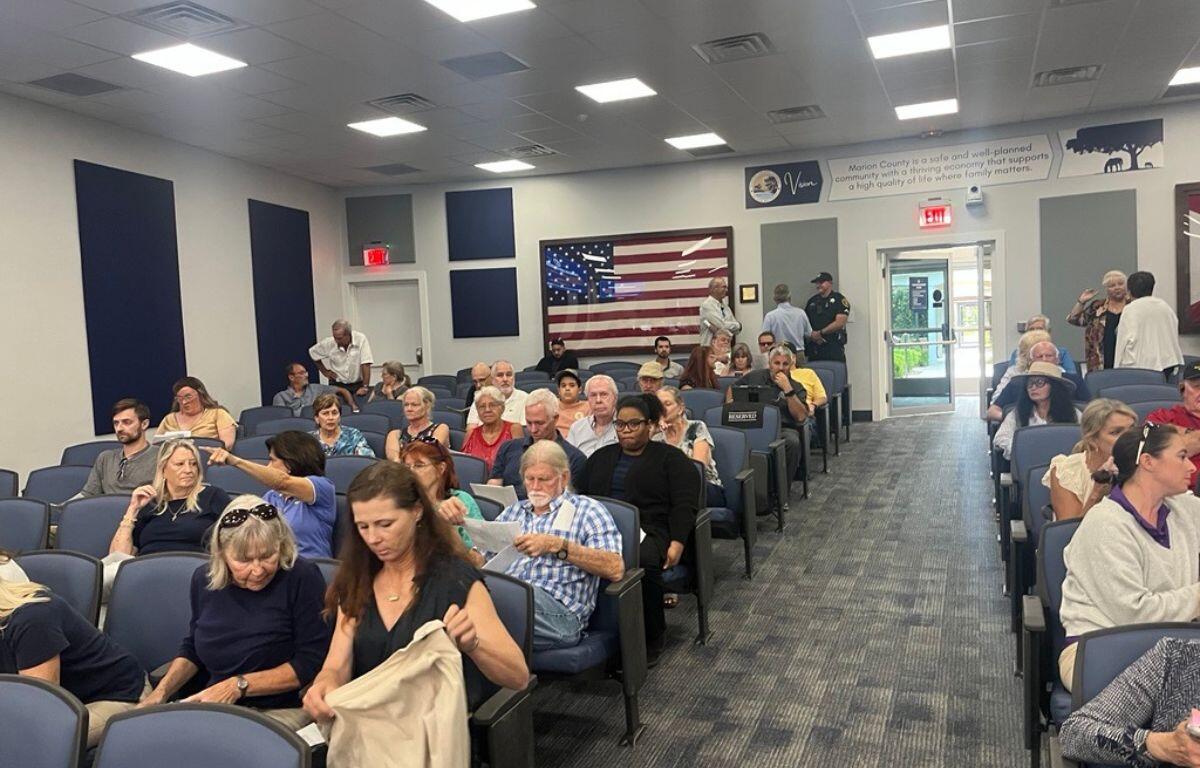

OCALA, FL (352today.com) – In a unanimous vote 4-0, the Marion County Planning and Zoning Board approved recommendations for Golden Ocala’s requests involving comprehensive plan text and map amendments, along with the consolidation of two existing planned urban development projects (PUD) into a single-unit PUD to allow for the creation of an indoor/outdoor sports complex and event venue. The vote came during a public hearing on June 30.
The proposed development, which could bring national sports tournaments and youth programming to the area, is now one step closer to review by state and regional agencies. A transmittal public hearing is scheduled for July 21, during which the Marion County Board of County Commissioners will decide whether to forward the proposed large-scale comprehensive plan amendments. Rezoning requests are on hold until the comprehensive plan amendment process is complete.
Balancing growth with Marion County values
County staff recommended approval of all three amendments submitted by Golden Ocala Equestrian Land, LLC, stating they align with the county’s comprehensive plan, are in the public interest, and are compatible with surrounding land uses.
However, for many Marion County and Ocala residents, particularly those in rural areas and the equine industry, the project raises deep concerns. Several citizens at the public hearing objected to the plan, citing noise and lighting issues, its proximity to the Farmland Preservation Area, the potential stress on horses, added traffic, and the risk of diminishing the county’s unique equestrian identity.
Others worried about long-term environmental consequences, particularly how such a large-scale project might impact the Floridan Aquifer and local water resources. For a region built on a reputation as the Horse Capital of the World, and one with a strong rural heritage, residents questioned whether the project could shift the area’s character.
Community concerns vs. economic opportunity
Despite opposition, the applicant emphasized the economic benefits, citing a gap analysis showing strong demand for a sports facility of this kind. According to their presentation, the complex would serve local families and youth, while also drawing tourism and hosting national tournaments.
Representatives from Sports Facilities Companies outlined offerings such as field sports, court sports, ice activities, non-traditional events like cook-offs and rallies, and community programs. They emphasized that the project could provide meaningful recreation and entertainment options for residents while boosting the local economy.
The projection of direct spending would be $185 million for a five-year period, a total of indirect/direct of $300 million to the county in terms of overall economic impact, and $2.6 million in taxes direct to the county.
The proposal includes a number of conditions the applicant must meet if approved, although specifics were not detailed during the hearing.
Should the Marion County Commission approve the amendments, construction could begin as early as 2027, with the complex expected to be completed by 2033. The project would be in four phases.
More news that matters to you…
-
3 charged with trying to pass counterfeit money at multiple Sumter County fast-food drive-thrus
The individuals tried or succeeded in passing fake currency at multiple fast-food restaurants in the Bushnell area.
-
Niagara Bottling is closing Ocala plant, laying off remaining 57 employees
The California-based company bought the Silver Springs Bottled Water Co. plant just a year ago, and immediately laid off 85 workers; the new layoffs comprise the rest of the plant’s workforce.
-
Ocklawaha River Raid returns to bring local history to life
The Ocklawaha River Raid is back for another year of living North Central Florida history.
-
Ocali Country Days takes a step back to the 1800s this weekend
Ocali Country Days brings local history and educational fun to Silver Springs Nov. 7 & 8.
-
Ocala City Council approves rezoning, ends 2008 agreement for vacant SW 20th Street property
The unanimous vote changes the 2.8-acre lot from limited neighborhood business to standard neighborhood business zoning and lifts old restrictions that banned alcohol uses and capped building size.