


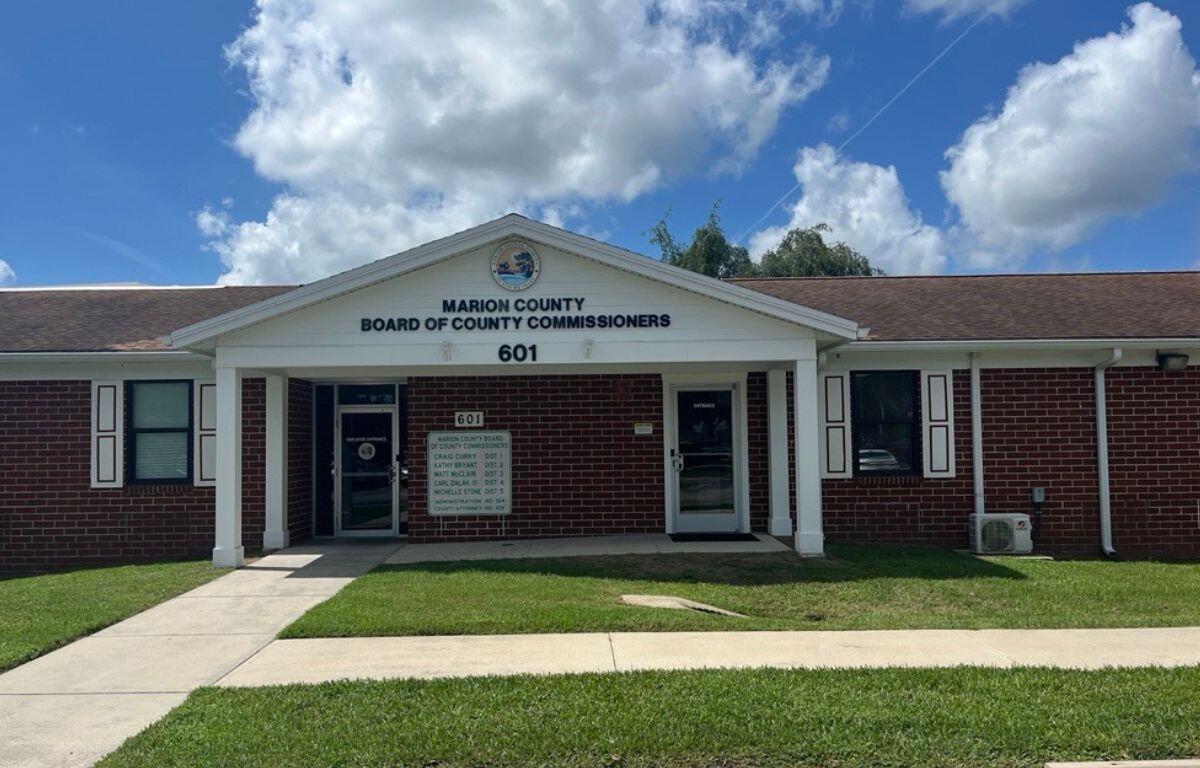

OCALA, FL (352Today.com) – The Marion County Board of County Commissioners voted Tuesday to schedule a workshop on data centers for Sept. 1, moving forward with proactive planning despite strong public opposition from residents concerned about water use, noise, environmental impacts and the county’s rural character.
The approved agenda item directs staff to schedule and advertise a Board of County Commissioners workshop to discuss data centers on Tuesday, September 1, 2026, at 2 p.m., or as soon thereafter as possible, in the McPherson Governmental Campus Auditorium.
According to the staff report from Growth Services Director Chuck Varadin, the workshop is intended to allow the board to provide direction on how Marion County should evaluate and manage potential data center applications. This comes in light of newly enacted state legislation, Senate Bill 484, which does not preempt local zoning authority but establishes mandatory requirements for utility cost allocation and consumptive water use permitting.
“Staff is requesting Board direction on how Marion County should evaluate and manage potential data center applications before receiving one, particularly in light of newly enacted state legislation (SB 484, 2026),” the agenda item states. “To ensure policy alignment and consistent application of these statutory requirements, staff would like to outline the procedural considerations for future applications and seek Board guidance on the preferred approach before any data center proposal is formally submitted.”
No data center application is currently pending before the county.
Public comment was overwhelmingly opposed to data centers in Marion County. Several speakers urged commissioners not to move forward even with planning for the facilities.
Marita Weston asked commissioners to vote “no” on the procedural request to hold the workshop.
“Workshops are not free; they cost money,” Weston said.
“If you’re saying that you want to be proactive and you’re listening to the community, the community does not want a data center. Not now. Not later. Not in a smaller size. We just do not want a data center here in Marion County. It does not fit Marion County, and we feel that the staff’s time is better used by perhaps amending the land code, the land development code, to actually prohibit data centers as a primitive use. Couldn’t we solve this right now,” she continued.
In response to Weston, Commissioner Carl Zalak, III answered, “No, ma’am.”
When Weston asked why the answer was “no,” Zalak responded, “because of the Constitution,” and then addressed her suggestion that data centers could simply be prohibited by not allowing the issue to be discussed.
“People want to live in this fairy tale land. What you’re saying is that no citizen then has the right to ask their government for something,” Zalak said.
“The bottom line is, for our country, data centers are infrastructure. Everybody gets on their phone, and we all use these things every single day. And unless America decides that we’re going to put those things away, we need infrastructure to take care of that,” he continued.
Marion County Attorney Matthew “Guy” Minter explained the legal realities of the situation.
“Anybody can come in here, and as long as it’s a legal request, anybody can petition their government for an application, a permit, whatever,” Minter stated.
Zalak reinforced the point, telling residents who questioned why the county cannot just ban data center applications for Marion County currently.
“It doesn’t work that way legally,” Zalak said.
“The thing about America is, you can’t stop a citizen and a property owner, based on the Florida Constitution and based on property rights, from asking the government that they are in for a request. That is part of our rights as Americans: to have our piece of property and ask the government to change it. Government doesn’t have to necessarily change it, but you have to have a framework to allow people to do that,” he continued.
“We want to talk about that instead of being reactive, instead of having an application and having to work through that with no regulation in place. We would rather, because of the things I think the board has learned, the things that are going on in our country, we would rather have a proactive approach and say, ‘Hey, if you were ever to do something like that, what would that look like in Marion County as of today? You could only build those in an industrial area with a special use permit; you can’t build it on a piece of ag land in Marion County’,” Zalak said.
Multiple residents raised specific concerns during the meeting. Rebecca Ware, of Silver Springs, spoke about long-term local impacts.
“This is the first year we’ve ever had well problems right in the national forest; all the lakes, all the ponds are low. We don’t need anybody out here taking more water. We don’t,” Ware said.
Sherry Wilson highlighted issues beyond water and electricity.
“These things produce a massive amount of noise, and with noise comes vibration. So, we need to think and remember that we are the horse capital of the world,” Wilson said.
“We need to take into consideration what these things are going to do to the wildlife, livestock, and not only that, but think of our human health,” she continued.
County officials indicated the county could consider a temporary planning moratorium while developing regulations, but stressed the importance of creating a clear framework, potentially including updates to the Land Development Code, that would govern how any future application would be reviewed. A moratorium is a temporary pause or delay on an activity, law, or payment, often put in place to give time for review, planning, or resolution. For example, a city might declare a moratorium on new building permits while it updates its zoning rules.
Commissioners noted that if an actual application is submitted or if code changes are proposed, there will be multiple opportunities for public input, including evening public hearings.
Commissioner Craig Curry added perspective from the recent National Association of Counties conference, where data centers were a major nationwide topic. He said commissioners learned from leaders in other areas that already have such facilities.
“I just want to let you know that this isn’t a willy-nilly type issue for us, or for any other commissioner across the country; it’s new. It’s scary to a lot of people, but we are assembling a lot of good information, and then talking to people that have actually built these things and are dealing with them. So, no decisions have been made. But we hear the community,” Curry said.
“I personally sat through two hours of data center information, and then followed up with some other commissioners that I’ve never met before, but had real-time experience with these things. So, I appreciate the community. The community is out front, and unfortunately, a lot of misinformation on the internet starts going around, and people form opinions off of that. What we need to start forming our opinions from is our workshops and the actual materials that we present that we have researched,” he continued.
The Sept. 1 workshop is designed as a working session to help the board develop a thoughtful, informed approach rather than a reactive one. While it is not a formal public hearing, residents will have the opportunity to speak, and county officials encouraged ongoing communication through emails, phone calls or one-on-one meetings in the meantime.
Click here for more information.