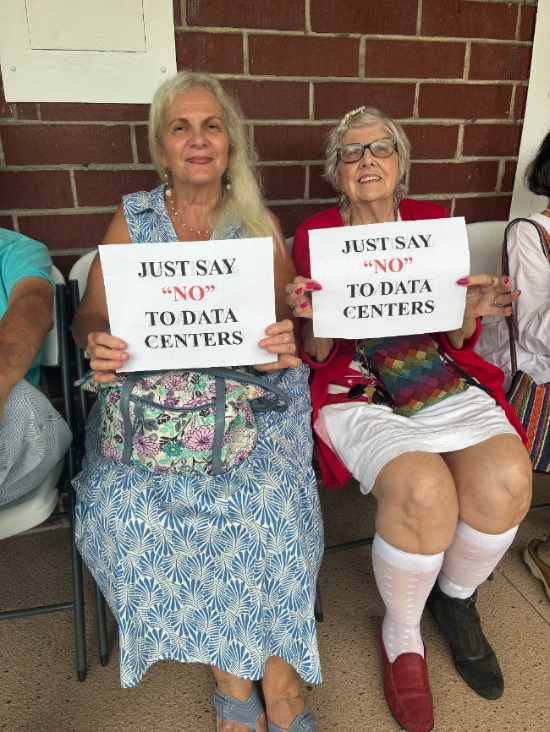

OCALA, FL (352today.com) – Organizer Brian Donnelly and a long line of speakers pressed for a pause on entertaining contracts to build data centers in Marion County Monday night, and the Planning and Zoning Commission voted to send that recommendation to county commissioners.
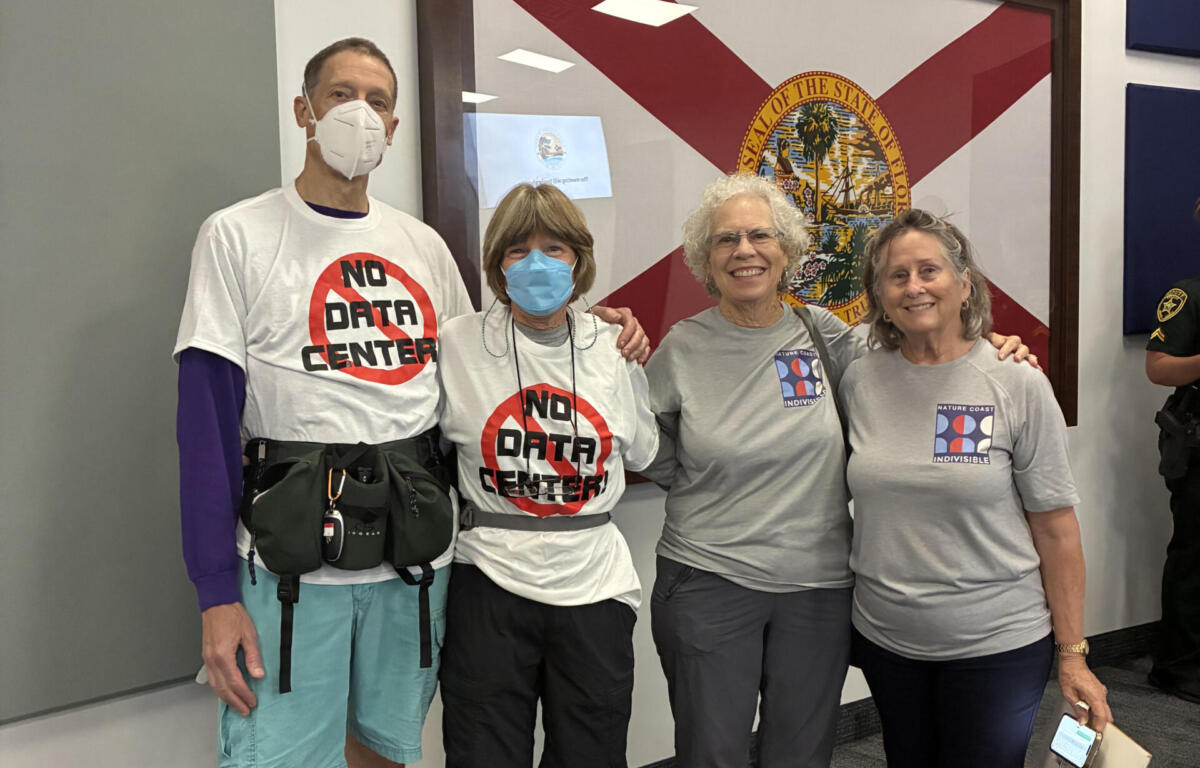
Marion County residents, some wearing matching “No Data Centers” shirts, piled into McPherson Auditorium on August 31, 2026, as the Planning and Zoning Commission held a public hearing on a proposed 12-month moratorium on new data centers, cryptocurrency mining and related facilities, then voted to recommend the freeze.
Staff said the draft ordinance would stop the county from accepting, reviewing or approving development permits, development orders, rezonings or site plans for those uses for up to 365 days. During that window, staff would study groundwater withdrawals, water-supply and wastewater capacity, electrical grid needs, land-use compatibility, springs, hydrogeology and water-conservation standards, and would coordinate with water management districts. The pause would end after twelve months, or sooner if the county adopts comprehensive plan or land development code amendments, whichever comes first.
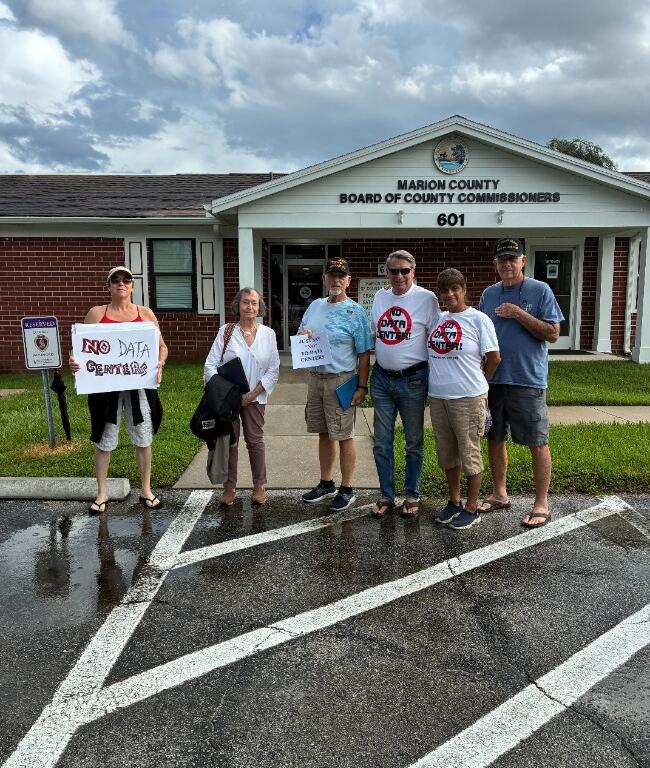
The chair limited speakers to two minutes and asked them to stay on the topic of the moratorium, not a permanent ban. After a show of hands in favor of the pause, most speakers supported it.
Destiny Decker, a 22-year-old Ocala native and college student, said more than 210,000 Marion County residents, nearly 64 percent, are affected by drought. “Once these resources are depleted, my generation can’t simply vote to get them back,” she said. “AI doesn’t need Marion County more than Marion County needs its water.”
Brian Donnelly, who organized the turnout, called local opposition under current technology “about a 90-10” split and pointed to Silver Springs, saying water levels are roughly 60 to 65 percent below historic norms. “We’re a beautiful rural county,” he said. “Wisdom is the only thing that is going to protect this county.”
Joel Hickman credited Commissioner Kathy Bryant for pushing the moratorium after residents sought to delay an earlier workshop. He said existing rules do not address the infrastructure demands of newer data centers and that cumulative effects on water, wastewater and the power grid “are not yet fully understood.” Hickman told the board 6,194 people had signed a related petition and asked members to “hold up to this moratorium.”
Jack Pritchard of Summerfield opposed the pause. He said closed-loop cooling is already used widely, called water conservation “one of the easiest fixes,” and argued a delay would waste time as technology moves “at the speed of light.” He also said the county should worry more about “what China’s doing to us” than about freezing applications. “We should move forward, get this job done,” he said. “It can be done safely.”
Max Shepherd of Ocala rejected that framing. He said China has about 400 data centers while the United States has more than 5,000, and that a supposed race with China is being used as cover.
“This race that we’re talking about to be the best at AI is a Trojan horse,” he said. “I use the phrasing of Trojan horse specifically because the people who are funding AI data centers are the ones who are gonna tell you that it’s unstoppable and that it’s just gonna happen. These are the same people who are going to become ludicrously wealthy because they keep getting constructed. They have the ability to stop it, they’re telling you it can’t be. People want money. And that’s why these things keep getting built.”
After public comment closed, Growth Services Director Chuck Varadin told the board staff is still researching legal, water and other issues and that rewriting the land-development code or comprehensive plan would take at least six months before extra study time. Staff confirmed there is no pending data center application. One commissioner called the ordinance a “precautionary measure” and said treating every data center as the same size and impact would be a mistake.
After public comment closed, a commissioner moved to recommend the ordinance as presented, a temporary moratorium of up to 12 months. The motion was seconded. All members present voted in favor. None opposed.
The recommendation now goes to the commission for a second public hearing on September 15, 2026. Staff has a data-center workshop scheduled for September 21, 2026, to present research and seek direction on next steps, including land development code options that could range from size and siting rules to a permanent ban.