


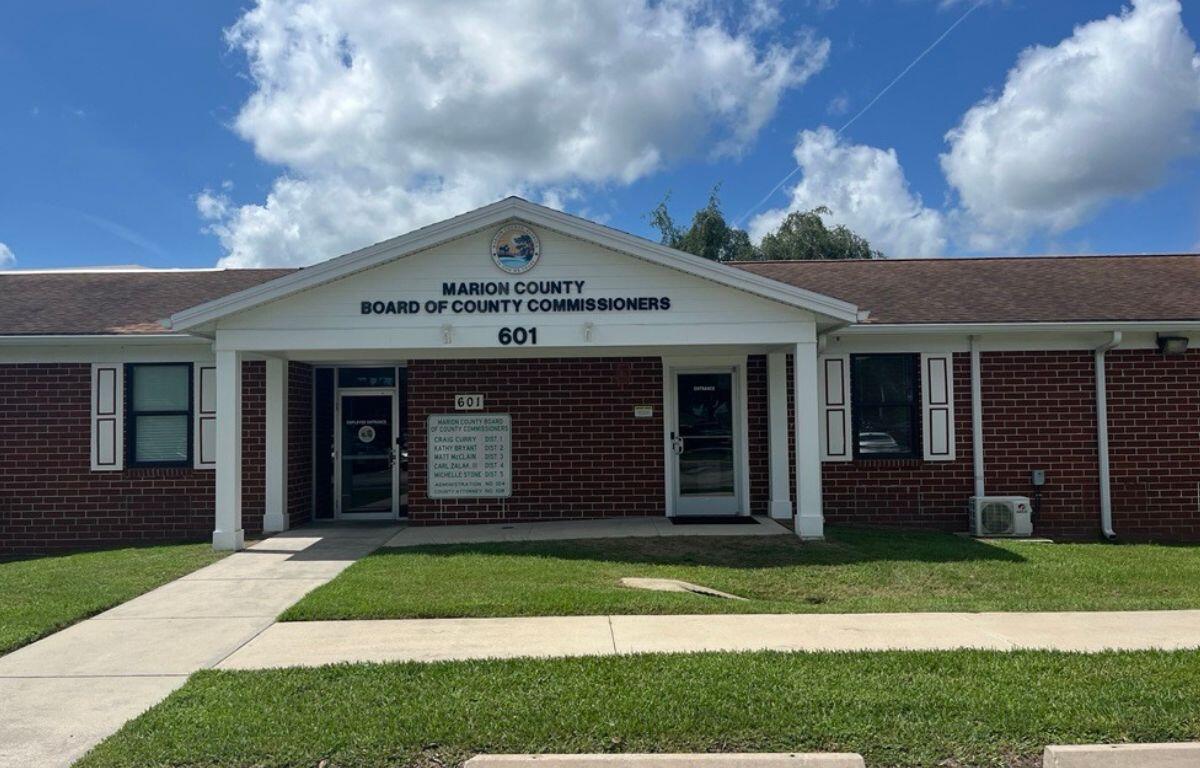

OCALA, FL (352today.com) – The Marion County Board of County Commissioners and the Marion County Parks and Recreation Department are working toward long-term sustainable funding solutions for the department.
The Marion County Board of County Commissioners workshop on Tuesday, March 3, 2026, focused specifically on bond funding, with the Trust of Public Land‘s Pegeen Hanrahan making the presentation before the board, sharing insights and recommendations on how their team can support the county in reaching their goals.
“We appreciate your partnership and the shared commitment to meeting the evolving needs of our community,” said Jim Couillard, Marion County Parks and Recreation director and landscape architect. “As you know, our department has a growing need for consistent funding both to care for and maintain our existing facilities and to plan thoroughly and thoughtfully for future parks, recreation centers and trail projects. In previous discussions, we’ve shared information about our backlog of deferred maintenance, capital improvements and replacement needs as well as opportunities that new parks, expanded recreation services and spaces can create for residents and visitors alike.”
Choices versus decisions
The Marion County Board of County Commissioners and the parks and recreation staff have met several times since July 2024, to explore funding options to address the aforementioned needs in strategic and sustainable ways, said Couillard. Impact fees and bond funding have been two areas of focus, and the department and commission are especially encouraged by the potential role of tourism and development dollars in enhancing parks that both strengthen the community and support tourism. Each of these tools represents a promising opportunity and the department is excited about continuing to work alongside the commissioners to bring meaningful improvements to the county.
Trust for Public Land is a national nonprofit organization founded in 1972, and Hanrahan works for the segment of the organization called Conservation Finance. They work almost exclusively at the ballot box, with voter authorized funding sources; however, they also do some legislative work.
“I’m currently working with the State of South Carolina and the State of Georgia on their funding sources,” said Hanrahan. “I work almost exclusively in the Southeast and Casey Bauer is our new Florida director for conservation finance. We work on parks, trails, natural lands, open space and also schoolyards. We’re the biggest organization in the nation for two types of projects, rail-trail projects and Florida is very important in our nation’s rail infrastructure. We’ve done a lot of rail-trail projects in Florida, and secondarily on REPI (Readiness, Environmental, Protection and Integration) projects, which protect our nation’s military assets. We’re the number one organization in the nation that does protection of land around military bases. “
The Trust for Public Land has worked on more than 5,500 land acquisition projects, as well as 311 community schoolyards, where they do a lot of renovation of older schoolyards and opening schoolyards to public use during non-school hours. They’ve also protected more than 4 million acres, and played a role in securing more than $112 billion in voter authorized funding.
“In Alachua County, we have done a couple of projects, the Alachua County Wild Spaces Public Places program has invested at school facilities, there’s a new track at Howard Bishop Middle School and then I believe the playground at Carolyn B. Parker Elementary School, those were both funded by county sales tax dollars,” said Hanrahan, who has been with the organization for 21 years. “Trust for Public Land does a collaborative design process with children at the schools where they bring kids in to look at what they would like to reenvision as their schoolyard. We’ve only done that in one place, and it’s a Title One school, it’s in Miami Beach. In that case, they were working with the City of Miami Beach and the Miami-Dade School Board. They worked on the design with the kids and now they’re doing the project.”
Keeping it green through revenue streams
The area Hanrahan works on are the funding and leverage components, and one of the things the Trust for Public Land works on with local governments is figuring out how to help bring state and federal dollars to programs like Rural and Family Lands, the Greenways and Trails funding, the Florida Community’s Trust funding. Currently there’s a lot of focus on Rural and Family Lands and less focus on local government parks and trails and open space.
The Trust for Public Land also does land acquisition projects–the Sarasota Legacy Trail, the Wells Built Hotel in downtown Orlando, which was an African American hotel and is now a public meeting space and museum–as well as working on a lot of rural protection projects, which often remain in private ownership, but there’s a purchase of the right to develop those properties, so they remain as farms or forests. said Hanrahan. They have worked on 470 projects in Florida.
Whatever the focus on funding for Marion County Parks and Recreation ends up being, the Trust for Public Land is going to work to meet whatever the county’s policy direction is, said Hanrahan. The funding that the Trust for Public Land is working with mostly in Florida is currently associated with the Florida Wildlife Corridor. It’s a substantial priority of the State of Florida with Gov. Ron DeSantis’ support. The Trust for Public Land’s primary funder is a Tampa-focused tech entrepreneur, Arnie Bellini, who has funded the Trust for Public Land to work predominantly with local government, Live Wildly and the Bellini Better World Foundation to try to encourage local funding sources to help protect the Florida Wildlife Corridor.
Checking the boxes
“We have worked on many ballot measures that are purely for parks or even individual projects,” said Hanrahan. “We worked with Ormond Beach for protection of the Andy Romano Park. We can really scale based on what your direction as a county commission is. We usually work at the ballot box. We work with cities and counties and also states to fund priorities the county has a need for. They’re usually capital focused, although we have a few options that include operating. It’s very common for us to work on ballot measures that include other priorities other than parks or trails or open space, most commonly roads because that is one of the most expensive needs of county government, but we’ve also worked on fire stations, sheriff’s facilities, animal shelters, libraries, affordable housing, anything that’s a legal public use for your capital dollars, we’ve probably worked on it some way. I do a lot of work in South Carolina and it’s almost always roads plus land conservation, but here in Florida, it’s been any number of different things.”
Over the period of time that the Trust for Public Land has been working on ballot measures, the organization has an 84 percent win rate. The Trust for Public Land is very meticulous in its approach prior to taking something to the ballot box, ensuring that what moves forward is something that voters actually want and that the county commission, as elected leaders, can endorse and encourage moving forward, said Hanrahan.
In Florida, the Trust for Public Land has worked on 45 successful ballot measures overall, with a 90 percent win rate, said Hanrahan. Conservation wins span the political spectrum. During the pandemic, there were 23 ballots that went to the ballot that year, and all 23 passed. About 77 percent of measures that have gone to the ballot in the United States, and that includes some outdoor recreation and conservation uses have passed, and when Trust for Public Land is involved, it’s been 84 percent, and they’re involved in about half of the ballot measures in that area.
Investing for the long run
There are three overarching funding sources that local governments in Florida have to fund the county’s capital needs, including general obligation bonds. A general obligation bond to a local government is similar to a mortgage for a citizen–it’s a long-term lending instrument and is usually backed by the property tax if it’s voter approved, but the county would be able to bond for other types of revenue sources, said Hanrahan.
There are counties in Florida such as Lee, Collier and Volusia that opt for a voter dedicated property tax. It is advisory to the county commission, it doesn’t bind the commission, but it’s a way of saying to the voters, is this something you want to do? If something changes the county wouldn’t have to levy that property tax, so it’s more like a straw poll.
The county commission is familiar with sales tax, such as the Penny Sales Tax. However, it’s not unusual for counties to include parks and recreation in their sales taxes. A bond is really only paid for by property owners, if it’s backed by the property tax, and it’s a segment of the voting population that’s much narrower that’s paying for it, than a property tax, said Hanrahan.